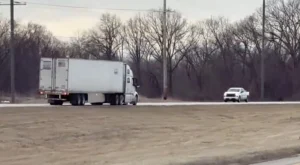
The ATRI in collaboration with the AASHTO, has published a study on truck parking at public rest areas.
The American Transportation Research Institute (ATRI), in collaboration with the American Association of State Highway and Transportation Officials (AASHTO), has published a study on truck parking at public rest areas. This research, which included a survey of the Departments of Transportation (DOT) from all 50 states, Washington D.C., and Puerto Rico, reveals a critical shortage of parking spaces, with only one space available for every 11 truck drivers nationwide.
The study examined the costs and challenges associated with land acquisition, construction, and maintenance of parking areas, as well as the services provided to drivers. Based on the data collected, ATRI developed an interactive online dashboard showing the truck parking capacity and available services in each state, taking into account factors such as state size and proximity to key freight routes. This data allows for easy identification of the states with the highest and lowest truck parking availability.

Statewide public truck parking facilities
To rank the states, the ATRI research team identified key metrics based on truck driver priorities, focusing especially on areas with the greatest need for parking. Each state was evaluated according to the following criteria:
- Amenities: availability of restrooms, lighting, pet areas, trash bins, waste disposal stations, vending machines, walking trails, and 24-hour security.
- Safety measures: adequate lighting, fencing, surveillance cameras, regular patrols, and emergency call buttons.
Taking into account eight types of amenities and five safety measures, ATRI created a ranking table that evaluates states based on: total number of available truck parking spaces, the average number of spaces per 100 miles, the amenities and safety features provided, and annual investment in parking infrastructure.

States with the Highest Truck Parking Capacity
Based on the total number of available truck parking spaces, the top ten states are:
- Florida – 2,100 truck parking spaces
- Illinois – 1,449 truck parking spaces
- Texas – 1,409 truck parking spaces
- Ohio – 1,403 truck parking spaces
- Indiana – 1,402 truck parking spaces
- Michigan – 1,300 truck parking spaces
- California – 1,203 truck parking spaces
- Missouri – 1,152 truck parking spaces
- Georgia – 997 truck parking spaces
- Oregon – 914 truck parking spaces
From this list, only Texas provides all eight amenities, though it only meets three out of five safety measures. Illinois, on the other hand, offers all five safety features, but only five amenities. Florida maintains the top spot thanks to seven out of eight amenities and four safety measures.
However, Tennessee, despite not appearing in the top ten for parking capacity, is the only state that meets all evaluated amenities and safety measures. Still, it has just 584 truck parking spaces.

States with the Lowest Truck Parking Capacity
On the other end of the spectrum, the study also highlights the states with the lowest availability of truck parking spaces, which additionally offer fewer amenities and safety features. These states are:
- Utah – 295 truck parking spaces
- Louisiana – 280 truck parking spaces
- Oklahoma – 263 truck parking spaces
- Colorado – 241 truck parking spaces
- Vermont – 236 truck parking spaces
- South Dakota – 215 truck parking spaces
- Maryland – 215 truck parking spaces
- New Hampshire – 194 truck parking spaces
- North Dakota – 190 truck parking spaces
- Alaska – 70 truck parking spaces
The state with the highest annual maintenance budget for rest areas is Virginia, which invests $32,982 per year for 758 spaces. In contrast, Indiana, ranked fifth in number of parking spaces, allocates only $344 annually.
This study highlights the significant disparity in investment when it comes to providing safe and well-equipped truck parking, as well as the urgent need for adequate facilities to improve the quality of freight transportation across the country.

TAA Compliance: When Safety Complaints Turn Into Six-Figure Losses
STAA compliance is no longer a technical detail for fleet owners—it is a financial, legal, and insurance exposure. A recent enforcement action in Texas shows how mishandling safety complaints can lead to termination claims, retaliation findings, and six-figure penalties, and what carriers must do to avoid becoming the next case

U.S. labor market raises red flags on Wall Street
The U.S. labor market closed 2025 with clear signs of weakening, as evidenced by the latest employment data released in December. In the latest episode

DOT finds half of North Carolina CDLs were issued illegally
The DOT warns that half of North Carolina’s CDL licenses are irregular after a federal audit uncovered serious compliance failures. The findings directly affect truckers, fleets, and transportation companies, raising urgent questions about road safety, legal operations, and the future of the trucking industry.

California’s Unhealthy Air: Impacts on Trucking and Freight
Unhealthy Air Quality in California: What Repeated Pollution Alerts Mean for Trucking and Freight Operations

Global Road Freight on Track to Hit USD 5 Trillion by 2033
Global Road Freight on Track to Hit USD 5 Trillion by 2033 as e-commerce growth, supply chain restructuring, and technology adoption accelerate demand for road-based cargo transport worldwide.

California misses DOT deadline risking $160 million in federal funding
The state of California has reached the deadline set by the DOT to take action regarding the situation involving the number of non-domiciled CDLs issued