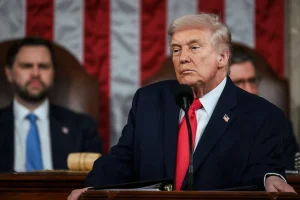
On March 5th, multiple states hold their primary elections simultaneously.
The 2024 presidential elections in the United States are drawing closer. Today, Tuesday, March 5th, marks a crucial phase of the presidential primaries, known as “Super Tuesday.” On this date, multiple states hold their primary elections simultaneously.
The leading candidates, Democrat Joe Biden and former President Donald Trump, have their positions almost secured. However, Super Tuesday could represent the last opportunity for Nikki Haley, former Governor of South Carolina, to challenge Trump for the Republican nomination.
Super Tuesday comprises 15 contests for Republicans and 16 for Democrats across the country, awarding a significant number of delegates to both parties. So far, Biden has dominated the primaries, while Trump has only lost one contest.

This event, part of the modern primary system that has grown in recent decades, has an interesting history. Originating in the 1980s, it was first used by Southern Democrats to influence the selection of a moderate candidate, although this objective hasn’t always been achieved.
Which states are participating?
A broad cross-section of the country will participate in Super Tuesday. This year, it will take place in 16 states, and voters will head to the polls in all time zones of the continental US, from Alabama to Alaska, and from California to Texas.
Duration of Super Tuesday and the primaries
The primaries do not conclude on Super Tuesday. It is expected that neither of the candidates will secure the majority of delegates until later, between March 12th and 19th. In any case, the primaries will continue until early June. Conventions will not take place until July for Republicans and August for Democrats.
The primaries will also provide additional information about the strengths and weaknesses of the leading candidates, as major campaigns test their positions with key sectors of the electorate in a country that appears as divided as ever. Within the parties, ideological battles will be fought in primaries with relatively low participation.

Dalilah Law seeks to remove non-english speaking commercial drivers
President Donald Trump proposed the “Dalilah Law,” an initiative aimed at prohibiting undocumented immigrants from obtaining commercial driver’s licenses. On February 24, President Donald Trump

FORMULA 1 and the AI That Could Transform Transportation in the U.S.
The artificial intelligence system that Formula 1 implemented to monitor every car on every turn is opening the door to new applications in trucking, logistics,
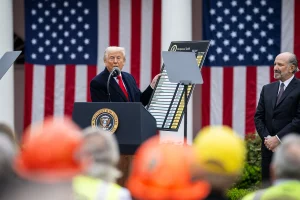
$170 billion at stake: 1,500 companies demand tariff refunds
Companies have challenged the global tariffs imposed by President Donald Trump, asking federal courts to reactivate proceedings to begin the refund process. The companies that

In brief: enforcement measures target speeding, CDL training gaps and more
Major enforcement actions across the U.S., including speeding, CDL fraud, and chain violations Colorado launches Speed Enforcement Program The Colorado Department of Transportation (CDOT) has

Chinese Vehicles Raise Espionage and Remote Sabotage Concerns
Investigations into Chinese technology in connected vehicles warn of espionage risks, massive data transmission, and potential remote access vulnerabilities that concern U.S. transportation and security
Between the Court and the Fed: the market redefines its roadmap for 2026
Trade policy in limbo as markets price in 2026 rate cuts and Supreme Court strikes down Trump tariff plan. In the latest episode of the