“Move Over or Slow Down” and autonomous vehicle regulations require drivers to change lanes or reduce speed when approaching stopped vehicles on the road and establish permits for the operation of self-driving cars.
On September 1, 2025, Texas implemented a groundbreaking transportation law that combines two major priorities: strengthening road safety through stricter “Move Over or Slow Down” rules and setting the first statewide framework for autonomous vehicle (AV) operations. The legislation aims both to protect lives in immediate traffic situations and to prepare for the rapidly evolving future of automated mobility.
Protecting Lives Through the “Move Over or Slow Down” Rule
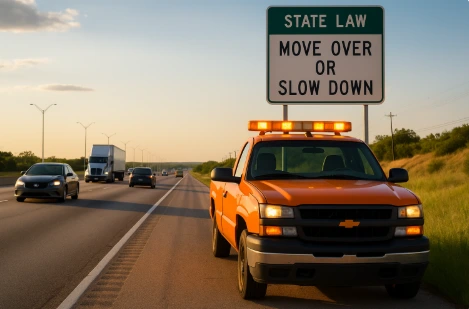
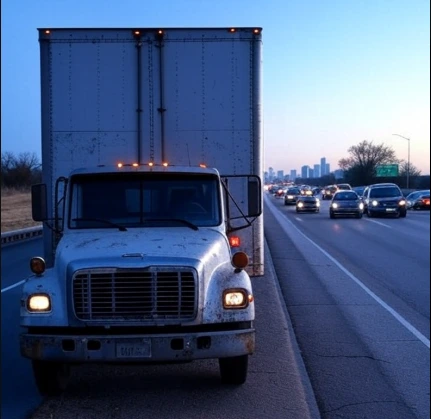
The first part of the new law expands on what is known nationwide as the “Move Over Law.” Drivers traveling on multi-lane roads in Texas must now change lanes when approaching a stopped vehicle with flashing lights—including police cruisers, tow trucks, ambulances, fire engines, or even highway maintenance crews.
If traffic conditions make a lane change unsafe, drivers are required to slow down significantly:
- On roads with posted speed limits above 25 mph, drivers must reduce their speed by at least 20 mph below the limit.
- On roads with limits of 25 mph or less, the maximum speed when passing is 5 mph.
The penalties are steep. Fines start at $1,250 for a first violation and can climb to $4,000 if the violation results in a crash causing property damage or injuries. In severe cases, jail time is also possible.
The law responds to a troubling trend. According to the Texas Department of Transportation, more than 250 accidents per year occur when drivers fail to move over or slow down for emergency vehicles. These crashes have injured and even killed first responders and roadside workers. State officials believe that strong financial penalties will serve as a deterrent and help create a culture of safer driving.

Regulating the Future: Autonomous Vehicles in Texas
The second component of the law addresses the fast-growing presence of autonomous vehicles. With companies testing AVs in Austin, Houston, and Dallas, lawmakers sought to avoid a regulatory gap that could put road users at risk.
Under the new framework, all autonomous vehicles operating on Texas roads must obtain a special permit from the Department of Motor Vehicles (DMV). Requirements include:
- Emergency response plans
- Fail-safe shutdown procedures
- Insurance coverage tailored to AV operations
One controversial exception was included: Tesla’s robotaxi service in Austin is exempt because it still uses human monitors inside the vehicles. Safety advocates argue this carve-out gives preferential treatment to one company and may weaken public trust in AV oversight.
A Model for Other States
Texas’s approach is being closely watched nationwide. The stricter “Move Over or Slow Down” law could serve as a model if accident reductions are proven, while the AV permitting system offers one of the first large-scale attempts at regulating autonomous mobility in the U.S.
For the trucking and passenger transport industries, the law also raises practical questions:
- How will tougher penalties affect insurance costs and route planning?
- Will the AV permit process slow down deployment or increase operating expenses?
Industry analysts suggest that over time, these regulations could enhance Texas’s reputation as a state with safer highways and innovative but accountable transportation systems.
Balancing Safety and Innovation
By merging stronger “Move Over or Slow Down” rules with new AV requirements, Texas has positioned itself as a leader in both road safety and transportation technology regulation. The law sends a clear message: whether you are driving past a tow truck with flashing lights or sharing the road with a self-driving car, responsibility and safety come first.

Freedom 250 Grand Prix Set to Make History in America’s Capital
Organized by INDYCAR in collaboration with the White House, the “Freedom 250 Grand Prix” will combine high-speed racing with a celebration of American patriotism.

Safe Driver Week 2026 Begins: Stay Prepared
The Safe Driver Week by the Commercial Vehicle Safety Alliance (CVSA), officially began on July 12.

ICE Expands Inspections for Truck Drivers: Required Documents
ICE agents have joined commercial vehicle inspections at selected U.S. weigh stations. Drivers should be prepared to present a valid CDL, vehicle documents, proof of legal work authorization, and meet the federal English proficiency requirement.

Common DOT Violations and How to Avoid Them
Common Department of Transportation (DOT) violations for truck drivers in Texas and California and how to avoid them.

New World Screwworm Cases Rise in Texas as Origin Remains Unknown
Uncertainty surrounds the spread of the New World screwworm in Texas; experts still don’t know how it entered the U.S.

Cyclospora Outbreak: How to Protect Your Health on the Road
The Cyclospora outbreak has already sickened more than 1,400 people in states including Michigan, Ohio, Illinois, Indiana, New York, North Carolina, and Texas. For truck drivers, recognizing the symptoms and preventing dehydration could make the difference between a safe trip and an unexpected stop.