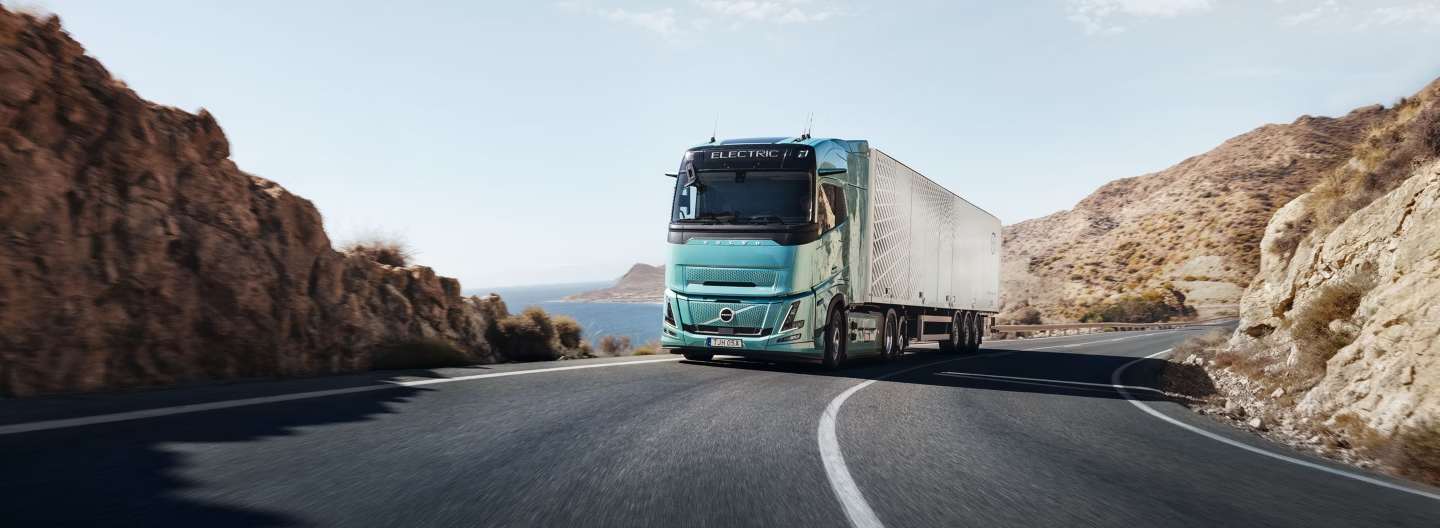
Study reveals various types of incidents involving trucks and the victim groups involved
A study by Volvo Trucks on the most common road accidents reveals various incidents involving trucks and the affected victim groups. The aim of this study is to prevent and raise awareness about these accidents to enhance road safety. According to the company’s classification, eight types of accidents are identified, categorized into three groups of affected parties.
Driving a truck requires utmost concentration and responsibility from both the driver and other road users. Familiarizing oneself with different accident types helps transport companies implement necessary measures to ensure driver safety.
Serious injuries and fatalities in accidents involving heavy trucks typically fall into one of these three categories:
- Vehicle occupants: 55-65%
- Pedestrians and cyclists: 25-30%
- Truck occupants: 10-15%
Most common types of truck accidents
1. Run-off-road accidents
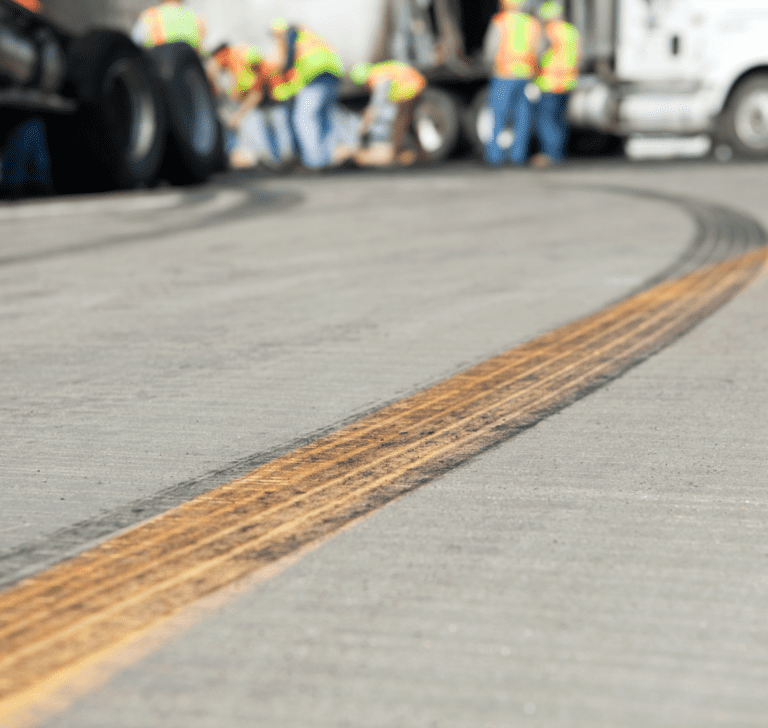
When a truck leaves its lane and goes off-road, often resulting in rollovers or collisions with objects, accounting for approximately 35-40% of accidents causing serious injuries or death to truck occupants. This type of accident is often caused by driver fatigue or distraction or swerving to avoid obstacles. Other common causes include slippery road conditions or tire blowouts. The main victims of these accidents are truck occupants.
2. Vehicle rollovers
Truck rollovers are mainly caused by loss of stability, representing about 20% of accidents resulting in serious or fatal injuries to vehicle occupants. This type of accident is typically caused by driving at inappropriate speeds for conditions, combined with factors such as inexperienced drivers, unstable loads, and slippery road conditions. The main victims of these incidents are truck occupants.

3. Head-on collisions with another vehicle
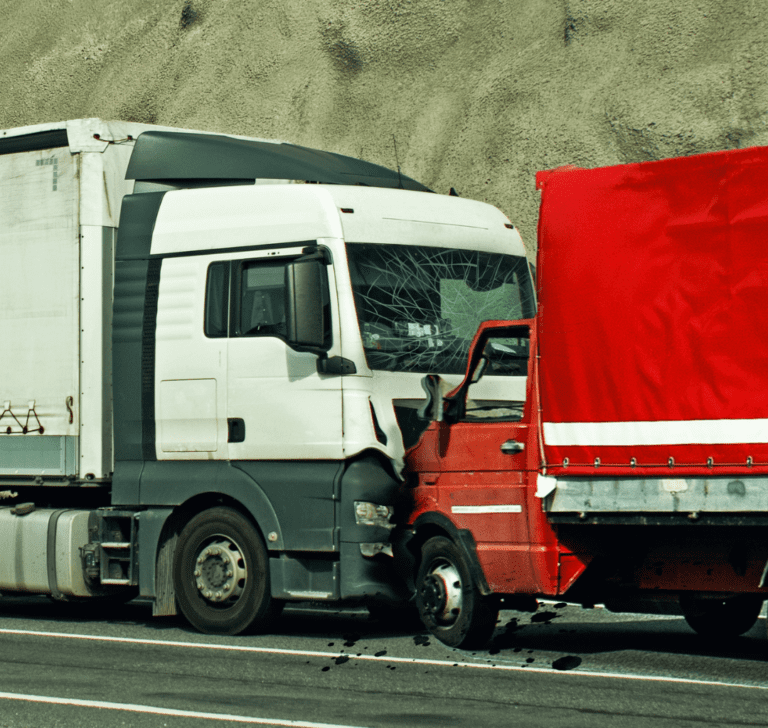
Head-on collisions between trucks and oncoming vehicles account for 5-15% of accidents resulting in serious or fatal injuries to truck occupants, and 25-35% of accidents causing serious or fatal injuries to car occupants. These collisions are often caused by cars veering into the truck’s lane. When the truck crosses into the opposite lane, causes include driver inattention, curves with poor visibility, tire blowouts, narrow roads, or slippery conditions. The main victims of these accidents are truck occupants and occupants of other vehicles.
4. Rear-end collisions
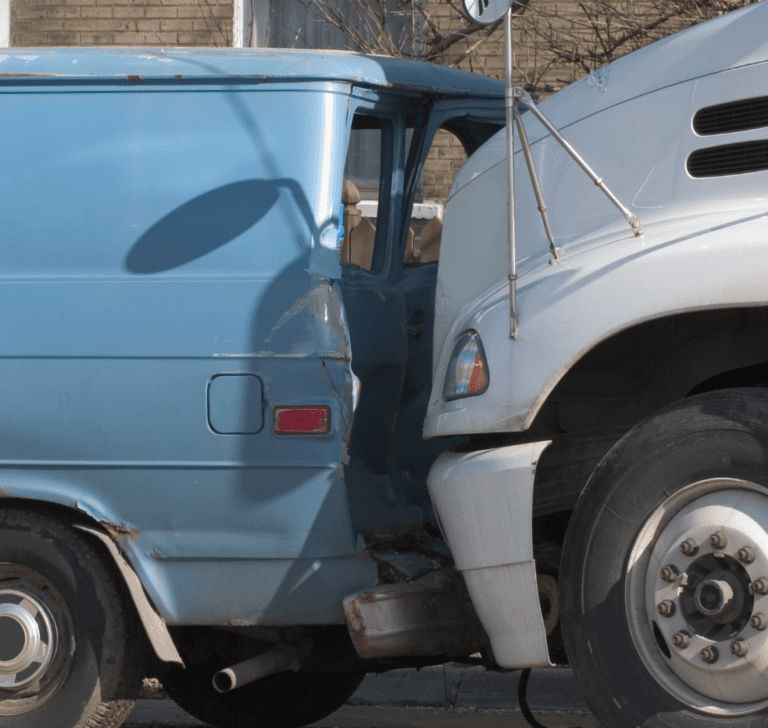
Truck rear-end collisions with vehicles represent 15-25% of accidents resulting in serious or fatal injuries to truck occupants, and about 10% of accidents causing serious or fatal injuries to other vehicle occupants. These are often caused by driver distraction or inattention, following too closely, limited visibility conditions, or slippery roads. Victims of these accidents include both truck occupants and occupants of other vehicles.

5. Lane change accidents
Accidents where a truck collides while changing lanes represent about 15-20% of accidents. Common causes include lack of attention and limited visibility. In these accidents, the main victims are occupants of other vehicles.
6. Frontal collisions with a pedestrian or cyclist
This type of accident constitutes approximately 50% of fatal or serious accidents involving pedestrians or cyclists. Major causes include poor visibility from the truck cabin in 75% of cases, poorly adjusted mirrors, lack of communication between the driver and road users, driver stress, lack of attention, or distraction. The main victims of these incidents are pedestrians and cyclists, considered vulnerable road users.

7. Reversing accidents
Accidents where a truck hits a pedestrian, cyclist, or another vehicle while reversing represent about 12% of truck accidents involving pedestrians. Common causes include obstructed visibility from the truck cabin, unclear routines or lack of awareness, driver stress, lack of attention, or distraction. The main victims of these accidents are vulnerable road users.
8. Turning collisions
This type of accident represents approximately 35% of truck accidents with cyclist victims and 15% of accidents with pedestrian victims. The most common causes, in over 70% of cases, are visibility issues from the cabin, especially on the passenger side. Other causes include poorly adjusted side mirrors, lack of communication between the driver and road users, driver stress, lack of attention, or distraction. The main victims of these accidents are vulnerable road users.


Cargo theft report 2025: $725 million in losses
Verisk CargoNet reports that cargo theft crime volumes remained stable, with a sharp increase in total losses. Verisk CargoNet’s 2025 report stated that the total

Ground and Air Transportation Brace for a Weekend of Cancellations and Delays
A historic cold wave is set to disrupt ground and air transportation across the United States, bringing cancellations, delays, and operational restrictions to highways, airports, and essential services throughout the weekend. Federal authorities have activated emergency plans in response to a major winter storm expected to deliver snow, ice, and extreme temperatures to large portions of the country.

Geopolitical tensions and the dispute between Trump and the Federal Reserve
The United States is going through a complex geopolitical environment along with internal tensions between President Donald Trump and the Federal Reserve. In the latest

Polar Vortex Puts U.S. Roads on Alert
A powerful polar vortex outbreak is triggering a widespread winter storm across the United States, bringing snow, ice, and extreme cold to major freight corridors. The event poses a serious risk to trucking operations, road safety, delivery schedules, and commercial vehicle insurance exposure.

DOT unveils possible AI strategy to enforce CDL regulations
The DOT is looking to adopt AI and advanced data analytics to improve the accuracy and effectiveness of enforcement measures. On January 14, the 105th

U.S. Trucking Defies the January Slowdown
Contrary to seasonal patterns, the U.S. trucking market entered 2026 without the traditional January slowdown. Capacity, pricing, and demand indicators suggest the industry remains tighter than expected, driven by inventory shifts, resilient consumer spending, and a reconfiguration of supply chains.