The U.S. Interstate System connects all 50 states through a network of controlled-access highways that boost freight transportation.
The railroad used to be the primary means of freight transportation in the United States, due to the limited capacity of trucks and the poor quality of roads. However, the context of World War I triggered a change that transformed road transport routes. More than a century later, the U.S. Interstate System connects all 50 states through a network of controlled-access highways. These roads enable the efficient transportation of goods by trucks, which, in 2024, moved 72.7% of the country’s total freight.
As trucks proved their flexibility and effectiveness, road infrastructure was strengthened to support heavier and more powerful vehicles. Although there were debates between truck manufacturers and road builders about the damage these vehicles could cause, the expansion of divided highways allowed the boom in road transport, which continues to be vital to the U.S. economy.

Building the roads to carry loads
In its early days, road transportation focused on the construction of infrastructure to facilitate the transport of goods, a concept championed by Thomas H. MacDonald, head of the U.S. Bureau of Public Roads. MacDonald emphasized that the expansion of highways, especially those connecting major cities, generated cost savings that justified their construction. “Build the roads to carry loads” was the slogan of the early advocates of road building, while the opposition pressed to limit freight to the existing infrastructure.
During World War I, the slow progress and constant breakdowns of vehicles on expeditions highlighted the urgency of developing a more efficient road system, essential for both national defense and the country’s economic and population growth.
In 1919, Lieutenant Colonel Dwight D. Eisenhower participated in a U.S. Army transport mission, and his report on the journey helped lay the foundation for the country’s interstate highway system. It was then that, in 1926, the U.S. Numbered Highway System was created, formalizing routes like U.S. Route 1 and U.S. Route 30, which were key parts of the Lincoln Highway.
However, surface roads became inefficient and dangerous as traffic increased. Eisenhower proposed a network of highways connecting all U.S. cities with at least 50,000 inhabitants, emphasizing the importance of transportation for national unity. Despite opposition from railroad interests and legislative challenges, the Federal-Aid Highway Act of 1956 enabled the funding and development of the interstate highway system we know today.
A highway system that boosted the U.S. economy
The Dwight D. Eisenhower National System of Interstate and Defense Highways was completed in 1992 with the opening of I-70 in Glenwood Canyon, Colorado, 23 years later than the scheduled deadline and at a cost of $425 billion, far higher than the initial estimate of $25 billion. Although the system was delayed and exceeded the budget, Eisenhower believed its economic impact would be invaluable, creating jobs and opening up rural areas.
Between 1957 and 1996, the interstate highway system boosted the U.S. economy by trillions of dollars, increasing national productivity by 25%. Although it was declared finished during George H.W. Bush’s presidency, the system continues to expand and was not fully completed. However, as the interstate system grew, so did the trucking industry.
Through an interconnected highway system, the road transport industry was able to offer much lower shipping costs than the railroad. The development of intermodal containers benefited both overseas importers and exporters, as it facilitated the transport of goods by truck between trains and ports. In this way, highways have undergone an evolution of more than a century, becoming the main hub of road transportation.

The best roadside attractions for truckers in the U.S.
America’s highways hide unique places that break up the routine, don’t hesitate to check out these roadside attractions along the way. The road is much

The trucker style: comfort, function, and identity
Truckers’ style is much more than workwear; it’s an identity. These are the most commonly worn garments among truckers. Truckers’ style is much more than

Chaos on Highway 61: Viral Wrong-Way Truck Video Reignites the CDL Debate
An 80-ton tractor-trailer traveling miles in the wrong direction on Missouri’s Highway 61 has reignited a nationwide debate over Commercial Driver’s License (CDL) standards, training

How technology affects driver retention
Friend or foe? 52% of drivers say technology directly influences their decision to stay with or leave a fleet. Fleet telematics company Platform Science published

Dalilah Law seeks to remove non-english speaking commercial drivers
President Donald Trump proposed the “Dalilah Law,” an initiative aimed at prohibiting undocumented immigrants from obtaining commercial driver’s licenses. On February 24, President Donald Trump
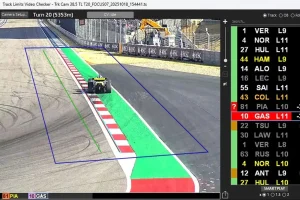
FORMULA 1 and the AI That Could Transform Transportation in the U.S.
The artificial intelligence system that Formula 1 implemented to monitor every car on every turn is opening the door to new applications in trucking, logistics,