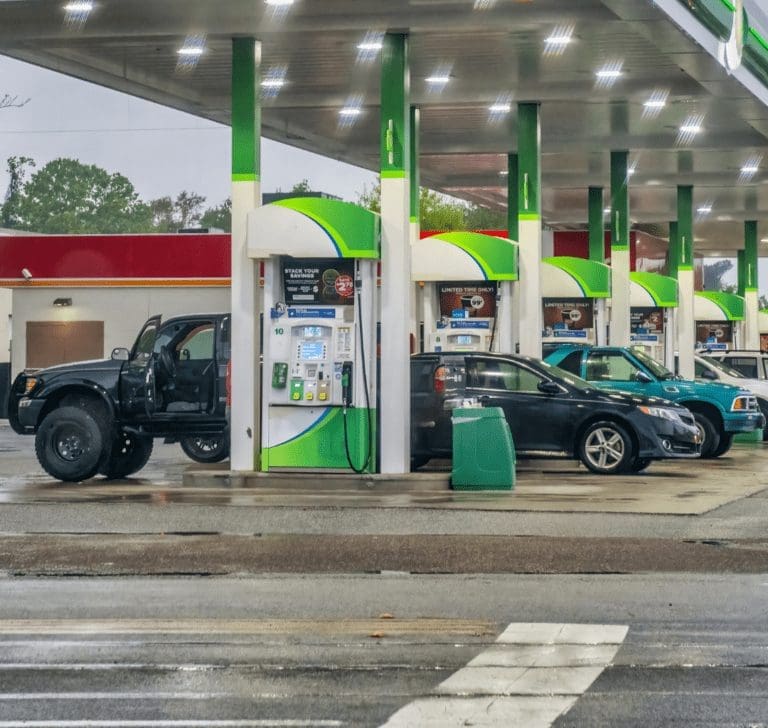
The EIA has reported that gasoline and diesel prices continue a gradual downward trend.
The United States is preparing for the presidential elections, and as historic events approach in the coming days, the Energy Information Administration (EIA) has reported that gasoline and diesel prices continue a gradual downward trend. According to the latest data, the average price of on-road diesel has decreased to $3.536 per gallon, representing a 3-cent drop from last week and 83 cents less compared to the same time last year.

Regional differences in diesel prices
Although the general trend is downward, regional variations are notable. In California, diesel prices fell by less than a penny, remaining at $4.681 per gallon. In contrast, both the East Coast and West Coast saw more modest drops, with only a 1-cent decline per gallon. On the West Coast, excluding California, diesel prices decreased by 2 cents.
The steepest declines were recorded in the Gulf Coast, Midwest, and Rocky Mountain regions. In the Gulf Coast, the price of diesel dropped by 4 cents, while in the Midwest, the decline was 5 cents. In this context, the Gulf Coast remains the most affordable region for diesel fuel, while California continues to be the most expensive.
The average diesel price per gallon by region is as follows:
- Lower Atlantic: $3.500
- Central Atlantic: $3.792
- California: $4.681
- East Coast: $3.590
- West Coast: $4.190
- Gulf Coast: $3.184
- Midwest: $3.517
- Rocky Mountains: $3.583
- New England: $3.753

Gasoline: similar trend
Gasoline prices have also followed a similar trend, with a nationwide decrease of 2 cents, averaging $3.069 per gallon. As for the regions where gasoline prices fell, the Gulf Coast saw a 2-cent reduction, reaching $2.619 per gallon, and the West Coast experienced a drop to $3.945 per gallon. In California, the price decreased by 3 cents to $4.292, while the East Coast saw a more significant decline of 5 cents, reaching $2.992 per gallon. In the Rocky Mountains, gasoline prices dropped by 9 cents to $3.103 per gallon.
Despite a slight interruption in the price trend due to hurricanes Helene and Milton, gasoline prices have resumed their gradual decline after the summer peak season. With these decreases, the Gulf Coast remains the cheapest region for gasoline, while California is still the most expensive, although prices in general are moderating as we approach the end of the year.

In Brief: FMCSA CDL Exemption, EPA Emissions Delay, and ELD Revocations
FMCSA and EPA introduce policy shifts for trucking and automotive industries.

Motor Oil Crisis Hits Trucking Industry as Supply Chain Disruptions Deepen
The conflict between the United States and Iran, combined with restrictions in the Strait of Hormuz, is now disrupting global motor oil supplies, driving up prices, reducing availability and creating new operational pressure for fleets and owner-operators across the United States.

4,000 Brake Inspections Led to Commercial Vehicles Being Removed from Service
The CVSA conducted inspections of commercial vehicles across North America as part of Brake Safety Day.

U.S. Bill Seeks to Create Federal Standards for Autonomous Trucks
As part of the BUILD America 250 Act, a comprehensive federal regulatory framework for the deployment of autonomous trucks in the United States has been proposed.

Freight: America’s New Push to Modernize Roads, Ports and Supply Chains
The U.S. Department of Transportation unveiled the 2026 National Freight Strategic Plan, a roadmap to upgrade a nearly seven-million-mile freight network that moves more than 54 million tons of goods every day. The announcement comes amid growing industrial activity, reshoring and mounting pressure on America’s logistics infrastructure.

World Cup 2026: The truckers are well insured and ready to be champions
The championship will turn US highways into a logistical hive of activity. A massive challenge that will require securing every truck and its cargo before the starting whistle. The numbers behind this huge business.