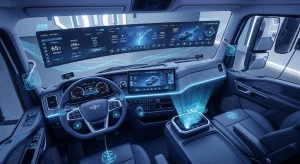
Uber Technologies Inc. has announced a new strategic partnership with Lucid Group Inc. and Nuro Driver.
Uber Technologies Inc. has announced a new strategic partnership to launch a fleet of robotaxis in a major U.S. city. The transportation company will collaborate with electric vehicle manufacturer Lucid Group Inc. and autonomous driving technology company Nuro on this ambitious project.
On July 17, Uber issued a statement revealing its plans to purchase and operate Lucid Gravity SUV vehicles equipped with Nuro Driver autonomous driving systems, to be integrated into its ride-sharing network. The company expects to roll out the first vehicle by the end of 2026 in a yet-to-be-disclosed U.S. city. It has also set a goal of deploying at least 20,000 robotaxis over the next six years.

Uber strengthens its robotaxi ambitions through new strategic alliances
In recent months, Uber has announced several partnerships with tech developers such as Waymo and Volkswagen Group. Its most recent agreement with Lucid Motors and Nuro reinforces its aim to become the leading commercial platform for robotaxis in the United States. Currently, Uber already offers autonomous rides in cities like Phoenix, Austin, and Atlanta.
Competition in the sector is heating up. Tesla Inc., for instance, has begun rolling out its robotaxi service in Austin, with plans to expand to other cities. In response, Uber continues to strengthen its network of alliances to position itself as a key competitor in the market.
Uber’s collaboration with Nuro began in 2022, initially focused on food delivery robots. In 2023, Nuro shifted its focus from manufacturing custom vehicles to developing autonomous software.
For Lucid Motors, one of the few EV manufacturers in the U.S., this alliance also marks a significant milestone. The company aims to position its second vehicle model, the Gravity, and is targeting production of 20,000 units in 2025, more than double the previous year, according to Transport Topics.
Prototypes of the robotaxis developed jointly by Lucid and Nuro are already being tested at Nuro’s closed test track in Las Vegas.

Technology expansion for Uber and Lucid
Lucid’s interim CEO, Marc Winterhoff, explained that Uber chose the Gravity SUV because Lucid is able to integrate the required autonomous hardware directly into its manufacturing process. Nuro’s software will be added once Uber receives the vehicles. Back in May, Winterhoff had mentioned that Lucid was in advanced talks with partners about using the Gravity for autonomous vehicle applications.
In an interview with Bloomberg, Winterhoff stated that this collaboration represents another step in Lucid’s broader technological expansion—from electric vehicles and licensing to partnerships in other domains. He emphasized that much can change over six years, viewing this agreement as a starting point.

TAA Compliance: When Safety Complaints Turn Into Six-Figure Losses
STAA compliance is no longer a technical detail for fleet owners—it is a financial, legal, and insurance exposure. A recent enforcement action in Texas shows how mishandling safety complaints can lead to termination claims, retaliation findings, and six-figure penalties, and what carriers must do to avoid becoming the next case

U.S. labor market raises red flags on Wall Street
The U.S. labor market closed 2025 with clear signs of weakening, as evidenced by the latest employment data released in December. In the latest episode

DOT finds half of North Carolina CDLs were issued illegally
The DOT warns that half of North Carolina’s CDL licenses are irregular after a federal audit uncovered serious compliance failures. The findings directly affect truckers, fleets, and transportation companies, raising urgent questions about road safety, legal operations, and the future of the trucking industry.

California’s Unhealthy Air: Impacts on Trucking and Freight
Unhealthy Air Quality in California: What Repeated Pollution Alerts Mean for Trucking and Freight Operations

Global Road Freight on Track to Hit USD 5 Trillion by 2033
Global Road Freight on Track to Hit USD 5 Trillion by 2033 as e-commerce growth, supply chain restructuring, and technology adoption accelerate demand for road-based cargo transport worldwide.

California misses DOT deadline risking $160 million in federal funding
The state of California has reached the deadline set by the DOT to take action regarding the situation involving the number of non-domiciled CDLs issued