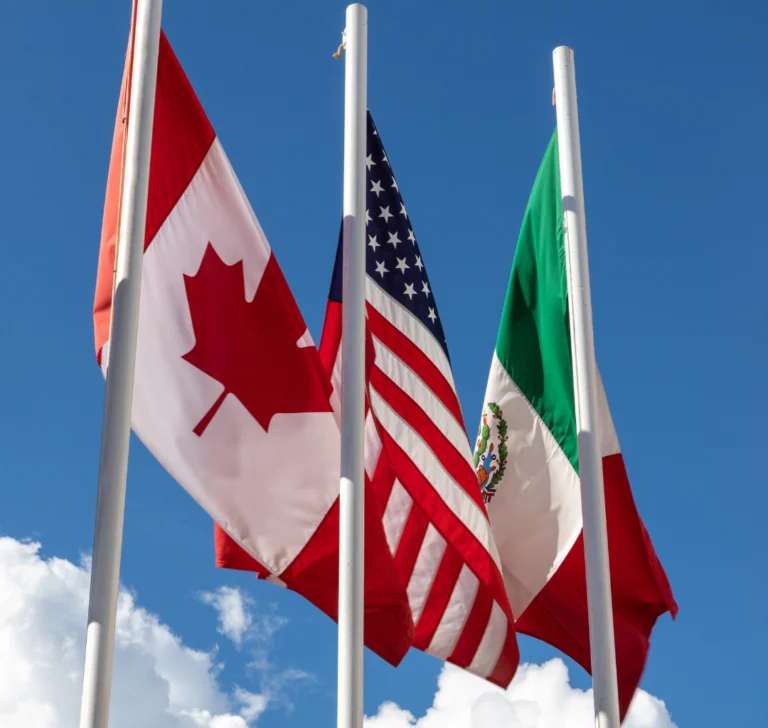
The United States-Mexico-Canada Agreement (USMCA) protects the vast majority of goods from Canada and Mexico from tariffs.
The tariffs established last week by President Donald Trump, set to take effect on August 7, have raised concerns in international markets, particularly in neighboring countries Mexico and Canada.
With tariffs of up to 35% on Canadian products and 25% on Mexican imports, the market is experiencing instability. However, a key clause in the United States-Mexico-Canada Agreement (USMCA) protects the vast majority of goods from Canada and Mexico from these tariffs.

The USMCA exempts most Canadian and Mexican products from tariffs
Products that meet the criteria of the USMCA, negotiated by Trump himself during his first term, are exempt from the new tariffs. This has significantly mitigated the impact of the trade measures.
In Canada, the Bank of Canada reports that 100% of energy exports and 95% of other exports comply with the USMCA. Additionally, the Royal Bank estimates that in April, nearly 90% of Canadian exports entered the U.S. market tariff-free.
Canadian Prime Minister Mark Carney stated that over 85% of bilateral trade with the United States remains free of tariffs and praised the agreement as an anchor of stability in a volatile trade environment.
Meanwhile, in Mexico, Trump has also imposed a 25% tariff on certain imports. However, this tariff only affects goods not covered by the USMCA. Mexican President Claudia Sheinbaum stated that Mexico remains the best-positioned country in the new global trade order thanks to the agreement. Economy Secretary Marcelo Ebrard confirmed that over 84% of trade with the United States is not subject to tariffs.
Some of the products covered under the USMCA include:
- Agricultural products
- Automobiles and auto parts
- Electronics
- Textiles
- Dairy products
- Energy products
- Wood and wood-derived products
- Metals
While the USMCA provides a critical shield, Trump has signaled his intention to renegotiate the agreement in 2026, when it is scheduled for review.

Impact on strategic sectors from tariffs
Despite the exemptions, Trump has imposed targeted tariffs on key sectors as part of Section 232 measures:
- 50% on steel and aluminum
- 25% on automobiles (except those manufactured in Canada and Mexico)
Prime Minister Carney noted that strategic industries such as automotive, steel, aluminum, copper, pharmaceuticals, semiconductors, and softwood lumber are being severely affected. On August 5, Carney announced a support package for the lumber sector.

Jerome Powell under investigation as tensions between Trump and the Fed escalate
The investigation into Powell has raised global concerns over a potential threat to the independence of the U.S. central bank. In the new episode of

Road Alert: 25 States Under Extreme Driving Conditions
Snow, ice, strong winds, and low visibility are keeping major highways under active travel advisories. The alert now affects 25 states and calls for extra caution, especially among truck drivers and freight carriers operating along key corridors.

Human Trafficking: A Nationwide Call to Action on America’s Roads
Human trafficking is the focus of a nationwide awareness week aimed at educating truck drivers, motor carriers, law enforcement, and the public about human trafficking, how to spot the warning signs, and what to do if someone may be in danger.

TAA Compliance: When Safety Complaints Turn Into Six-Figure Losses
STAA compliance is no longer a technical detail for fleet owners—it is a financial, legal, and insurance exposure. A recent enforcement action in Texas shows how mishandling safety complaints can lead to termination claims, retaliation findings, and six-figure penalties, and what carriers must do to avoid becoming the next case

U.S. labor market raises red flags on Wall Street
The U.S. labor market closed 2025 with clear signs of weakening, as evidenced by the latest employment data released in December. In the latest episode

DOT finds half of North Carolina CDLs were issued illegally
The DOT warns that half of North Carolina’s CDL licenses are irregular after a federal audit uncovered serious compliance failures. The findings directly affect truckers, fleets, and transportation companies, raising urgent questions about road safety, legal operations, and the future of the trucking industry.