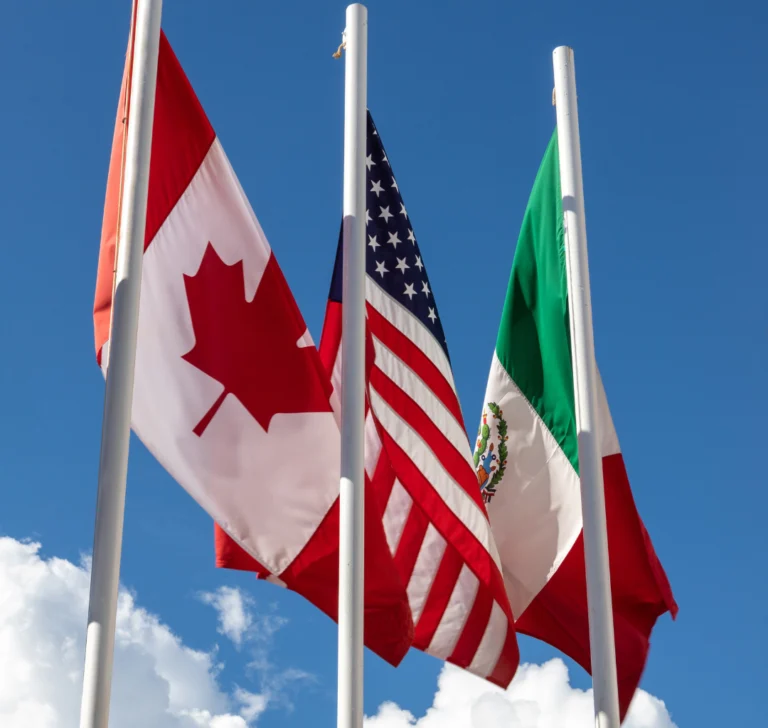
The United States-Mexico-Canada Agreement (USMCA) protects the vast majority of goods from Canada and Mexico from tariffs.
The tariffs established last week by President Donald Trump, set to take effect on August 7, have raised concerns in international markets, particularly in neighboring countries Mexico and Canada.
With tariffs of up to 35% on Canadian products and 25% on Mexican imports, the market is experiencing instability. However, a key clause in the United States-Mexico-Canada Agreement (USMCA) protects the vast majority of goods from Canada and Mexico from these tariffs.

The USMCA exempts most Canadian and Mexican products from tariffs
Products that meet the criteria of the USMCA, negotiated by Trump himself during his first term, are exempt from the new tariffs. This has significantly mitigated the impact of the trade measures.
In Canada, the Bank of Canada reports that 100% of energy exports and 95% of other exports comply with the USMCA. Additionally, the Royal Bank estimates that in April, nearly 90% of Canadian exports entered the U.S. market tariff-free.
Canadian Prime Minister Mark Carney stated that over 85% of bilateral trade with the United States remains free of tariffs and praised the agreement as an anchor of stability in a volatile trade environment.
Meanwhile, in Mexico, Trump has also imposed a 25% tariff on certain imports. However, this tariff only affects goods not covered by the USMCA. Mexican President Claudia Sheinbaum stated that Mexico remains the best-positioned country in the new global trade order thanks to the agreement. Economy Secretary Marcelo Ebrard confirmed that over 84% of trade with the United States is not subject to tariffs.
Some of the products covered under the USMCA include:
- Agricultural products
- Automobiles and auto parts
- Electronics
- Textiles
- Dairy products
- Energy products
- Wood and wood-derived products
- Metals
While the USMCA provides a critical shield, Trump has signaled his intention to renegotiate the agreement in 2026, when it is scheduled for review.

Impact on strategic sectors from tariffs
Despite the exemptions, Trump has imposed targeted tariffs on key sectors as part of Section 232 measures:
- 50% on steel and aluminum
- 25% on automobiles (except those manufactured in Canada and Mexico)
Prime Minister Carney noted that strategic industries such as automotive, steel, aluminum, copper, pharmaceuticals, semiconductors, and softwood lumber are being severely affected. On August 5, Carney announced a support package for the lumber sector.

Cargo Theft Increases During Memorial Day Weekend
Warning issued to carriers over rising cargo theft risk during Memorial Day weekend

Trucking Compliance Checklist (2026): What Does a Truck Driver Need to Stay Compliant?
Based on the most common questions, we created the basic compliance checklist every road driver needs to know.

Fraud in Trucking: New Biometric System Targets Shell Companies
The new system aims to stop fraud in the trucking industry through biometric controls, identity verification, and stricter federal oversight of carriers and commercial operators.

Memorial Day Traffic Expected to Reach Record Levels Across the U.S.
The American Automobile Association (AAA) predicts that this year will see a historic record number of travelers during the Memorial Day holiday.

Average Weekly Salary for U.S. Truck Drivers Reaches $1,804 in Q1 2026
The average weekly salary for company truck drivers increased by 11% during the first quarter of 2026, reaching an average of $1,804 per week.

World Cup 2026: Economic Impact Under Pressure
While FIFA projects record-breaking economic impact for the 2026 World Cup, sectors linked to tourism, hospitality, and logistics warn that the real scenario could be far more complex, with rising costs, operational strain, and infrastructure challenges across several host cities.