 Hable con un agente al (888) 572-7520
  Enviar mensaje a un agente



For many years, purchasing commercial truck insurance was a relatively straightforward process. A driver’s record, years of experience, type of equipment, and vehicle value formed the foundation upon which insurers calculated risk.
Modern trucking, however, has fundamentally changed that model.
Today, the same driver may receive dramatically different insurance quotes depending on the type of freight they haul, the transportation corridors they operate on, the technology installed in their truck, and the logistics environment in which they work.
In states like Washington—where international ports, cross-border commerce, major interstate corridors, and one of the nation’s most dynamic economies intersect—that transformation is especially evident.
Insurance No Longer Protects Only the Truck
One of the most significant changes of the past decade is conceptual.
Insurance companies no longer view themselves as insuring only a commercial vehicle. Instead, they evaluate the financial risk of an entire trucking operation.
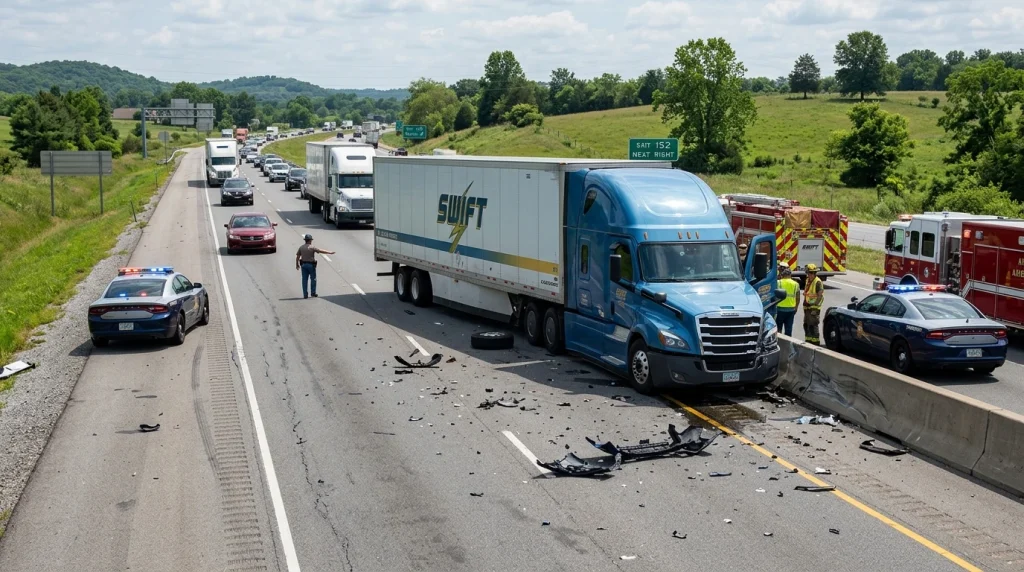
When a commercial truck is involved in a crash, the final cost extends far beyond repairing the equipment.
Depending on the circumstances, claims may include:
Property damage
Bodily injury
Medical expenses
Legal defense costs
Cargo loss or damage
Business interruption
Contractual claims
Downtime and operational losses
As a result, modern underwriting has become considerably more sophisticated.
A Shift Recognized by the FMCSA
The evolution of commercial trucking insurance is not merely an industry perception.
In its 2026 Report to Congress on Financial Responsibility Requirements for Motor Carriers, the Federal Motor Carrier Safety Administration (FMCSA) concluded that evaluating insurance adequacy requires considering changes in claim costs, litigation trends, insurance market conditions, and the overall evolution of the trucking industry.
The report represents one of the most comprehensive federal assessments of commercial motor carrier insurance published in recent years.
Insurance Costs Are Rising Even as Crash Rates Decline
One of the most interesting findings comes from research published in 2026 by the American Transportation Research Institute (ATRI).
Between 2021 and 2024, average truck liability insurance premiums increased 18.6%, reaching approximately 10.2 cents per mile.
Yet during that same period, the heavy-truck crash rate declined 2.6% across the industry.
At first glance, the numbers appear contradictory.
The explanation is straightforward. ATRI concluded that premium increases were driven primarily by the rising cost of claims—not by a comparable increase in the number of accidents.
In other words:
Accidents may be occurring less frequently, but each individual claim is becoming significantly more expensive.
The Real Issue: Claim Severity
The same ATRI research found that liability losses measured per mile increased 33.1% between 2021 and 2024 among the trucking companies analyzed.
That statistic helps explain why many carriers experience premium increases despite maintaining strong safety records.
For insurers, the central question is no longer simply:
How often will an accident occur?
Today, another question has become equally important:
How expensive will that accident be if it happens?
The Impact of Nuclear Verdicts
Another major force reshaping commercial trucking insurance is the rise of nuclear verdicts—jury awards involving exceptionally large financial damages.

The FMCSA’s Report to Congress references ATRI research examining approximately 600 trucking-related court cases between 2006 and 2018.
The findings reveal a dramatic trend:
Between 2005 and 2011, researchers identified 79 verdicts exceeding $1 million.
Between 2012 and 2019, that number rose to 265 cases, an increase of approximately 235%.
The average value of million-dollar-plus verdicts reached $3.1 million, while verdicts between 2010 and 2018 averaged $22.3 million.
After adjusting for inflation and medical costs, these awards increased between 36.5% and 37.6% beyond broader economic indicators.
For insurance companies, numbers like these fundamentally change the way risk is priced.
A single catastrophic lawsuit can materially affect the financial performance of an insurer’s entire portfolio.
What Do Insurers in Washington Evaluate Today?
Although every insurance company uses its own underwriting models, today’s evaluation process considers far more variables than it did only a few years ago.
Among them are:
Safety inspection history and regulatory compliance
Type of freight transported
Percentage of urban versus interstate operations
Frequency of port and distribution center access
Operations along heavily congested freight corridors
Use of dash cameras and telematics
Preventive maintenance programs
Driver experience and turnover
Internal safety management and risk-control practices
Not every insurer weighs these factors the same way, but the overall trend is unmistakable:
Risk evaluation has become increasingly comprehensive.
Why Washington Presents Unique Challenges
In Washington, many of these underwriting factors become even more significant.
Operations involving Pacific Northwest ports, cross-border freight with Canada, Interstate 5 traffic, and routes through mountainous terrain present operational challenges unlike those found in many other states.
That does not necessarily mean insuring a truck in Washington is more difficult.
It means insurers must evaluate the operating environment in much greater detail.
For an owner-operator, understanding this reality can make the difference between receiving a competitive quote and paying substantially higher premiums.
A New Insurance Paradigm
The trucking industry has evolved.
Roadways are more congested.
Commercial vehicles are increasingly sophisticated.
Cargo values continue to rise.
Litigation has become more expensive.
Supply chains have grown more sensitive to operational disruptions.
As a result, insurance companies have fundamentally changed how they measure risk.
Commercial truck insurance is no longer based solely on a driver’s past performance.
Increasingly, underwriting seeks to anticipate the future risk profile of an entire transportation operation.
Official data support an important conclusion:
The increase in commercial truck insurance costs cannot be explained simply by a higher number of crashes.
Instead, the available evidence points to a far more complex reality—one driven by rising repair costs, higher cargo values, increasing claim severity, and the growing financial impact of large court awards.
Understanding that broader landscape has become essential for trucking companies seeking to manage insurance costs over the long term.
How Can Trucking Companies Reduce Insurance Costs?
Reducing insurance premiums is rarely the result of a single negotiation or last-minute adjustment.
In most cases, lower long-term insurance costs are achieved through consistent risk management.
Carriers that invest in safety programs, preventive maintenance, driver training, compliance, and thorough operational documentation are generally better positioned during the underwriting process and more likely to build long-term relationships with their insurance providers.
In today’s market, the safest operation is often the most insurable one—and, ultimately, the most competitive.
 Business hours: Monday to Friday from 8:00 AM to 5:00 PM. California time