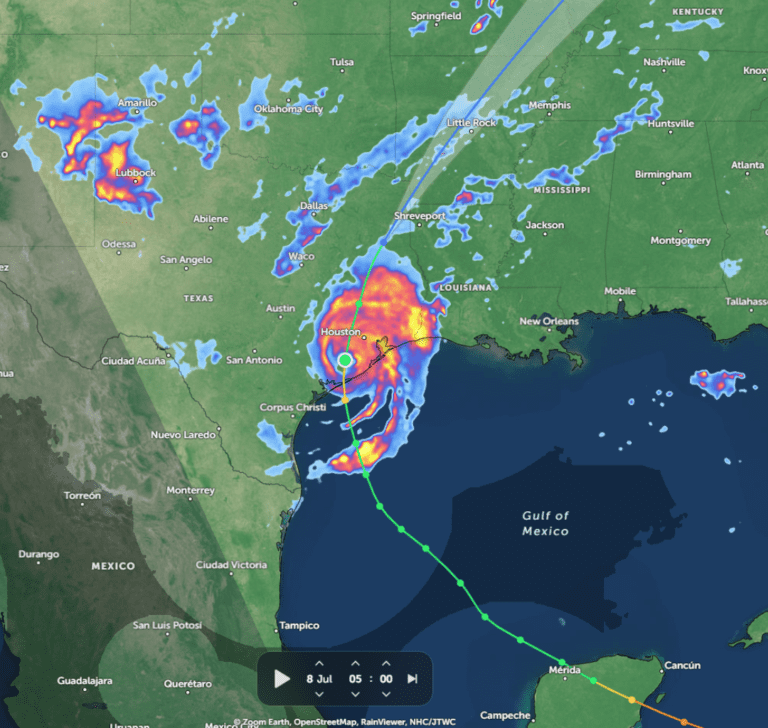
The Houston metropolitan area faces severe challenges following Hurricane Beryl's passage on July 8th
Houston’s metropolitan areas face severe challenges following Hurricane Beryl’s passage on July 8th. The storm, which claimed several lives and unleashed catastrophic floods, left millions without electricity and exposed to dangerous heat conditions in the coming days.
Until Wednesday, a heat advisory remains in effect in parts of Texas, with temperatures potentially reaching 105 degrees Fahrenheit. Widespread power loss has eliminated access to air conditioning in many homes, creating significant risks according to the National Weather Service.
Local authorities have issued a call for residents to stay at home whenever possible, given the risk of prolonged exposure to extreme heat and flooding caused by the hurricane. Inoperative traffic lights and fallen power lines further complicate the situation, creating a hazardous environment for drivers and pedestrians on affected streets.
According to data from PowerOutage.us, more than 2.3 million homes and businesses in the Houston area remain without electricity, although this number has decreased from a peak exceeding 2.7 million on Monday. Authorities are working to restore power as quickly as possible, prioritizing areas most affected by storm damage.
Despite weakening to a tropical depression, Beryl remains a threat as it moves northeast from southwestern Arkansas. Heavy rains and possible flash floods are expected from the Mississippi Valley to the Great Lakes during Tuesday and Wednesday.

Texas ports closed due to hurricane Beryl
Hurricane Beryl has also impacted the supply chain, as ports along the Texas Gulf Coast have ceased operations, halting vessel traffic since early Monday morning in anticipation of heavy rains and potentially deadly storm surges.
The ports of Houston, Corpus Christi, Galveston, Freeport, and Texas City were closed on Sunday morning after the Coast Guard, according to Reuters. Port authorities announced through a statement on platform X that repairs will continue, with an update expected on their reopening later on Tuesday afternoon. For now, all vessel movements and cargo operations are restricted.


Human Trafficking: A Nationwide Call to Action on America’s Roads
Human trafficking is the focus of a nationwide awareness week aimed at educating truck drivers, motor carriers, law enforcement, and the public about human trafficking, how to spot the warning signs, and what to do if someone may be in danger.

TAA Compliance: When Safety Complaints Turn Into Six-Figure Losses
STAA compliance is no longer a technical detail for fleet owners—it is a financial, legal, and insurance exposure. A recent enforcement action in Texas shows how mishandling safety complaints can lead to termination claims, retaliation findings, and six-figure penalties, and what carriers must do to avoid becoming the next case

U.S. labor market raises red flags on Wall Street
The U.S. labor market closed 2025 with clear signs of weakening, as evidenced by the latest employment data released in December. In the latest episode

DOT finds half of North Carolina CDLs were issued illegally
The DOT warns that half of North Carolina’s CDL licenses are irregular after a federal audit uncovered serious compliance failures. The findings directly affect truckers, fleets, and transportation companies, raising urgent questions about road safety, legal operations, and the future of the trucking industry.

California’s Unhealthy Air: Impacts on Trucking and Freight
Unhealthy Air Quality in California: What Repeated Pollution Alerts Mean for Trucking and Freight Operations

Global Road Freight on Track to Hit USD 5 Trillion by 2033
Global Road Freight on Track to Hit USD 5 Trillion by 2033 as e-commerce growth, supply chain restructuring, and technology adoption accelerate demand for road-based cargo transport worldwide.