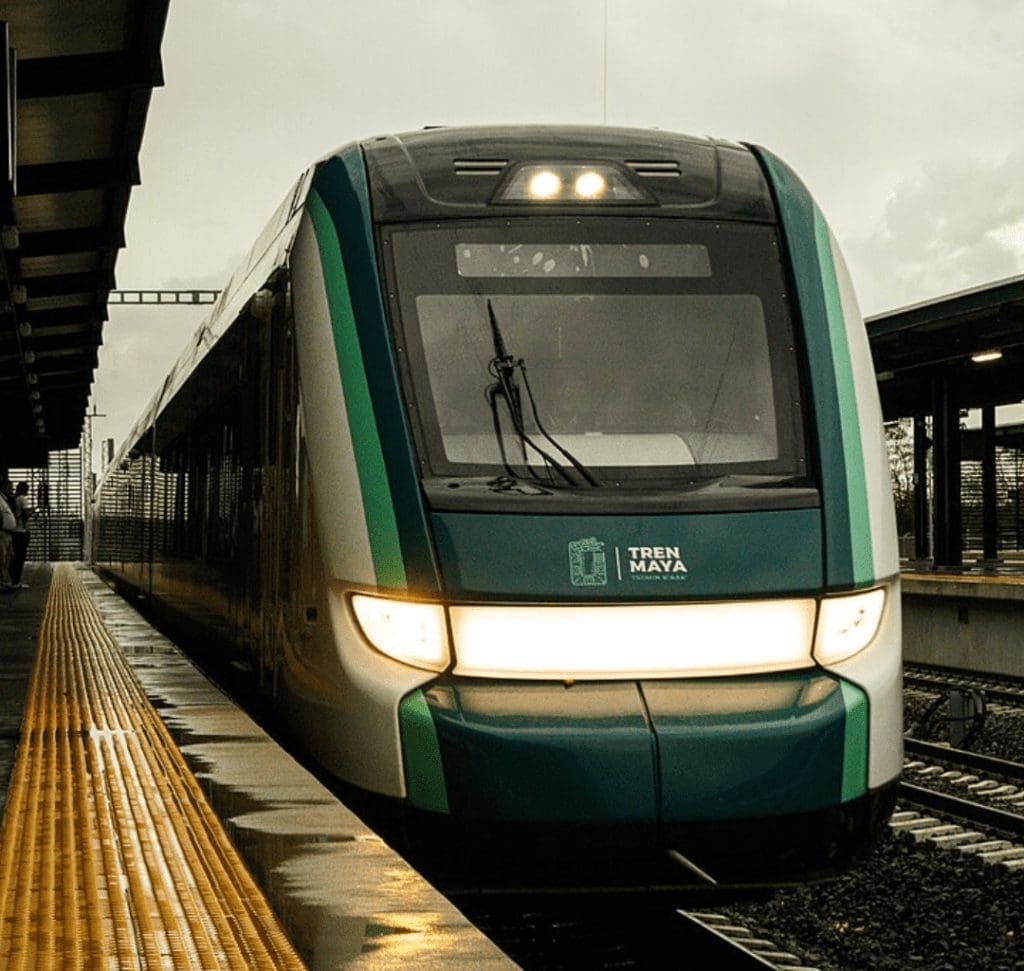
The protesters disrupted traffic on two main highways leading north from Mexico City for several hours due to unpaid work on the Tren Maya project.
On Tuesday, December 10, Mexican truckers blocked several major highways in central Mexico as part of a protest due to unpaid work on the Tren Maya project. The protesters disrupted traffic on two main highways leading north from Mexico City for several hours in the morning, as well as other routes in the Yucatán Peninsula, where they had transported gravel and other materials for the construction of the tourist train line.
Claudia Sheinbaum, President of Mexico, acknowledged that the subcontracted companies that hired the truckers had not paid them because the government had yet to settle its debts with them. “Payments have started to be made to the companies so that they, in turn, can pay the truckers,” Sheinbaum said, also emphasizing that this incident is part of a series of complaints from workers and business owners due to delays in payments from the Mexican government.

Truckers protest due to the compensation the Tren Maya has failed to generate
The government is facing financial difficulties, with large budget deficits that have affected its ability to pay suppliers for various projects, including the ambitious programs driven by the previous administration of Andrés Manuel López Obrador. Among these projects is the Tren Maya.
The Tren Maya, which began operations on December 16, 2023, continues to be a central project for the Mexican government. Although it is not fully completed, the busiest sections are already in service, while two less-used segments are expected to open by the end of this month. However, the project has not met the projections set for its first year.
On December 8, Mexican authorities announced that the tourist train had only transported approximately 600,000 passengers in its first 51 weeks. Considering the initial projections, this number represents only a fifth of the 3 million passengers that were expected to be carried by the Tren Maya during its first year of operation. This means the project is not generating the anticipated profits, making the lack of payments unsurprising.
In addition to the truckers’ protests, contractors and suppliers of the state-owned oil company Pemex have also expressed dissatisfaction for not having received payments amounting to an estimated $5 billion.

Pressure on the business sector and workers: protests and blockades
The Mexican government, under Sheinbaum’s leadership, has inherited a fiscal deficit that will reach 5.9% of Gross Domestic Product (GDP) in 2024. The current economic situation and the ongoing budget deficits have led the government to seek new sources of financing. In November, the Mexican Congress approved a $42 immigration fee for each cruise passenger, with much of that money earmarked for the armed forces. However, the lack of liquidity and delays in payments remain significant challenges for Sheinbaum’s administration.
This economic context has also led the government to increasingly rely on the military to manage key projects, such as the Tren Maya and airport infrastructure, generating criticism over the lack of transparency and the high cost of some of these projects. As the government looks for alternative ways to fund its initiatives, pressure on the business sector and workers continues to rise, with the risk of more protests and blockades further affecting the country’s economy.

FORMULA 1 and the AI That Could Transform Transportation in the U.S.
The artificial intelligence system that Formula 1 implemented to monitor every car on every turn is opening the door to new applications in trucking, logistics,

$170 billion at stake: 1,500 companies demand tariff refunds
Companies have challenged the global tariffs imposed by President Donald Trump, asking federal courts to reactivate proceedings to begin the refund process. The companies that

In brief: enforcement measures target speeding, CDL training gaps and more
Major enforcement actions across the U.S., including speeding, CDL fraud, and chain violations Colorado launches Speed Enforcement Program The Colorado Department of Transportation (CDOT) has

Chinese Vehicles Raise Espionage and Remote Sabotage Concerns
Investigations into Chinese technology in connected vehicles warn of espionage risks, massive data transmission, and potential remote access vulnerabilities that concern U.S. transportation and security

Between the Court and the Fed: the market redefines its roadmap for 2026
Trade policy in limbo as markets price in 2026 rate cuts and Supreme Court strikes down Trump tariff plan. In the latest episode of the

New 10% U.S. import tariff takes effect amid legal and market uncertainty
The implementation of these new tariffs has generated global uncertainty among exporters, increasing confusion around U.S. trade policy. The United States has implemented a new