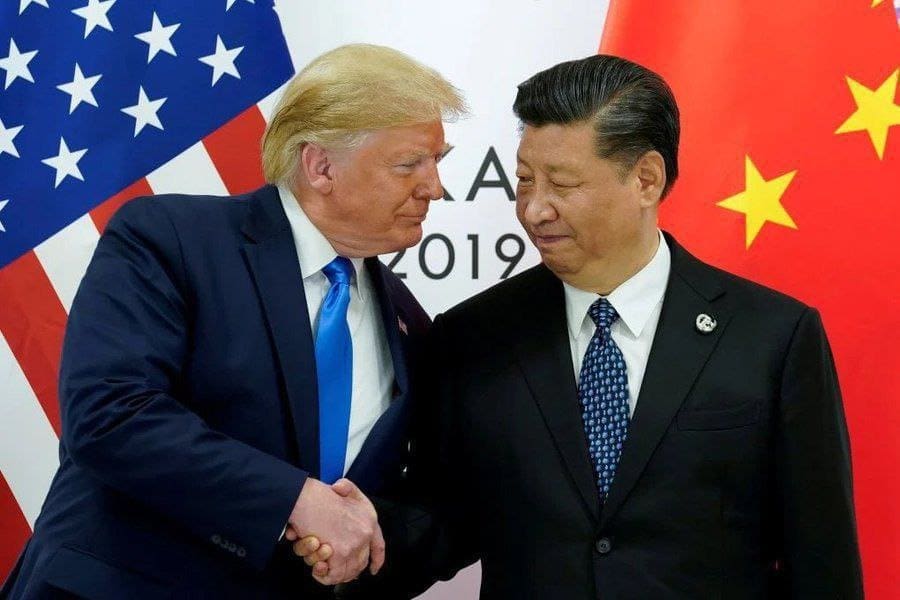
The United States and China have announced a temporary rollback of tariffs on each other’s goods, offering a crucial pause in a long-running trade war that has strained global markets and disrupted supply chains.
In a surprising turn of events, the United States and China have agreed to a temporary truce in their ongoing trade conflict, announcing a 90-day suspension of most tariffs on each other’s goods. The agreement, made public through a joint statement released Monday, follows intense negotiations in Geneva over the weekend.
The world’s two largest economies reported “significant progress” during the talks, with both parties reaffirming their commitment to fostering a “stable, long-term, and mutually advantageous” trade relationship.
The breakthrough has had immediate ripple effects in global markets. U.S. futures soared, with the Dow, S&P 500, and Nasdaq futures all posting strong gains. Asian markets followed suit — Hong Kong’s Hang Seng index rose nearly 3% — and the dollar strengthened. Meanwhile, the price of gold dipped, typically a sign of investor confidence.
Tariffs xcaled back but not eliminated
While some tariffs will remain in place — including those related to Chinese-made fentanyl, which the U.S. maintains at 20% — both nations agreed to sharply reduce the broader levies. Effective May 14, the U.S. will scale its tariffs on Chinese imports back from 145% to 30%, and China will lower its tariffs on U.S. goods from 125% to 10%.
These changes are intended to last for three months as the countries explore a longer-term solution.
The trade war, initiated under President Donald Trump’s administration, has weighed heavily on both economies. In the U.S., economic growth slowed earlier this year, partially due to businesses accelerating imports to beat impending tariffs. In China, exports to the U.S. have fallen, and factory activity reached a 16-month low in April — a sign of pressure on its manufacturing sector.
Dan Ives, a senior analyst at Wedbush Securities, called the deal a “positive surprise” and noted that it may pave the way for a broader agreement in the near future.
“This is a critical reset moment,” Ives said. “If momentum continues, we could see more aggressive tariff rollbacks over the coming months.”

🚨 BREAKING overnight: US and China agree to a 90-day pause on tariffs.
— Ron Smith (@Ronxyz00) May 12, 2025
Tariffs on Chinese imports reduced from 145% to 30%
Trump caved again? pic.twitter.com/wQ69YCWqUl
Dialogue Will Continue
To maintain momentum, both governments will establish a framework for ongoing discussions, led by Chinese Vice Premier He Lifeng, U.S. Treasury Secretary Scott Bessent, and U.S. Trade Representative Jamieson Greer. Meetings may alternate between China, the U.S., or other mutually agreed-upon locations.
“This is not about decoupling — it’s about rebuilding trust and finding common ground,” Bessent told reporters at a press briefing in Geneva. “Both nations want trade, but it has to be fair, and it has to be stable.”
China’s Ministry of Commerce echoed that sentiment, describing the joint statement as a meaningful first step toward resolving disputes through dialogue rather than confrontation.
The shift in tone from Beijing is notable. Until recently, Chinese officials insisted that Washington remove all tariffs as a condition for restarting talks. Now, both sides appear ready to compromise — at least in the short term.
Although this agreement doesn’t represent a full resolution of the trade war, it is the clearest signal yet that diplomacy may be back on the table. The coming months will be critical in determining whether the détente holds or gives way to renewed tensions.

North Dakota among states regaining non-domiciled CDL authority
North Dakota will reissue approximately 150 of the 526 CDLs and CLPs for non-resident drivers that were active during the FMCSA audit.

The Growing Threat of Chameleon Fleets
A CBS ‘60 Minutes’ investigation exposes the rise of ‘Chameleon Fleets’ in the U.S. trucking industry.

US transportation begins to show signs of recovery
With tonnage at record levels and rates on the rise, carriers are leading the expansion of the logistics market. If the forecasts hold true, years of uncertainty could be over.

Trump Administration Restarts California Pipeline to Lower Gasoline Prices
Under Trump, the restart of the Santa Ynez Pipeline aims to boost local crude supply and impact gasoline prices amid persistently high energy costs in California.

Lawmakers push to raise minimum truck insurance compensation to $5 million
The “Fair Compensation for Truck Crash Victims Act” seeks to increase insurance requirements for interstate motor carriers.

The Invisible Ecosystem Behind Autonomous Trucks
While everyone focuses on driverless trucks, the real business lies in the infrastructure that makes them possible. That’s where smart money is flowing.