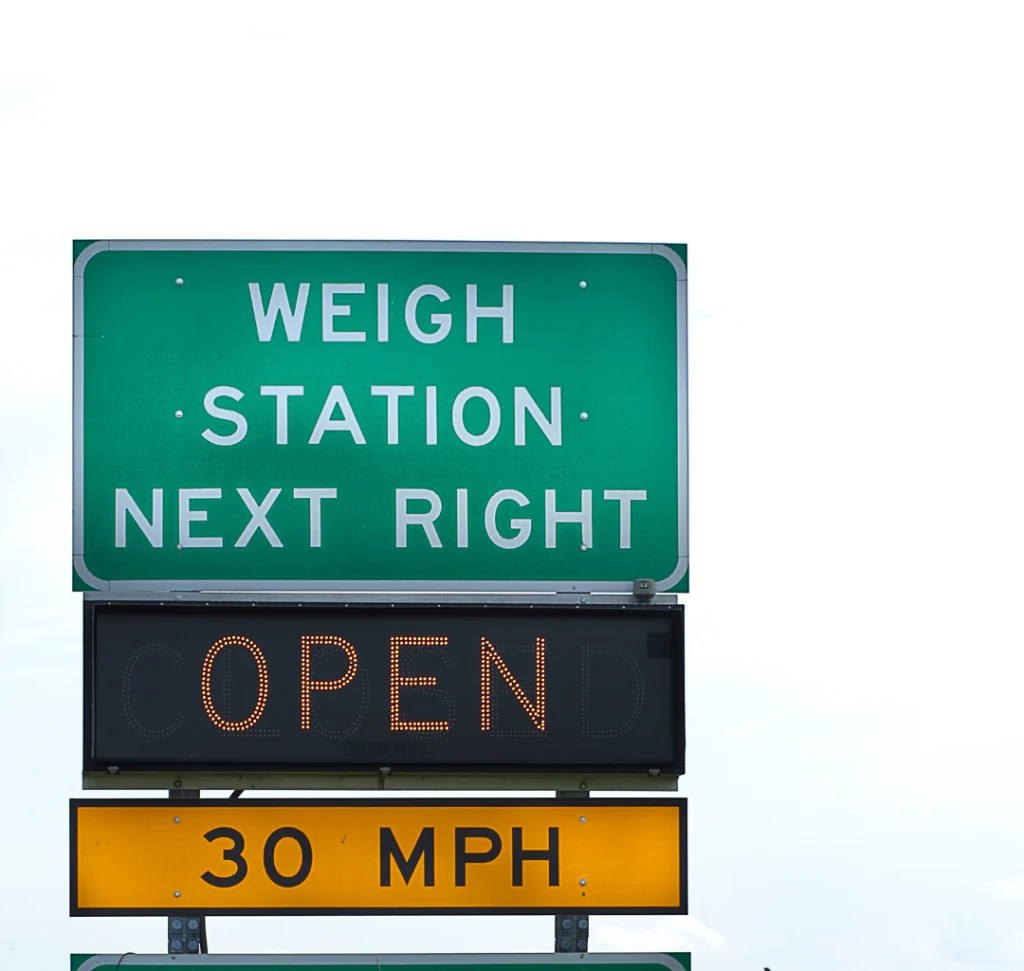
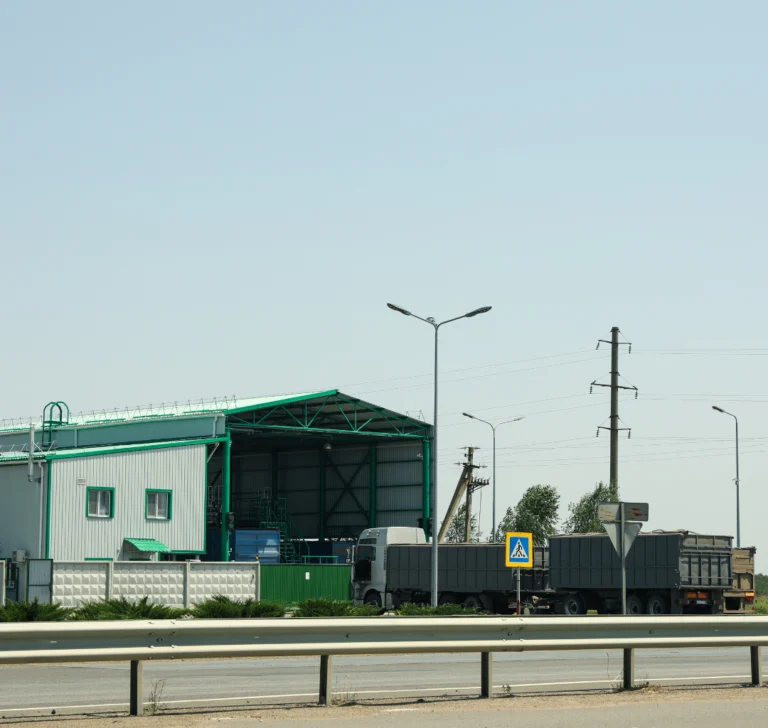
The Weigh Station Enforcement to Intercept and Guard Highways Act (WEIGH) would turn all weigh stations on interstate highways into English proficiency checkpoints.
In recent months, the trucking industry has seen an increase in regulations related to migrant drivers, aimed at strengthening overall sector safety. In this context, a new piece of legislation has been introduced to tighten language requirements for truck drivers.
Introduced on Monday, September 8, the Weigh Station Enforcement to Intercept and Guard Highways Act (WEIGH) would turn all weigh stations on interstate highways into English proficiency checkpoints.
The new law, proposed by Republican Congressman Byron Donalds of Florida, would require all weigh stations along the interstate system to inspect commercial driver’s licenses (CDLs) for potential irregularities. At the same time, these stations would serve as checkpoints to assess truck drivers’ proficiency in English, according to a statement released by Donalds.

Weigh Station Enforcement to Intercept and Guard Highways Act (WEIGH)
These measures come in response to recent accidents caused by truck drivers who either lacked valid commercial licenses, did not speak English, or were involved in the growing trend of CDL fraud observed in recent years.
Florida—the state where the crash involving driver Singh took place—has been among the most proactive in addressing the issue. Last week, Senator Ashley Moody introduced a bill in the Senate that would require CDLs to be issued only to U.S. citizens, lawful permanent residents, or individuals with a valid work visa or authorization from U.S. Citizenship and Immigration Services. The bill would also prohibit the issuance of temporary or non-domiciled CDLs altogether. Furthermore, it would mandate that all states regularly report to the federal government on their efforts to enforce English language requirements.
The latest legislative effort to tackle this growing “crisis” in road transportation is Congressman Donalds’ WEIGH Act. If passed, it would codify and enforce the Executive Order on English Language Proficiency (ELP) at all interstate weigh stations, empowering the U.S. Department of Transportation to use these facilities to uphold the order initially issued by President Trump.
“States’ failure to enforce these basic, common-sense requirements for truck drivers is putting every American motorist at risk. Safety must be the standard, not the exception,” stated Donalds in his release.

Desperate times call for desperate measures
Donalds emphasized that every truck driver passing through an interstate weigh station should be prepared for both a cargo inspection and an English language proficiency evaluation.
He also warned that states failing to properly implement the control protocols established by the Secretary of Transportation could face serious consequences, including the loss of their authority over the CDL program and the suspension of federal highway funding.

NHTSA Announces Recalls of More Than 8,000 Kenworth, Peterbilt, Volvo, and Mack Trucks Due to Safety Defects
Three recall campaigns involving more than 8,200 trucks have been announced due to problems with braking systems and transmissions.

One Passenger, 16 Rotors, and No Pilot: The Flying Taxi That Took Off in Front of Mount Fuji
A two-seat electric aircraft took off in Japan, flew 1,250 feet with one passenger on board, and landed without a pilot in the cabin. The demonstration offered a glimpse of what a ride in an autonomous air taxi could feel like. Would you get on board?

I‑205: The Bridge That Moved Over the Weekend
In Oregon, crews used hydraulic jacks to lift a 1,030-foot section of the Abernethy Bridge and slide it about eight feet sideways. Northbound I‑205 reopened Monday, four and a half hours ahead of schedule.

Thanksgiving 2026: Busiest Trucking Routes and Peak Traffic Hours
Nearly 73 million people are expected to travel by road during Thanksgiving. New York, Los Angeles, California, Texas, and Florida will be among the areas facing significant delays.

Made in the USA vs. imports: key points for understanding the price battle
Imported products remain competitive, but tariffs, input costs, logistics, and the costs of disruptions compel U.S. companies to look beyond price.
Texas Considers New Laws to Regulate Truck Weights and Protect Infrastructure
Texas is considering new bills to tighten penalties for overweight trucks, modify transportation routes, and ease load limits.