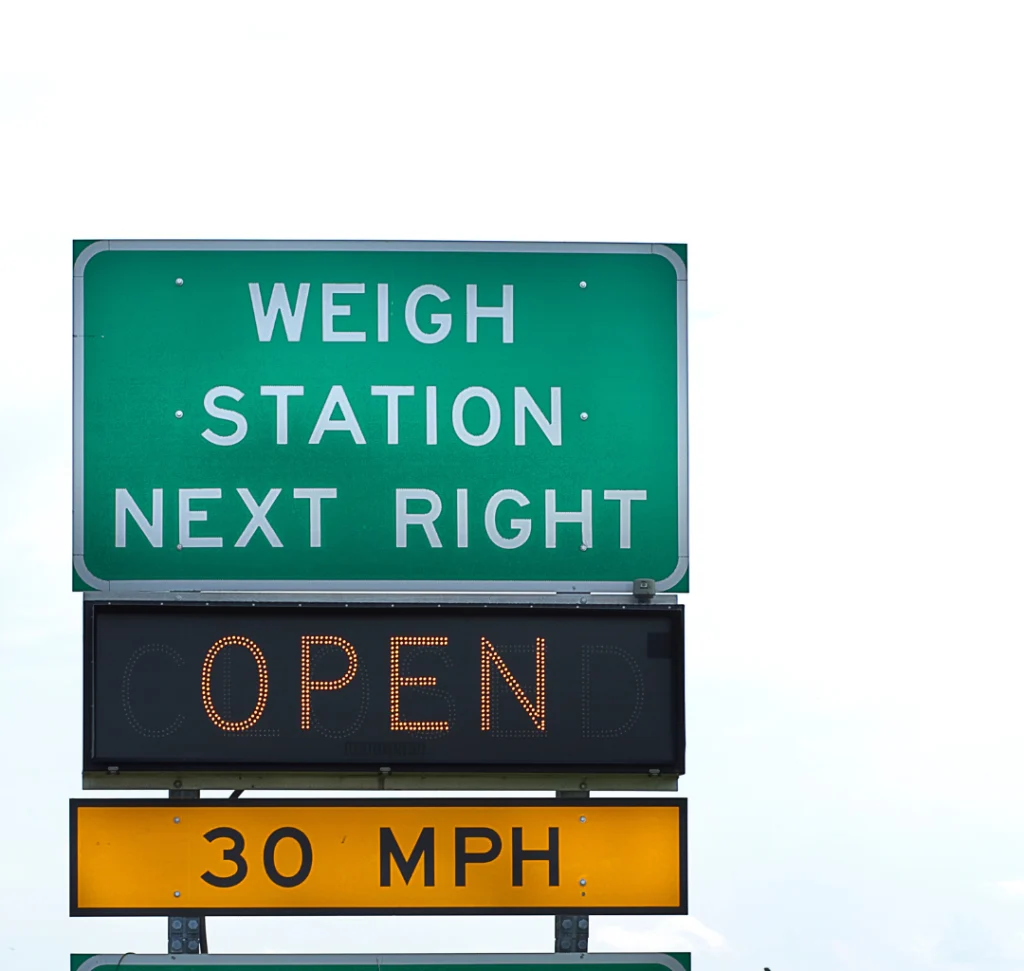
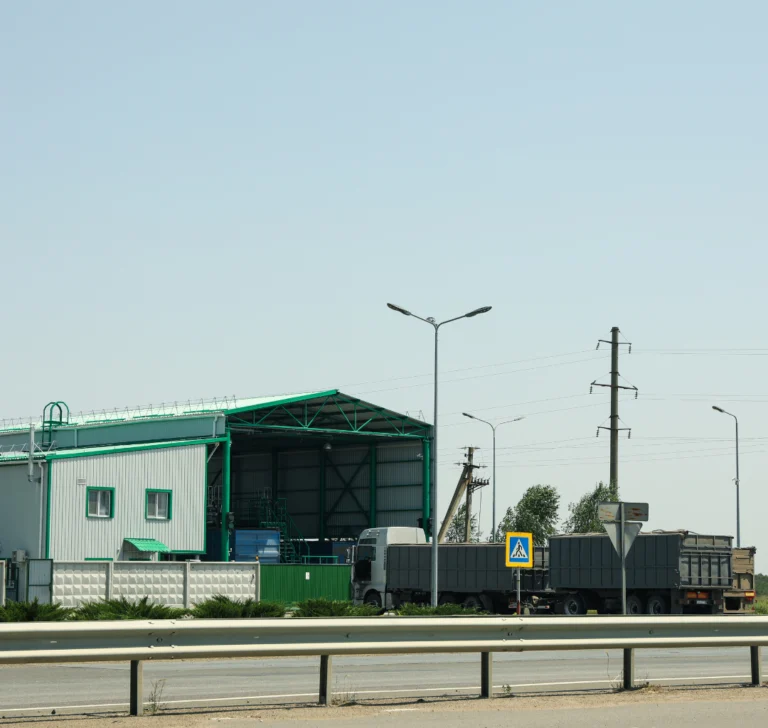
The Weigh Station Enforcement to Intercept and Guard Highways Act (WEIGH) would turn all weigh stations on interstate highways into English proficiency checkpoints.
In recent months, the trucking industry has seen an increase in regulations related to migrant drivers, aimed at strengthening overall sector safety. In this context, a new piece of legislation has been introduced to tighten language requirements for truck drivers.
Introduced on Monday, September 8, the Weigh Station Enforcement to Intercept and Guard Highways Act (WEIGH) would turn all weigh stations on interstate highways into English proficiency checkpoints.
The new law, proposed by Republican Congressman Byron Donalds of Florida, would require all weigh stations along the interstate system to inspect commercial driver’s licenses (CDLs) for potential irregularities. At the same time, these stations would serve as checkpoints to assess truck drivers’ proficiency in English, according to a statement released by Donalds.

Weigh Station Enforcement to Intercept and Guard Highways Act (WEIGH)
These measures come in response to recent accidents caused by truck drivers who either lacked valid commercial licenses, did not speak English, or were involved in the growing trend of CDL fraud observed in recent years.
Florida—the state where the crash involving driver Singh took place—has been among the most proactive in addressing the issue. Last week, Senator Ashley Moody introduced a bill in the Senate that would require CDLs to be issued only to U.S. citizens, lawful permanent residents, or individuals with a valid work visa or authorization from U.S. Citizenship and Immigration Services. The bill would also prohibit the issuance of temporary or non-domiciled CDLs altogether. Furthermore, it would mandate that all states regularly report to the federal government on their efforts to enforce English language requirements.
The latest legislative effort to tackle this growing “crisis” in road transportation is Congressman Donalds’ WEIGH Act. If passed, it would codify and enforce the Executive Order on English Language Proficiency (ELP) at all interstate weigh stations, empowering the U.S. Department of Transportation to use these facilities to uphold the order initially issued by President Trump.
“States’ failure to enforce these basic, common-sense requirements for truck drivers is putting every American motorist at risk. Safety must be the standard, not the exception,” stated Donalds in his release.

Desperate times call for desperate measures
Donalds emphasized that every truck driver passing through an interstate weigh station should be prepared for both a cargo inspection and an English language proficiency evaluation.
He also warned that states failing to properly implement the control protocols established by the Secretary of Transportation could face serious consequences, including the loss of their authority over the CDL program and the suspension of federal highway funding.

Human Trafficking: A Nationwide Call to Action on America’s Roads
Human trafficking is the focus of a nationwide awareness week aimed at educating truck drivers, motor carriers, law enforcement, and the public about human trafficking, how to spot the warning signs, and what to do if someone may be in danger.

TAA Compliance: When Safety Complaints Turn Into Six-Figure Losses
STAA compliance is no longer a technical detail for fleet owners—it is a financial, legal, and insurance exposure. A recent enforcement action in Texas shows how mishandling safety complaints can lead to termination claims, retaliation findings, and six-figure penalties, and what carriers must do to avoid becoming the next case

U.S. labor market raises red flags on Wall Street
The U.S. labor market closed 2025 with clear signs of weakening, as evidenced by the latest employment data released in December. In the latest episode

DOT finds half of North Carolina CDLs were issued illegally
The DOT warns that half of North Carolina’s CDL licenses are irregular after a federal audit uncovered serious compliance failures. The findings directly affect truckers, fleets, and transportation companies, raising urgent questions about road safety, legal operations, and the future of the trucking industry.

California’s Unhealthy Air: Impacts on Trucking and Freight
Unhealthy Air Quality in California: What Repeated Pollution Alerts Mean for Trucking and Freight Operations

Global Road Freight on Track to Hit USD 5 Trillion by 2033
Global Road Freight on Track to Hit USD 5 Trillion by 2033 as e-commerce growth, supply chain restructuring, and technology adoption accelerate demand for road-based cargo transport worldwide.