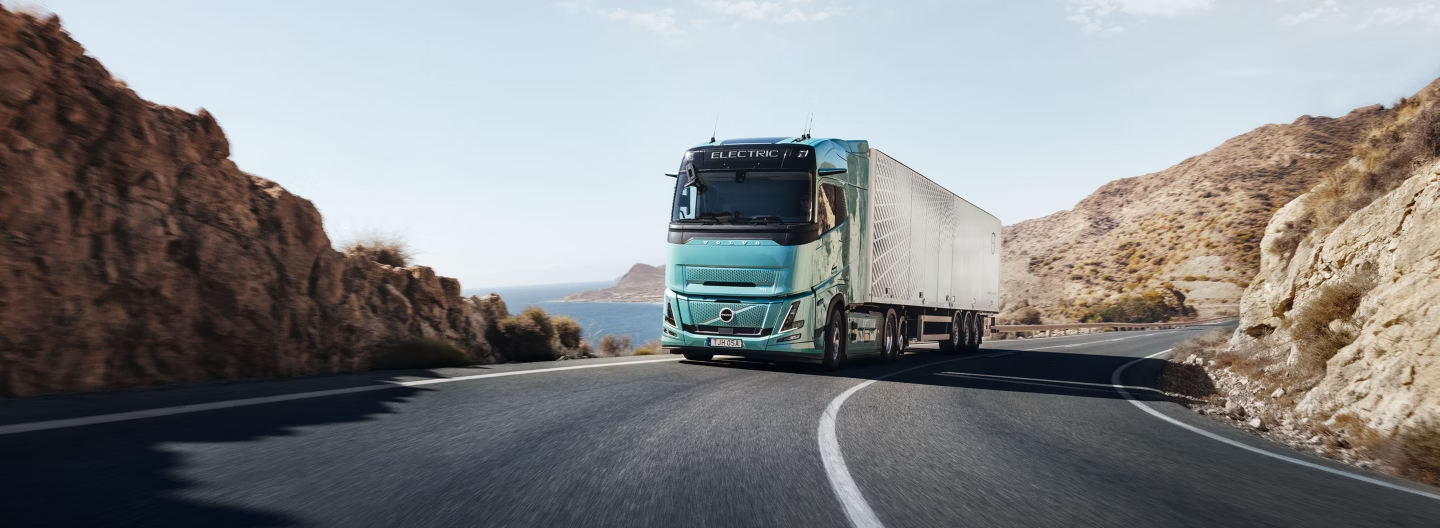
The National Freight Vehicle Traffic Association organized a demonstration to prioritize the protection of tractor-trailer systems.
On October 24, the National Freight Vehicle Traffic Association (NMFTA) organized a wireless hacking demonstration to exemplify how someone could take advantage of the vulnerabilities of cargo trailers and trailers.
At its Cybersecurity Digital Solutions Conference, NMFTA provided a demonstration for the event with a United Petroleum Transports tanker truck that was located several blocks from the main conference site. Ben Gardiner, senior cybersecurity research engineer at NMFTA, who carried out the demonstration, said the hack was performed using a relatively inexpensive setup.
The hacking attempt carried out by Gardiner focused on the trailer brakes, allowing audible information to be obtained that the objective had been achieved. The trailer brakes began making a regular, high-pitched sound shortly after the hack began as they discharged their pneumatic air supply.
He also pointed out that the hack used the trailer’s electrical network, which functions as a wireless interface despite not having been designed for it. This means that a hacker could attack a truck wirelessly without using obvious methods such as Bluetooth or Wi-Fi.
Gardiner explained at the conference that for the demonstration a very simple antenna was used and cables were attached to nearby traffic cones, in order to carry out the attack on the tractor-trailer with the help of a 50-volt power amplifier that It ran at a power of around 15 W. This hack had an estimated cost of $300, demonstrating how simple it can be to carry out in real life.

He highlighted that hackers could also use mobile equipment to assault moving vehicles from further away, sending arbitrary data to all devices on the power grid: trailer, tractor and telematics.
The NMFTA noted that trailer brakes feature converter chips, the code of which is based on technologies from decades past that originally did not require authentication or authorization. This technology has been present on trailers nationwide since 2001 and is expected to remain in effect for the next tractor-trailer interface standard.
With this demonstration, fleets are expected to prioritize firewalls and other mechanisms to protect their truck systems.

Nashville becomes the epicenter of transportation and heavy technology
The largest transportation technology trade show in the US kicks off in Tennessee. It brings together 5,000 experts and will shape the future of trucks, artificial intelligence, and fleet maintenance.

Why Soccer is Conquering Hearts and Businesses in the U.S.
Messi’s presence in stadiums and the hosting of the next World Cup, along with other global tournaments, have transformed it into a new entertainment giant. The gradual growth of the National Team motivates the public. Million-dollar businesses, brands, and a lot of passion.

The Asphalt Code of Honor: The Invisible Social Network That Saves Lives
On U.S. highways, truck drivers often communicate through a silent language of signals, headlights, and hand gestures. This informal system of road communication helps warn others about hazards, coordinate safe passing, and reinforce a culture of safety and solidarity among professional drivers

What if the Oscars were about trucking? Hollywood characters reimagined as truckers
This week marks the 98th Academy Awards, what if the categories were inspired by the transportation industry?

TCA Professional Drivers of the Year 2026: 5 drivers who paved the road
TCA Professional Drivers of the Year selects drivers with the greatest impact, outstanding safety records, and individuals with inspiring stories that made a difference.

Unusual Stories from the Road: When Reality Outruns Logistics
From a giant magnet moving down the highway like a spacecraft to millions of bees taking over a highway, the world of freight transportation is full of events that are as strange as they are real. Some of these stories went viral, others became legends among drivers, but all of them reveal the unexpected side of logistics.