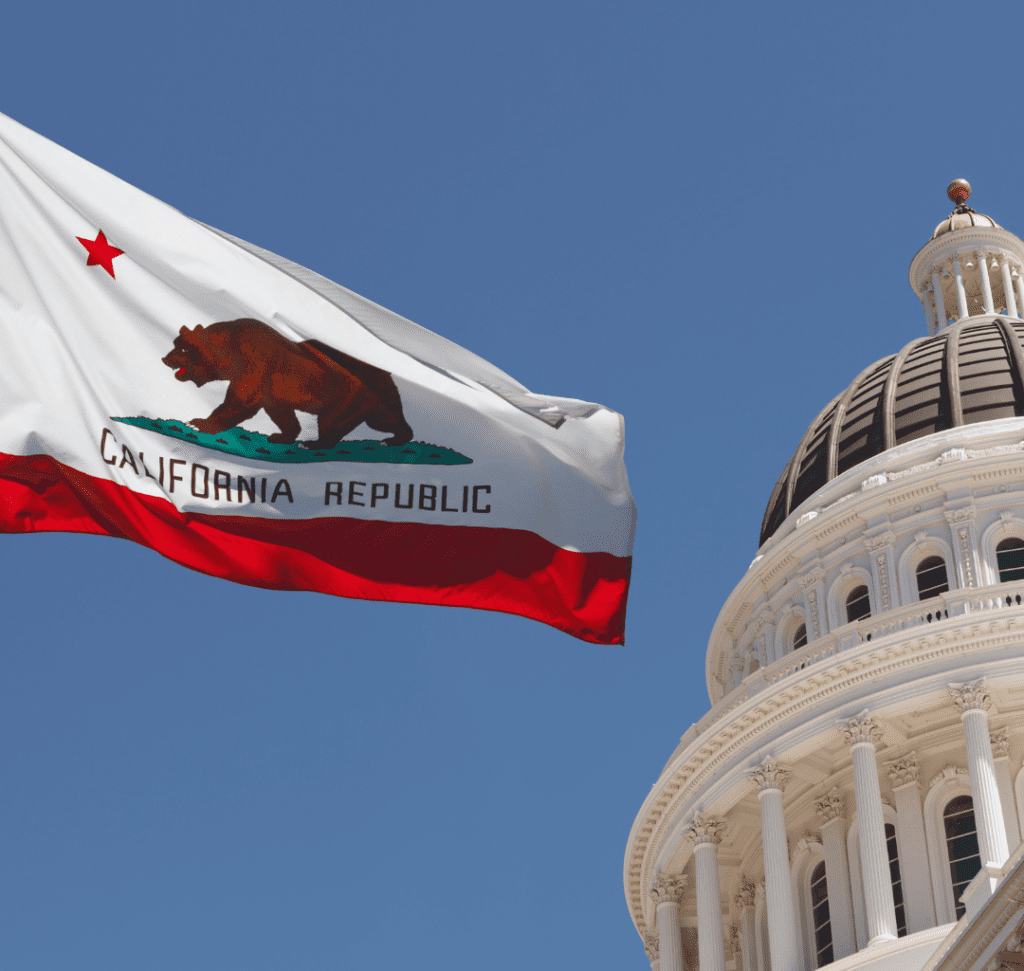
California's new emission laws have prompted a lawsuit against the state.
California’s new emission laws, which require both in-state and out-of-state companies to report on their supply chain emissions and mitigation efforts, have prompted a lawsuit against the state. This lawsuit was filed by the United States Chamber of Commerce, the American Farm Bureau Federation, the Western Growers Association, and two Californian business groups.
The legal action argues that these state laws force thousands of companies to make costly and politically charged disclosures about their operations in California and worldwide. They accuse the California Air Resources Board (CARB) of violating the First Amendment by compelling companies to make controversial statements and pressuring them to adhere to the state’s political agenda.
The new corporate disclosure laws mandate that companies report emissions throughout their supply chains, including indirect emissions, despite the difficulty in accurately calculating them. They also require companies to subjectively report on their climate-related financial risks and proposed mitigation strategies worldwide. The laws have faced criticism for attempting to apply to companies across the US and the world with minimal operations in the state, seen as an attempt to establish a national standard.

The legislation requires companies to cover CARB’s administrative costs through an annual fee deposited into a new “Climate-Related Financial Risk Disclosure Fund.” CARB can impose administrative fines of up to $50,000 per year for law violations.
The lawsuit argues that small businesses nationwide are forced to incur significant costs to monitor and report emissions to suppliers and customers, even those beyond the law’s scope, such as family farms belonging to the American Farm Bureau Federation (AFBF).
The lawsuit highlights how CARB’s new powers are affecting businesses outside of California nationwide. It warns that California’s laws, imposing mandatory emissions reporting and compliance requirements on both public and private companies, will have a particularly harsh impact on small businesses.
State Senator Scott Wiener, author of SB 253 and who announced its approval last year, dismissed the lawsuit, arguing that costs and implementation are manageable for companies. However, California lawmakers were warned about potential legal challenges in a state fiscal analysis last year. In September, the implications of SB 253 were discussed in the State Senate Rules Committee, indicating potentially significant costs for the state’s Department of Justice due to litigation stemming from the law.

Middle East Conflict: Impact on Diesel Prices and What U.S. Truckers Should Expect
The escalation of conflict in the Middle East has pushed crude oil prices toward $80 per barrel, reigniting global energy volatility. For the U.S. trucking

The best roadside attractions for truckers in the U.S.
America’s highways hide unique places that break up the routine, don’t hesitate to check out these roadside attractions along the way. The road is much

The trucker style: comfort, function, and identity
Truckers’ style is much more than workwear; it’s an identity. These are the most commonly worn garments among truckers. Truckers’ style is much more than

Chaos on Highway 61: Viral Wrong-Way Truck Video Reignites the CDL Debate
An 80-ton tractor-trailer traveling miles in the wrong direction on Missouri’s Highway 61 has reignited a nationwide debate over Commercial Driver’s License (CDL) standards, training

How technology affects driver retention
Friend or foe? 52% of drivers say technology directly influences their decision to stay with or leave a fleet. Fleet telematics company Platform Science published

Dalilah Law seeks to remove non-english speaking commercial drivers
President Donald Trump proposed the “Dalilah Law,” an initiative aimed at prohibiting undocumented immigrants from obtaining commercial driver’s licenses. On February 24, President Donald Trump