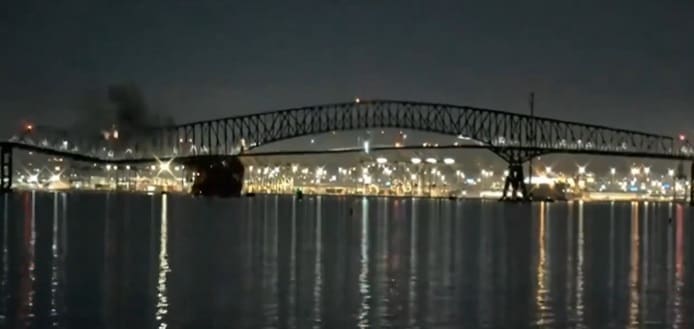
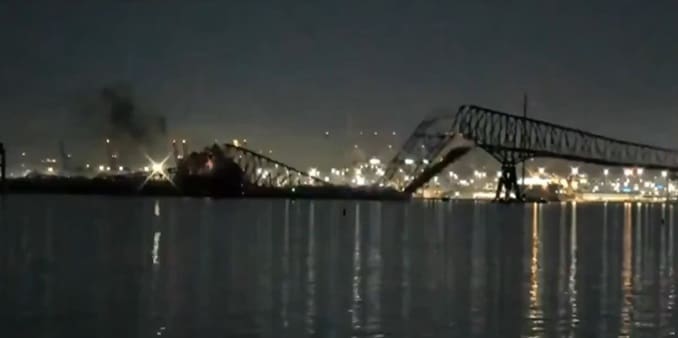
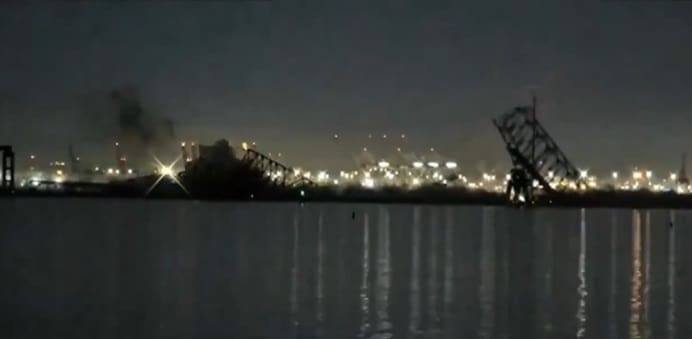
The impact caused the bridge to collapse, sending cars and people plunging into the river below
The Francis Scott Key Bridge in Baltimore collapsed Tuesday morning after a 948-foot container ship lost power and collided with it. Vehicles and individuals fell into the water, triggering a large-scale search-and-rescue operation. Two survivors were rescued, with one hospitalized, while six individuals remain missing. The collapse closed one of the busiest ports in the United States as rescuers continue searching the Patapsco River for more survivors.
Ship’s crew issued a distress call before the Francis Scott Key Bridge collapsed, allowing authorities to restrict vehicular traffic in the area, according to the Governor of Maryland. U.S. Coast Guard was alerted to the collapse at 1:27 AM and deployed search and rescue teams.
The involved vessel was identified as the Dali, owned by Grace Ocean Pte Ltd and operated by Synergy Marine Corp. According to Synergy, the Dali collided with one of the bridge’s pillars, and all crew members, including the two pilots, have been located with no reported injuries.

According to the Baltimore fire chief, using infrared technology and side-scan sonar, five submerged vehicles were identified in the water, which is approximately 15 meters deep. The water temperature was around 47 degrees Fahrenheit before dawn on Tuesday, according to data collected by a buoy for the National Oceanic and Atmospheric Administration. Six people who were working on the bridge remain missing, and one of the rescued individuals was taken to the hospital.
Traffic and freight movement on the East Coast
The Maryland Transportation Authority urges drivers to avoid Interstate 695 due to the collapse of the Francis Scott Key Bridge. This incident will disrupt freight movement on the East Coast as the port is crucial for commercial maritime transportation, recording over 750,000 vehicles in 2022, according to port data.
The closure of this key port threatens to disrupt the supply of various products, from automobiles to coal and other commodities such as sugar. This could lead to bottlenecks and increase delays and costs in the Northeast. The Francis Scott Key Bridge was a major route between New York and Washington, with a daily traffic of 31,000 cars and an annual total of 11.3 million vehicles.


Nevada’s Runaway Ramps Save Lives
Runaway ramps on highways help stop vehicles experiencing brake failure, saving lives on the road.

California Highway Patrol Inspections: What They Check on Commercial Trucks and How to Prepare
Learn what the California Highway Patrol checks on commercial trucks in California, including brakes, tires, documents, hours of service, and safety.

Indiana, the RV Capital of the World: The Business Behind America’s RV Industry
Indiana accounts for the vast majority of RV manufacturing in the United States. But behind the factories is a lesser-known business: delivering brand-new recreational vehicles to dealerships across the country. Who are the drivers making these trips, how does the delivery business work, and when is a commercial driver’s license (CDL) required?

Texas Warns of Flooded Roads as El Niño Approaches
The Texas Department of Transportation (TxDOT) is warning drivers about hidden dangers beneath floodwaters, penalties for ignoring road closures, and precautions truckers should take ahead of a potentially wetter and stormier 2026–2027 winter.

The United States is growing, but sustaining that growth is becoming increasingly difficult
The country continues its economic expansion, but debt, interest rates, and inflation are driving up the cost of financing for businesses, households, and even the government itself.
USDOT Announces More Than $1.6 Billion to Rebuild Damaged Infrastructure
The United States will allocate more than $1.6 billion to repair roads, bridges, and transportation infrastructure damaged by hurricanes and floods.