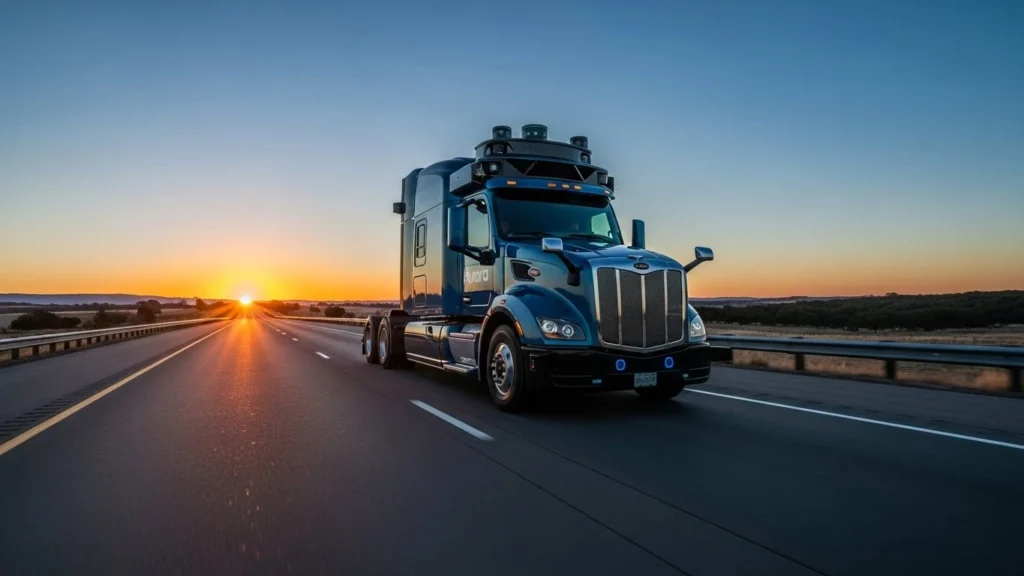
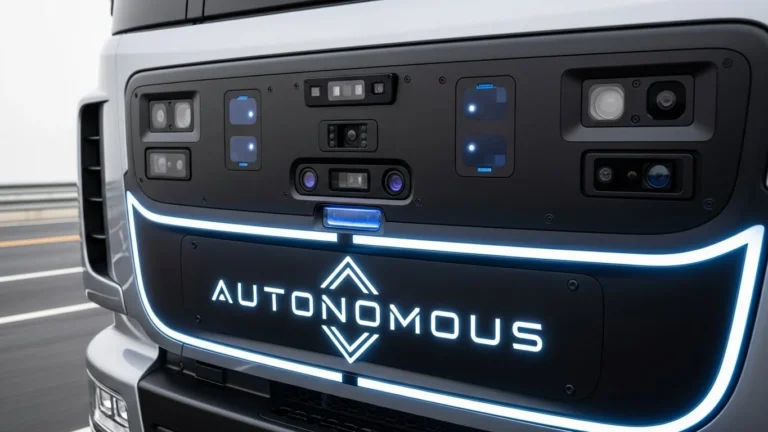
The push to deploy driverless trucks without a human operator has reignited a national debate over safety, jobs, and regulation—drawing unions, tech companies, and federal lawmakers into a conflict that could redefine the future of U.S. freight transportation.
The rapid advancement of autonomous trucking has once again ignited a fundamental debate within the U.S. freight industry: can technological innovation move forward without a human driver on board, or must safety and employment concerns set clear limits? The issue gained renewed momentum this week after the CEO of Aurora, one of the country’s leading autonomous truck developers, publicly rejected a demand from the Teamsters union that all autonomous trucks be required to carry a human operator with a commercial driver’s license (CDL).
The Technology Industry’s Case
Aurora’s position is straightforward. According to the company, mandating a full-time human driver would significantly undermine the economic and operational advantages of autonomous trucking. Aurora argues that its technology is specifically designed to operate safely without direct human intervention, particularly on long, predictable freight corridors such as interstate highways connecting major distribution hubs.
Safety and Jobs at the Heart of the Union’s Position
The Teamsters see the issue very differently. For the union, the demand for a human operator is not only about protecting jobs, but about public safety. Union leaders argue that heavy trucks traveling without a trained driver capable of responding to unexpected events—such as severe weather, accidents, road construction, or system failures—pose unacceptable risks on public roads.

A Structural Tension Across the Freight Sector
This clash highlights a deeper structural tension within the trucking sector. On one side, technology companies and some large fleets see automation as a necessary evolution to keep freight moving in an increasingly complex logistics environment. On the other, labor groups and parts of the political establishment caution that the rush to automate may overlook real-world risks that only emerge outside controlled testing conditions.
Washington’s Growing Role
The debate is no longer confined to corporate boardrooms or union halls. In Washington, the controversy is drawing growing attention from federal lawmakers, many of whom are concerned about the fragmented regulatory landscape governing autonomous vehicles. Today, autonomous trucks operate under a patchwork of state-level rules, with varying requirements for human supervision, testing protocols, and liability in the event of a crash.
The Push for Federal Standards
As a result, pressure is mounting for the federal government to establish uniform national standards. The trucking industry is calling for regulatory clarity and consistency to support long-term investment, while unions are pushing for minimum safety and labor protections to be embedded into any federal framework.
Why Hybrid Models Are Gaining Attention
At the same time, the debate reflects a strategic reality: automation is not advancing evenly across all segments of trucking. While autonomous systems appear most viable on long, repetitive highway routes, they continue to face significant challenges in dense urban environments, complex delivery zones, and unpredictable traffic conditions. This has fueled discussion around hybrid operating models, where autonomous trucks handle highway segments and human drivers manage urban driving, loading, unloading, and emergency situations.
What This Means for Drivers and Fleets
For drivers and trucking companies alike, the stakes are high. Decisions made today will shape what trucking jobs look like over the next decade, which skills will be most valuable, and how the human role in freight transportation evolves alongside rapidly advancing technology.
A Turning Point for U.S. Trucking
Ultimately, what is at stake is more than a single innovation. The outcome of this debate will determine how the U.S. balances efficiency, safety, and employment in one of the most critical pillars of its economy. As companies like Aurora push toward a driverless future and the Teamsters seek to slow what they view as a premature transition, Congress may soon find itself acting as the referee in a conflict set to redefine American trucking.

$75,000 brokers bond rule now in effect
The FMCSA has the authority to suspend the operating license of transportation brokers whose minimum financial security falls below $75,000 After numerous debates, mixed opinions,

Which Trucking Industry Segment Will Grow the Most in the U.S. and Why
Which trucking industry segment will grow the most in the U.S. and why is a key question for investors, carriers, and logistics operators. A new report from DataNexus Market Research points to tank trucking as the fastest-growing segment, driven by rising demand for chemicals, fuels, and hazardous materials

Dangerous Roads: Massive Indiana Crash Involving More Than 10 Semi Trucks Raises Red Flags
Dangerous winter roads, truck accidents, multi-vehicle pile-ups, and low visibility are back in the spotlight after a major crash in Indiana. A pile-up involving more than 30 vehicles, including at least 10 semi trucks, left several people injured and reignited the debate over how to drive safely on snow- and ice-covered highways.

Jerome Powell under investigation as tensions between Trump and the Fed escalate
The investigation into Powell has raised global concerns over a potential threat to the independence of the U.S. central bank. In the new episode of

Road Alert: 25 States Under Extreme Driving Conditions
Snow, ice, strong winds, and low visibility are keeping major highways under active travel advisories. The alert now affects 25 states and calls for extra caution, especially among truck drivers and freight carriers operating along key corridors.

Human Trafficking: A Nationwide Call to Action on America’s Roads
Human trafficking is the focus of a nationwide awareness week aimed at educating truck drivers, motor carriers, law enforcement, and the public about human trafficking, how to spot the warning signs, and what to do if someone may be in danger.