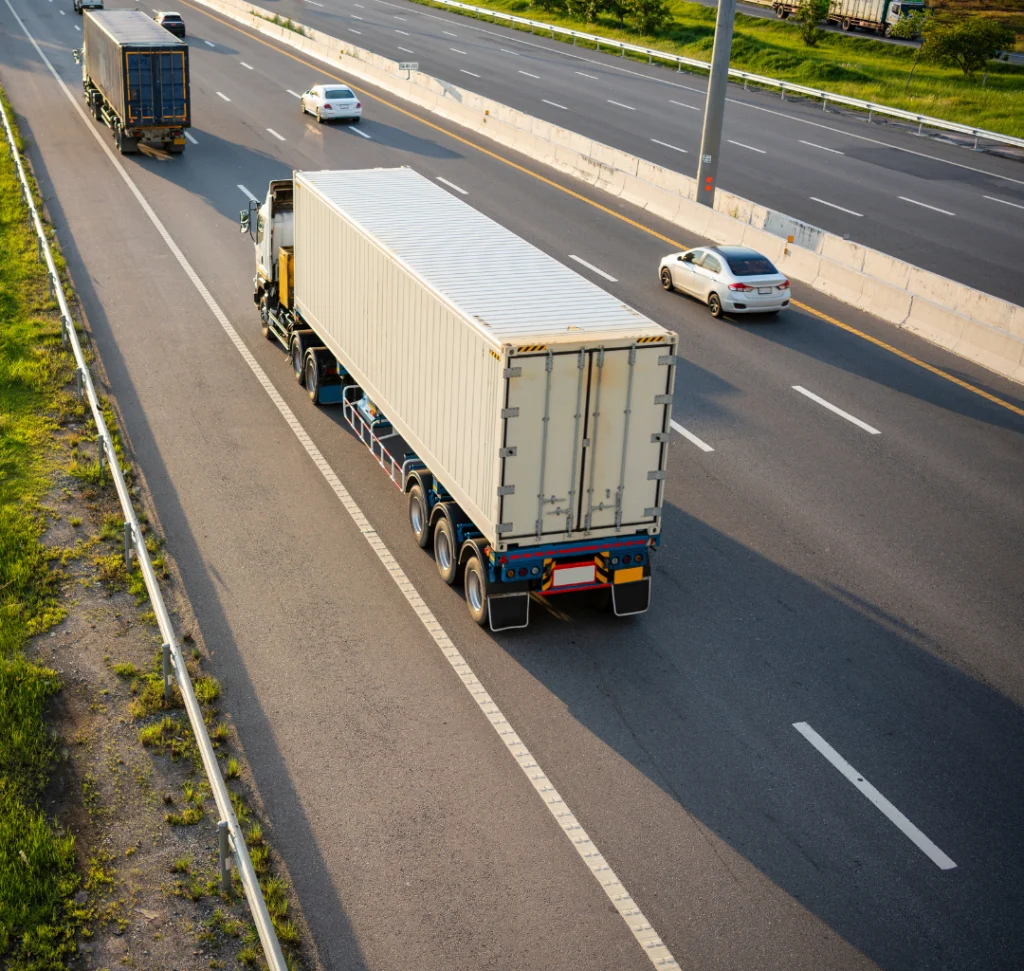
The Department of Transportation stated that the BUILD program is intended to leave a lasting legacy.
On July 15, Secretary of Transportation Sean Duffy announced the allocation of 30 infrastructure grants totaling $488 million. These investments — ranging from truck parking facilities to bridges, highways, and multimodal projects — aim to improve travel safety and boost the economy.
Duffy noted that 77% of the funding will go toward highway and bridge projects, while multimodal surface transportation projects will receive $3 million. One of the most notable grants was awarded to the West Virginia Division of Highways, which will receive $24.8 million to expand interstate truck parking along I-81, I-64, and I-79 in Berkeley, Cabell, and Monongalia counties.

West Virginia receives BUILD program grant
In 2023, West Virginia had 1,860 truck parking spaces across 60 public and commercial facilities, according to the state’s Freight Transportation Plan. However, the report found that these spaces were overused, often forcing drivers to rely on alternative locations like Walmart parking lots during peak hours.
The chair of the Senate Committee on Environment and Public Works expressed her support for the project in a letter backing WVDOT’s grant application, emphasizing that improving these facilities will enhance driver safety and encourage economic investment across the state.
The funding comes through the Department of Transportation’s BUILD (Better Utilizing Investments to Leverage Development) program, which supports surface transportation infrastructure projects with significant local or regional impact. With this federal support, the West Virginia project will cover 70% of its estimated $35.5 million total cost.

BUILD: a lasting legacy for the U.S
In addition to West Virginia, twenty-five other states also received BUILD grants. In Washington state, Snohomish County was awarded $2 million for a project to improve the intermodal yard and the Everett curve.
In Pennsylvania, the Bucks County Redevelopment Authority will receive $25 million to revitalize the Bristol Port, including construction of a 1,100-foot dock. Meanwhile, the city of Cleveland was granted $900,000 to develop plans and designs for a modern transportation hub.
In North Dakota, Ward County was awarded $4 million for the Minot’s Accessible Growth-Driving Intermodal Connector (MAGIC) project, which aims to improve mobility along U.S. Highways 2, 52, and 83.
The Department of Transportation stated that the BUILD program is intended to leave a lasting legacy. The total $488 million in grants is just the beginning of a four-year administration determined to build bigger and bolder than ever before, Duffy announced. Projects were selected based on safety, project readiness, and cost-effectiveness.

Why Reefer Is the Most Profitable Segment of 2026
Refrigerated transportation is leading the recovery of the U.S. freight market: higher rates, sustained demand, and key opportunities in Florida and along the Mexico border.
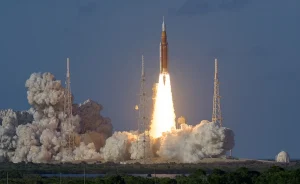
Artemis II and the logistics of space: more like trucking than you think
On Wednesday, April 1, 2026, NASA launched the Artemis II mission, and it made us wonder: what do a truck and a spacecraft have in common?

FMCSA report: HOS violations increase after 2020 rule changes
In a recent report presented to Congress, the Federal Motor Carrier Safety Administration (FMCSA) evaluated the 2020 changes to hours-of-service (HOS) regulations.

How Artificial Intelligence Is Redefining Cargo Theft in the Trucking Industry
The rapid rise of AI-driven fraud schemes—deepfakes, double brokering, and identity theft—is generating multimillion-dollar losses across the freight industry, forcing companies and regulators to rethink security systems.

Wall Street: Transport sector bets on peace and market rebound
Industry leaders predict a significant logistics surge as stabilizing global trade routes and the prospect of peace ignite a much-needed recovery for major transport firms.
Truck Mechanics: The Most In-Demand Job in the United States
The shortage of truck mechanics has become a critical challenge for the transportation industry—but also a high-paying career opportunity.