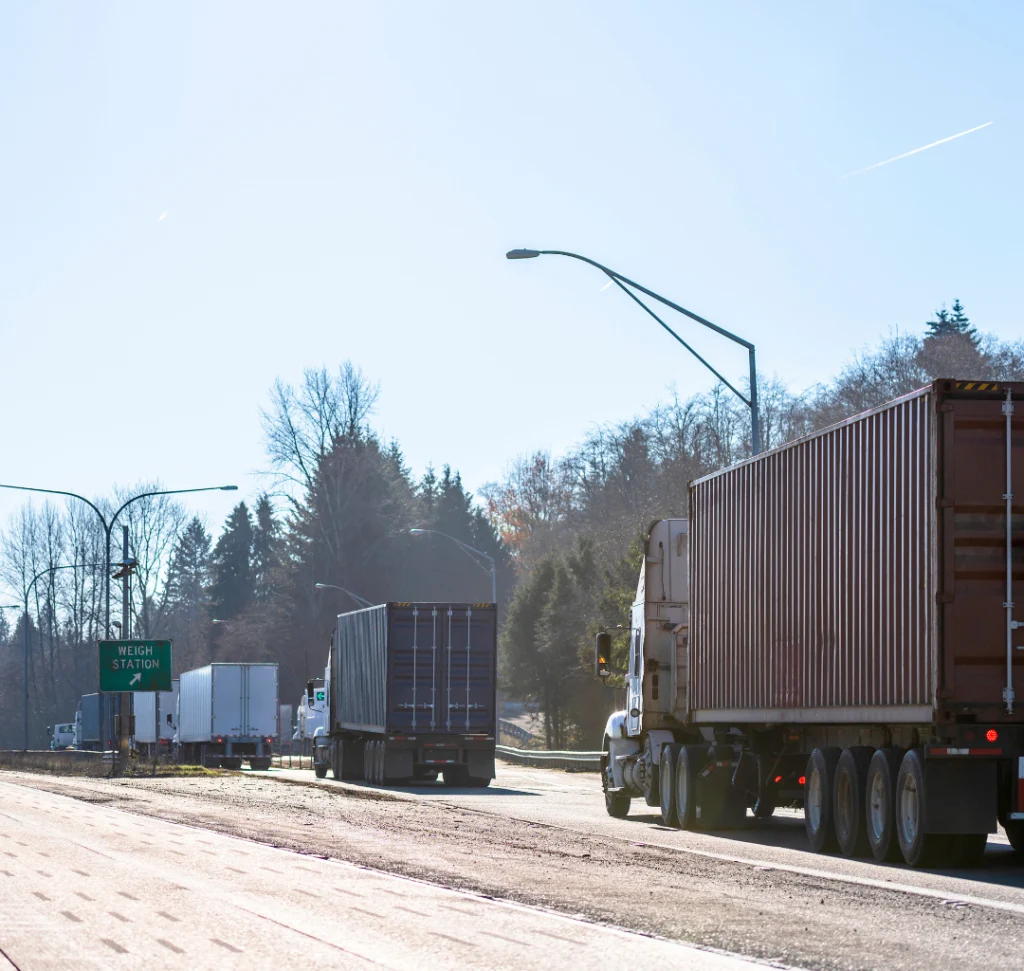
The transportation industry opposes increasing the size and weight limits for commercial trucks.
The transportation industry opposes increasing the size and weight limits for commercial trucks. In recent days, more than 2,200 local government leaders from across the country have expressed their opposition to proposed increases in truck size and weight, including heavier single-trailer trucks, through a letter sent to Congress.
Organized by the Coalition Against Bigger Trucks (CABT), the letter was signed by municipal and county officials, as well as public works directors and engineers from across the United States. In it, they state that the nation’s infrastructure is in poor condition, as local roads and bridges were not built to the same standards as interstate highways. “The impact of heavier or longer trailer trucks would only worsen these problems,” CABT argued.

Transportation industry vs. increased weight limits for commercial trucks
The transportation industry has repeatedly voiced its opposition to increasing weight limits for commercial trucks. In 2023, organizations such as the Owner-Operator Independent Drivers Association (OOIDA), the Truckload Carriers Association (TCA), and the Teamsters Union opposed H.R. 3372 a bill that proposed a 10-year pilot program allowing trucks to operate at weights of up to 91,000 pounds. Although states could choose whether to participate, the initiative did not advance in the House of Representatives.
This year, those same groups reaffirmed their stance during testimony before the House Transportation and Infrastructure Committee. Nevertheless, CABT states that transportation companies are currently pushing several proposals to raise the federal weight limit. These include a pilot program for 91,000-pound trucks to assess crash rates, a provision allowing logging trucks of up to 154,000 pounds, and a measure that would give governors the authority to set interstate weight limits within their states, potentially fragmenting federal regulation and harming interstate commerce.
A CABT study published this year warned that such increases could endanger up to 82,457 local bridges, with estimated replacement costs reaching $98.6 billion. In response, Representative Jerrold Nadler of New York voiced his concern, noting that trucks ultimately rely on local infrastructure, not just the interstate system.

Consequences of heavier trucks: damage to local infrastructure
The debate over increasing truck weight limits has been one of the most prominent issues in the road transport industry. Despite opposition, some states have already implemented or are considering adjustments to permitted weight limits.
The Executive Director of the Minnesota Association of Townships, also a board member of the National Association of Towns and Townships, warned that although these proposals focus on interstate highways, local infrastructure will be directly impacted. He pointed out that trucks don’t just travel on highways; they rely on local roads and bridges to load, unload, park, and rest all of which place strain on local infrastructure.
CABT continues to argue that heavier trucks significantly damage local structures. Similarly, the U.S. Department of Transportation, in its comprehensive 2016 study on truck size and weight limits, recommended against increasing them. This position reinforces the need for investment in infrastructure improvements before considering any increase in commercial truck weight limits.

Human Trafficking: A Nationwide Call to Action on America’s Roads
Human trafficking is the focus of a nationwide awareness week aimed at educating truck drivers, motor carriers, law enforcement, and the public about human trafficking, how to spot the warning signs, and what to do if someone may be in danger.

TAA Compliance: When Safety Complaints Turn Into Six-Figure Losses
STAA compliance is no longer a technical detail for fleet owners—it is a financial, legal, and insurance exposure. A recent enforcement action in Texas shows how mishandling safety complaints can lead to termination claims, retaliation findings, and six-figure penalties, and what carriers must do to avoid becoming the next case

U.S. labor market raises red flags on Wall Street
The U.S. labor market closed 2025 with clear signs of weakening, as evidenced by the latest employment data released in December. In the latest episode

DOT finds half of North Carolina CDLs were issued illegally
The DOT warns that half of North Carolina’s CDL licenses are irregular after a federal audit uncovered serious compliance failures. The findings directly affect truckers, fleets, and transportation companies, raising urgent questions about road safety, legal operations, and the future of the trucking industry.

California’s Unhealthy Air: Impacts on Trucking and Freight
Unhealthy Air Quality in California: What Repeated Pollution Alerts Mean for Trucking and Freight Operations

Global Road Freight on Track to Hit USD 5 Trillion by 2033
Global Road Freight on Track to Hit USD 5 Trillion by 2033 as e-commerce growth, supply chain restructuring, and technology adoption accelerate demand for road-based cargo transport worldwide.