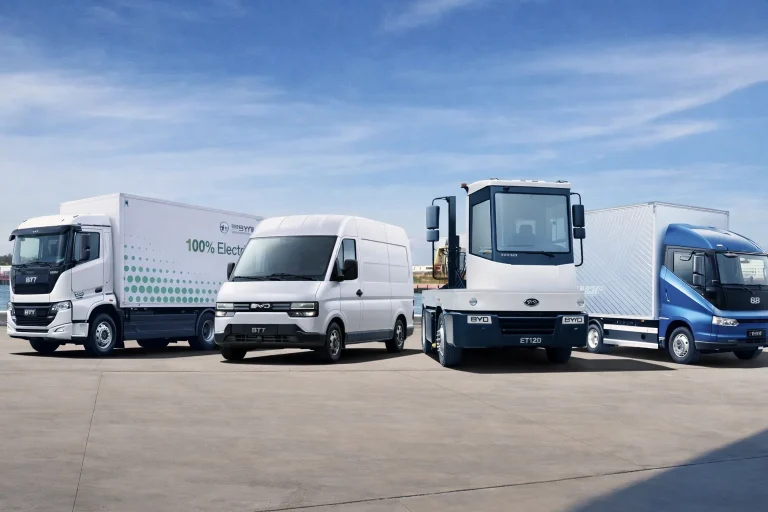
Investigations into Chinese technology in connected vehicles warn of espionage risks, massive data transmission, and potential remote access vulnerabilities that concern U.S. transportation and security experts.

The rapid expansion of connected vehicle technology is raising growing security concerns in the United States, particularly regarding commercial vehicles that rely on technology developed in China. Cybersecurity specialists and transportation authorities warn that connectivity systems installed in modern vehicles may allow the collection and transmission of massive volumes of operational data and, in extreme scenarios, could enable remote access to critical systems.
The concern goes beyond economic competition or manufacturing costs. The central issue is the potential security risk associated with electronic and communication systems integrated into today’s vehicles. Federal restrictions on certain foreign-connected technologies reflect a broader recognition that commercial vehicles have become mobile digital platforms with strategic importance.
For the transportation industry and fleet operators, this debate has direct operational implications. Modern trucks, delivery vehicles, and commercial fleets increasingly function as connected systems capable of transmitting large volumes of sensitive operational information.
Vehicles Are Becoming Rolling Data Platforms
Modern commercial vehicles incorporate a growing number of electronic systems designed to improve safety, efficiency, and fleet management. At the same time, these technologies generate enormous amounts of data.
A typical connected commercial vehicle may include:
Exterior and interior cameras
Radar and sensor systems
Microphones and voice-control systems
Continuous GPS tracking
Vehicle telematics
Remote diagnostic systems
Cellular connectivity modules
Battery management systems in electric vehicles
These systems collect detailed information about vehicle operations, driver behavior, routes, and surroundings. Data can include regular delivery routes, schedules, driving patterns, real-time location, and even interior recordings in some cases.
European technical investigations have found that significant portions of this data may be transmitted automatically to overseas servers. In one study involving a Chinese-built electric vehicle, researchers documented that approximately 90 percent of the collected data was transmitted to servers located in China.
For transportation and logistics companies, this raises concerns about the exposure of sensitive operational information such as freight routes, delivery schedules, and commercial activity.
Remote Sabotage Seen as the Biggest Risk
While data espionage has attracted attention, cybersecurity specialists warn that the most serious threat may involve remote access to critical vehicle systems.
Technical tests conducted by European researchers demonstrated that remote access to internal electronic systems was possible even under limited connectivity conditions. In one controlled test, researchers were able to access the battery management system of a connected electric vehicle, revealing potential vulnerabilities.
In theory, this type of access could allow attackers to:
Disable a vehicle remotely
Interfere with electronic systems
Manipulate telematics data
Shut down fleet operations
Disrupt logistics activity
Although no large-scale attacks have been publicly confirmed, security experts say the potential vulnerabilities justify preventive measures and closer regulatory oversight.
For fleet operators, the possibility of remote interference represents a new category of operational risk that did not exist in traditional mechanical vehicles.

U.S. Restrictions on Chinese Vehicle Technology
The United States has already begun limiting the use of certain connected vehicle technologies originating from China.
Current regulations allow manufacturers to use some materials produced in China, such as glass or plastics, but restrictions apply to communication chips, connectivity modules, and advanced vehicle software developed by Chinese suppliers.
These measures aim to reduce the risk of data leakage and cybersecurity vulnerabilities within the transportation infrastructure.
Federal officials increasingly view connectivity systems capable of transmitting information overseas as potential exposure points for sensitive operational data.
As commercial vehicles become more connected, cybersecurity considerations are becoming part of national transportation policy.
Concerns Are Also Growing in Europe
Security concerns surrounding Chinese-connected vehicle technology are not limited to the United States.
Several European governments are evaluating restrictions related to vehicles equipped with foreign electronic systems. Some agencies have warned officials to avoid discussing sensitive matters inside connected vehicles due to the possibility that audio or location data could be recorded and transmitted.
In some cases, policymakers have considered limiting the presence of vehicles with Chinese technology near military installations or critical infrastructure.
Despite these concerns, many Western manufacturers continue to rely on Chinese suppliers for electronics, sensors, and connectivity components. This dependence has created a complex balance between technological innovation and security concerns.
A New Risk Category for the Trucking Industry
For the transportation sector, connected vehicles represent a fundamental shift in how fleets operate. Trucks and commercial vehicles are increasingly integrated with digital systems that allow continuous monitoring and remote management.
These systems commonly include:
Dispatch platforms
Fleet management systems
Electronic logging devices (ELDs)
Insurance telematics
Maintenance monitoring systems
Connectivity improves efficiency and safety, but it also introduces new vulnerabilities that did not exist in earlier generations of commercial vehicles.
Transportation companies are increasingly asking critical questions such as:
Where vehicle data is stored
Who controls connectivity systems
Which vendors develop the software
What cybersecurity protections are in place
The evolution of connected commercial vehicles is transforming trucks and fleets into complex digital systems. In this new environment, cybersecurity is becoming one of the most important factors in protecting transportation operations in the United States.
As connected vehicle technology continues to expand, espionage risks and remote sabotage concerns are likely to remain a central issue for fleet operators and the trucking industry.

$170 billion at stake: 1,500 companies demand tariff refunds
Companies have challenged the global tariffs imposed by President Donald Trump, asking federal courts to reactivate proceedings to begin the refund process. The companies that

In brief: enforcement measures target speeding, CDL training gaps and more
Major enforcement actions across the U.S., including speeding, CDL fraud, and chain violations Colorado launches Speed Enforcement Program The Colorado Department of Transportation (CDOT) has
Chinese Vehicles Raise Espionage and Remote Sabotage Concerns
Investigations into Chinese technology in connected vehicles warn of espionage risks, massive data transmission, and potential remote access vulnerabilities that concern U.S. transportation and security

Between the Court and the Fed: the market redefines its roadmap for 2026
Trade policy in limbo as markets price in 2026 rate cuts and Supreme Court strikes down Trump tariff plan. In the latest episode of the

New 10% U.S. import tariff takes effect amid legal and market uncertainty
The implementation of these new tariffs has generated global uncertainty among exporters, increasing confusion around U.S. trade policy. The United States has implemented a new

Military Trucks That Moved a Base in Syria
Convoys of advanced HEMTT and PLS military trucks carried armored vehicles, prefabricated base structures, mobile workshops and heavy equipment during the U.S. withdrawal from northeastern