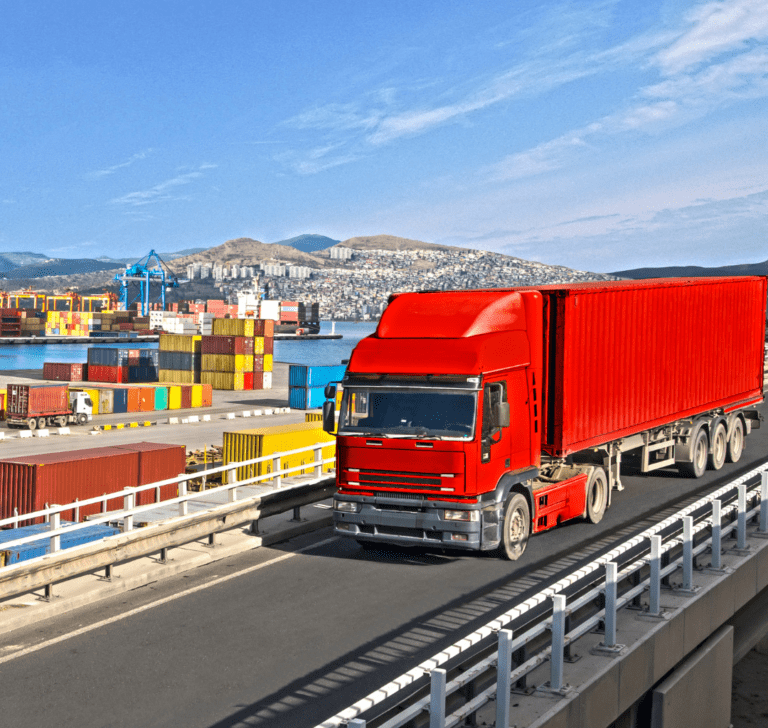
Despite the recent tariff threats from President Donald Trump, cross-border transportation has managed to remain in positive numbers.
So far in 2025, cross-border freight transportation has seen solid growth, following a positive trend, especially in the southern U.S.-Mexico border. Despite the recent tariff threats from President Donald Trump, cross-border transportation has managed to remain in positive numbers, with some trends increasing.
According to the latest data from the Bureau of Transportation Statistics, in January, goods worth nearly $88 billion were transported by truck across the borders, marking a significant 10% increase compared to January 2024, and an even larger 13% growth compared to December 2024.

Most popular goods in cross-border freight transportation
In January 2025, truck freight transportation across U.S. borders saw widespread increases. At the northern border, growth was 7%, while at the southern border, it was even higher, reaching 13%, according to the Bureau of Transportation Statistics.
At the northern border, the most transported products were computers and their parts, valued at $5.6 billion, and vehicles worth $4.6 billion. Meanwhile, at the southern border, the most notable goods were computers and parts at $13 billion, electrical machinery at $11.4 billion, and vehicles at $6.7 billion. Computer-related products dominated trade at this border for much of 2024, with year-over-year increases ranging from 20% to 67%.

Impact of Trump’s Tariff Threats
The increase experienced in early 2025 is closely linked to the tariff threats imposed at both borders in mid-January. The constant changes in tariffs announced by President Donald Trump have created uncertainty; however, cross-border trade has remained strong, preparing for any changes that might affect it in the near future.
Avery Vise, Vice President of Road Transportation at Freight Transportation Research Associates (FTR), stated that the 12.5% increase in seasonally adjusted imports during January was the largest monthly increase recorded. Vise linked this rise to Trump’s tariff threats, as reported by LandLine.
The Canadian Trucking Alliance warned that the tariffs could severely harm Canada’s road transport industry, while the Owner-Operator Independent Drivers Association (OOIDA) noted that the tariffs could delay the recovery from a prolonged recession in the freight transport sector. Although OOIDA acknowledged that it’s too early to predict the long-term economic effects, it will continue to monitor the impact of these policies.
This context reflects sustained growth in cross-border freight transportation but also highlights the future challenges stemming from trade policies and tariffs that continue to influence North America’s economy.

Commercial Driver’s License (CDL) in Washington: A Guide for Truck Drivers
For those looking to work as professional drivers in the state of Washington, obtaining a Commercial Driver’s License (CDL) is one of the most important

The Growth of Intermodal Transport in Washington: The New Inland Hub Gets Moving
The Tri-Cities Inland Logistics Hub and a new rail link in Pasco are driving intermodal transport growth in Washington.

The Main Truck Bottlenecks in Washington in 2026
The I-5 bridge over the Columbia River is the worst truck bottlenecks in Washington and Oregon.

Guide to Permits for Oversize Vehicles in Washington
Transporting an oversize vehicle, machinery, or load on Washington state highways can require a special size and weight permit. Learn when a permit for oversize load is needed.

High-Value Cargo Leaving Washington Ports: Why a Standard Policy May Not Be Enough
Electronics, machinery, industrial components, and other goods can concentrate hundreds of thousands of dollars in a single trailer. For carriers operating out of Seattle and Tacoma, knowing the true value of what they are hauling can be just as important as knowing the route.

Florida Highways for Truck Drivers: How the State’s Road System Works
Florida organizes its highway network into seven FDOT districts, along with Florida’s Turnpike. Here’s how the system works and what this division means for truck drivers and motor carriers.