Cross-border transportation and the vital role of the supply chain in U.S. border cities.
The continuous growth of cross-border truck freight transportation halted in December, with a slight decline in North American transportation. According to the Bureau of Transportation Statistics, in December, over $73 billion worth of goods were moved by truck across borders, marking an 11% decrease from November and nearly 1% less than December 2022. This is the first year-on-year decrease since February 2021, following a streak of 33 months of increases. December’s decline marks the largest month-to-month drop since the pandemic’s onset, surpassing even the 38.5% drop recorded in April 2020.
Truck-borne cross-border freight at the US northern border increased by over 1% compared to December 2022. However, at the southern border, the value of freight decreased by 2.5%. As for the Mexican border, the primary products were electrical machinery , computers/parts, and vehicles/parts.

In December, the total value of cross-border freight transportation reached nearly $122 billion, with a slight 0.1% year-on-year decrease and a 7% loss from the previous month. This decline interrupted two months of growth and marked a trend of loss for much of 2023. Truck, pipeline, and air transportation showed declines, while maritime and rail transportation increased.
Trade and supply chain at the US-Mexico border
Despite the statistical decline, foreign companies continue to seek supply chain diversification, especially in border cities. This strategy, known as nearshoring, has become increasingly prevalent in the northern and central states of Mexico.
The Cali-Baja megaregion, connecting Southern California and the northern part of Baja California in Mexico, has emerged as a significant beneficiary of global trade flows. Data provided in a 2022 study by the University of San Diego, shows this region is the largest and most economically integrated along the US-Mexico border.
According to FreightWaves, the manufacturing sector in Mexico attracted the highest Foreign Direct Investment (FDI) last year, with over $18 billion, nearly 70% of which went to Baja California in 2023. Additionally, approximately 70.8% of FDI came from the United States, followed by Japan with 15.7%.
Currently, 956 maquiladoras operate in Baja California, according to the INEGI report, with most located in Tijuana, Mexicali, and Tecate. These maquiladoras, primarily situated along the border, are Mexican factories owned by foreign companies that export their products to the companies’ home countries.
However, a persistent issue in these border cities is the shortage of truck drivers. The availability of operators is insufficient, affecting both transportation and manufacturing companies. Although there are enough trucks and containers to transport goods, the shortage of drivers is evident, a situation similar to that faced by the United States.

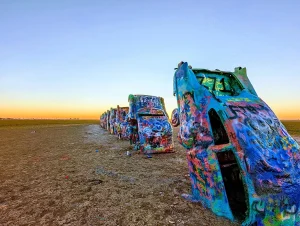
The best roadside attractions for truckers in the U.S.
America’s highways hide unique places that break up the routine, don’t hesitate to check out these roadside attractions along the way. The road is much

The trucker style: comfort, function, and identity
Truckers’ style is much more than workwear; it’s an identity. These are the most commonly worn garments among truckers. Truckers’ style is much more than

Chaos on Highway 61: Viral Wrong-Way Truck Video Reignites the CDL Debate
An 80-ton tractor-trailer traveling miles in the wrong direction on Missouri’s Highway 61 has reignited a nationwide debate over Commercial Driver’s License (CDL) standards, training

How technology affects driver retention
Friend or foe? 52% of drivers say technology directly influences their decision to stay with or leave a fleet. Fleet telematics company Platform Science published

Dalilah Law seeks to remove non-english speaking commercial drivers
President Donald Trump proposed the “Dalilah Law,” an initiative aimed at prohibiting undocumented immigrants from obtaining commercial driver’s licenses. On February 24, President Donald Trump
FORMULA 1 and the AI That Could Transform Transportation in the U.S.
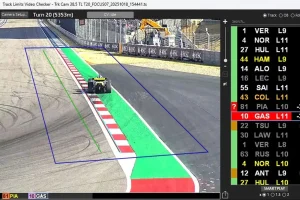
The artificial intelligence system that Formula 1 implemented to monitor every car on every turn is opening the door to new applications in trucking, logistics,