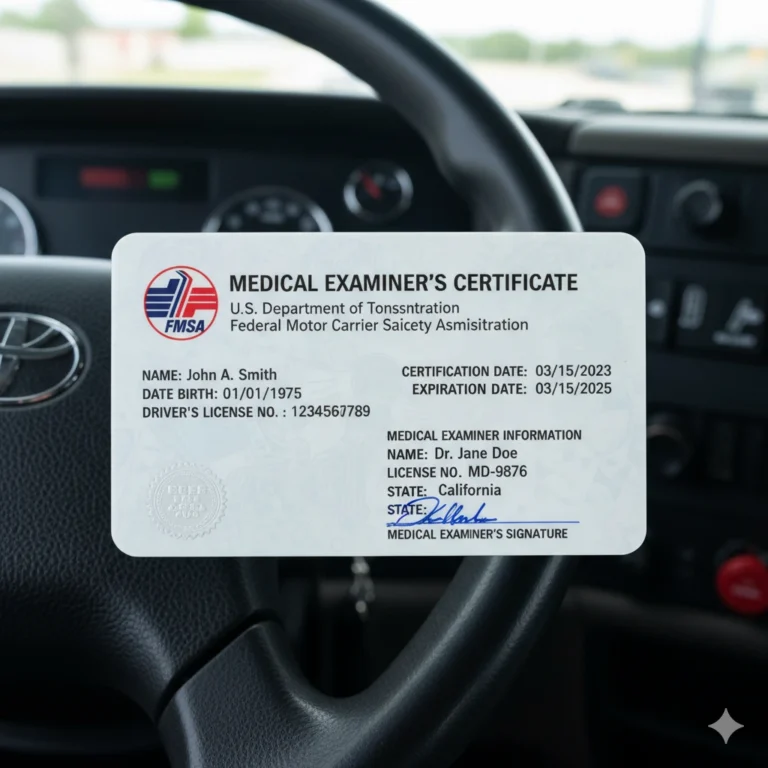
Keeping your DOT Medical Card current is essential for both drivers and fleet operations. Staying organized and renewing on time helps avoid CDL suspensions, route interruptions, and unnecessary administrative delays. Regular medical certification is a core part of safe and compliant commercial driving
The DOT Medical Card is more than a standard document. It confirms that a commercial driver is medically qualified to operate a commercial motor vehicle under Federal Motor Carrier Safety Administration (FMCSA) regulations. For drivers, having an up-to-date medical certification means being legally eligible to continue working. For fleets, it ensures that only medically qualified drivers are dispatched, protecting operational continuity and maintaining compliance during audits and inspections.
However, many drivers wait until the last moment to renew the certification, which can lead to unexpected delays, suspension of driving privileges, or removal from dispatch schedules. Establishing good habits for tracking renewal dates and completing medical exams ahead of time is key to preventing avoidable disruptions.

What It Means to Keep Medical Certification Up to Date
Keeping your DOT Medical Card current involves several steps that must happen consistently:
Know the expiration date of your current medical certification.
Schedule your DOT medical exam ahead of time.
Submit the updated certificate to your State Driver Licensing Agency (SDLA).
Keep copies of your certification for both personal records and fleet files.
Most drivers receive a medical certificate valid for 24 months. However, if the medical examiner identifies a condition that requires periodic monitoring, such as high blood pressure, diabetes, sleep apnea under treatment, or a cardiovascular condition, the certification may be valid for 12 months or possibly 3 to 6 months for follow-up. A shorter certification does not mean the driver cannot work; rather, it reflects the need for more frequent health check-ins to ensure safe operation.
Keeping records accurate and updated ensures that a driver’s medical status is correctly reflected in state CDL databases, which prevents unexpected suspensions.
Why Renewal Should Be Planned in Advance
When the DOT Medical Card expires, the driver’s CDL can change to non-certified status. In some states, this can trigger automatic CDL downgrade, requiring additional steps to restore privileges. Once the certificate expires, the driver is not legally allowed to operate a commercial motor vehicle.
Renewing in advance allows time to:
Find an appointment with a certified medical examiner.
Complete any follow-up evaluations if needed.
Resolve any documentation or state submission issues.
Avoid removal from duty or rescheduling of assigned routes.
Planning early prevents last-minute complications. A good rule is to check expiration dates at least 60 days before renewal is required.
Fleet Management: Organizing Medical Certification
For carriers and fleet managers, tracking medical certificate expiration dates is a critical part of compliance. During audits or roadside inspections, proof of a valid medical certification must be available for each driver, and the certification must be updated in CDLIS (Commercial Driver’s License Information System).
Recommended fleet practices include:
Maintaining an up-to-date internal roster with expiration dates.
Sending reminders to drivers well before renewal windows.
Requesting both physical and digital copies of each updated certificate.
Confirming that the certificate has been correctly submitted to the SDLA.
Assigning a compliance coordinator or administrator responsible for verification.
When these steps are standard procedure, renewal becomes routine rather than urgent.
Practical Guidance for Drivers
Drivers can help ensure continuity by taking an active role in managing their certification:
Store a copy of the DOT Medical Card in the truck and another at home.
Save a digital scan on a phone or email account for quick access.
Set a calendar reminder for the expiration date and an earlier reminder 60 days prior.
Communicate with the fleet or dispatch office if the certification issued is shorter than expected.
Being proactive helps prevent schedule delays and ensures readiness for roadside checks.
Keeping the DOT Medical Card up to date is a shared responsibility between drivers and fleet operators. It supports safe driving practices, protects the integrity of the CDL, and ensures stability in daily fleet operations. Regular medical examinations help detect and manage health conditions early and maintain the driver’s ability to perform demanding work safely. When renewal is planned in advance and documented properly, both drivers and companies benefit from uninterrupted work and consistent compliance.
Truck driver: stop choosing the worst route

The meaning of Hanukkah and how to celebrate it on the road
Hanukkah is a celebration of resilience and hope, and here are some ways you can take this on the road. December is one of the

Waymo under investigation for potential safety risk in school zones
A recent wave of videos has shown that some Waymo vehicles are not complying with safety regulations in school zones. The autonomous vehicle company Waymo,

Don’t Blame the Snow: The Real Causes Behind Winter Truck Accidents
Don’t Blame the Snow: Why Most Winter Truck Accidents Are Preventable

Mexico aligns with U.S. as new tariffs target Asian imports
Mexican lawmakers gave their final approval to the new tariffs on Asian imports, largely aligning themselves with the United States’ efforts to tighten trade barriers

Seven charged in New York CDL fraud case involving DMV employees
A group of DMV employees in New York allegedly manipulated the process of obtaining commercial driver’s licenses by allowing applicants who never showed up to

Transportation Seeks Proposals to Rebuild the American Legion Memorial Bridge
Transportation seeks proposals to rebuild the American Legion Memorial Bridge, repeating the call for proposals to address the most critical freight chokepoint on the East Coast. The initiative aims to attract ideas, financing models, and private-sector innovation to modernize a corridor that today imposes millions in delays on the trucking industry.