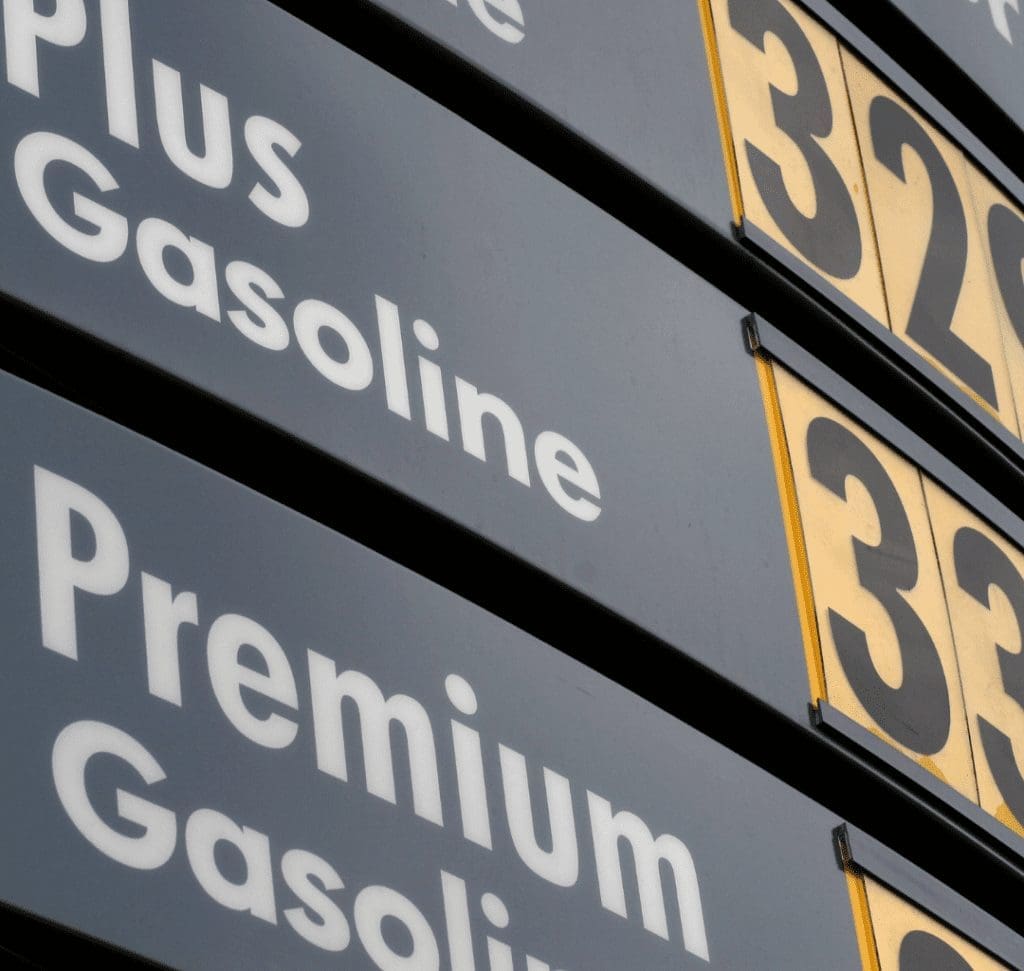
An average car has a capacity of 15 gallons, how much did it cost to fill up a tank a few decades ago?
Walkmans, arcades, and video rental stores—these are just a few of the things that have largely disappeared since the 1980s, now condensed into a single device, a symbol of one of the major technological changes of the 2010s. As technology and society have evolved, so too has the cost of living. In recent decades, the prices of essentials such as housing, food, transportation, and gasoline have experienced significant changes. If you’re curious about how these costs have evolved, let’s take a look at the price of filling up a tank in the 80s, 90s, 00s, and today.
In 1980, the national average price of gasoline per gallon was $1.19. The week of August 19, 2024, the average price of gasoline was $3.38 per gallon. Despite the noticeable increase, various factors determine the true value of filling up a tank in the 1980s, so $1.19 in 1980 would be approximately equivalent to $4.54 in today’s terms. However, this does not mean that filling up the tank is cheap today.
David Poulnot, Vice President of Multivertical Sales at Upside, states that gasoline prices are rising due to factors such as supply chain issues and global conflicts. So, what are the differences between current prices and those from the past? GoBankingRates has published an article showing the main differences.

Current gasoline prices vs. prices in past decades
The average car has a capacity of between 12 and 15 gallons. Assuming your tank is 15 gallons and empty, these are the approximate costs to fill it currently:
- Regular gasoline: $50.81
- Mid-grade gasoline: $57.80
- Premium gasoline: $63.05
- Diesel: $55.92
And how much did it cost in the past? The data collected mainly comes from the U.S. Energy Information Administration (EIA) as well as TitleMax. The EIA has published data on fuel costs from the early 1990s to today, including gasoline prices for all types of fuel. Here’s the list by decade:
- 2020 — $2.25 per gallon
- 2010 — $2.83 per gallon
- 2000 — $1.52 per gallon
- 1990 — $1.16 per gallon
- 1980 — $1.19 per gallon
Regarding the cost to fill up a full tank, assuming a typical vehicle capacity of 15 gallons, the prices look like this:
- 2020 — $33.87 per tank
- 2010 — $42.53 per tank
- 2000 — $22.85 per tank
- 1990 — $17.37 per tank
- 1980 — $17.85 per tank

The price per gallon in the 1990s would be approximately $2.29 in today’s terms. On the other hand, in 2008, one of the highest prices per gallon was recorded at $3.27, which is equivalent to about $4.40 today due to the onset of the recession. In 1929, the price was just $0.29 per gallon, a figure that seems very low today but is equivalent to about $3.59 in current dollars. These comparisons show that gasoline prices are intrinsically linked to the economy; what seems low or high depends on the economic context and wages of the time. So, do we have low prices today?

Indiana and Ohio Pave the Way for Autonomous Trucking
Backed by an $8.8 million investment and federal transportation funding, Indiana and Ohio are developing a corridor to test automated trucks in real-world freight operations. The project aims to improve highway safety, logistics efficiency, and interstate autonomous vehicle operations.

Texas Lawsuit Raises Questions About Age Limits for Truck Drivers
A federal lawsuit against a Texas trucking company is drawing attention to the rights of older truck drivers. How long can they stay behind the wheel, what medical requirements must they meet, and what does federal law say?

California to Texas: Young Americans Move as Logistics Booms
Texas is strengthening its position as a major U.S. transportation and distribution hub while thousands of young Americans choose the state as a place to live and work.

Florida Reopens Highways After Isaias, but Logistics Disruptions Persist
Following Hurricane Isaias, Florida continues to face port closures and fuel supply challenges as trucking companies play a critical role in delivering essential goods and supporting recovery efforts across the Panhandle.

Wall Street soars, consumption lands. What if we seek a balance?
As Wall Street hits record highs, driven by technological innovation, U.S. households are adjusting their priorities, paving the way for a long-term transformation.

Do You Live in a Happy State? The Happiest States in the U.S. in 2026
A WalletHub study identified the “happiest” states in the United States. Which one do you live in?