The DOT has decided to reactivate the suspended pilot programs that will study the effects of allowing truck drivers to split their mandatory rest times.
The United States Department of Transportation (DOT) has decided to reactivate the suspended pilot programs that will study the effects of allowing truck drivers to split their mandatory rest times, according to federal hours of service regulations.
Known as “Split Duty Period” and “Flexible Sleeper Bed,“ these pilot programs have been included in the DOT’s Pro-Trucker package, promoted by Secretary Duffy. The aim of these programs is to relax federal regulations in the trucking industry, with a key focus on service and rest hours.

Split Duty and Flexible Sleeper: dividing mandatory rest times
Split Duty consists of a pilot program that will allow truck drivers to interrupt their 14-hour driving period for a break of between 30 minutes and three hours. Once the testing phase is implemented, the Federal Motor Carrier Safety Administration (FMCSA) will assess the data from this program to determine how this additional flexibility could impact safety.
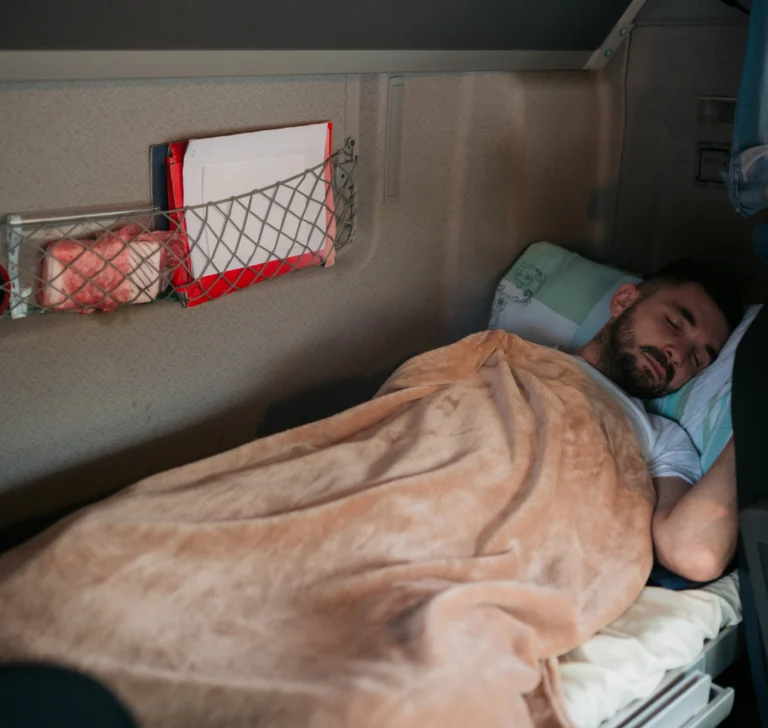
On the other hand, the Flexible Sleeper experiment would allow participating drivers to divide their 10-hour rest period into different combinations. The current sleeper berth regulation allows freight drivers to split their mandatory 10-hour rest period as long as one of the rest periods, whether inside or outside of the sleeper berth, is at least two hours long and the other involves at least seven consecutive hours in the berth.
The Department of Transportation stated that the FMCSA will evaluate the safety implications of allowing drivers to split their 10-hour off-duty requirement. Additionally, the research will aim to examine how these alternatives affect driver fatigue, as well as their overall safety performance, with the goal of determining whether a wider range of rest options could benefit both drivers and the motoring public.

Improving truck driver working conditions in the U.S.
This proposal has been in development for years. In 2013, the FMCSA first proposed a pilot program to study changes to rest periods, and in 2017, 2019, and 2020, it was proposed again. However, the proposals did not come to fruition until now, with plans to implement it as part of the Pro-Trucker program, which mandates the DOT to “identify and begin to implement additional administrative, regulatory, or enforcement measures to improve the working conditions of truck drivers in the United States.”
According to data shared by the Department of Transportation, details of both pilot programs will begin to develop in early 2026, and about 500 drivers are expected to participate in them.

Fuel tax cuts gain momentum across U.S. states
In response to recent increases in fuel prices, lawmakers in several states have been working to adopt measures that temporarily suspend fuel taxes.

Maintenance practices commonly overlooked in fleets
These overlooked maintenance tasks can cost a fleet an average of $12,000 to $18,000 per truck annually.

U.S. Economy 2026: Accelerating vs. Stalling Sectors
Technology, renewable energy and domestic tourism drove production during the first quarter of the year. The residential real estate, agriculture and textile sectors lagged behind. What happened to transportation? Special report.

10 Things Truck Drivers Are Not Allowed to Do (And Many Don’t Know It)
Fines up to $16,000, CDL suspension, and accident risk: these are the DOT and FMCSA rules every truck driver must know today.

Do you want to be a truck driver? Here’s what you need to know
Being a truck driver in the United States represents an attractive professional option due to the sustained demand in the logistics industry, but it comes with certain challenges.

$12.5 billion saved by the impact of weigh station bypass technology
The 2026 National Bypass Impact Index reveals significant operational benefits accumulated over nearly three decades.
All content and original artwork, unless otherwise noted, is protected by copyright. Saint George uses certain images under license from various licensing vendors for this purpose. Any unauthorized commercial reproduction or distribution of copyrighted materials is prohibited.