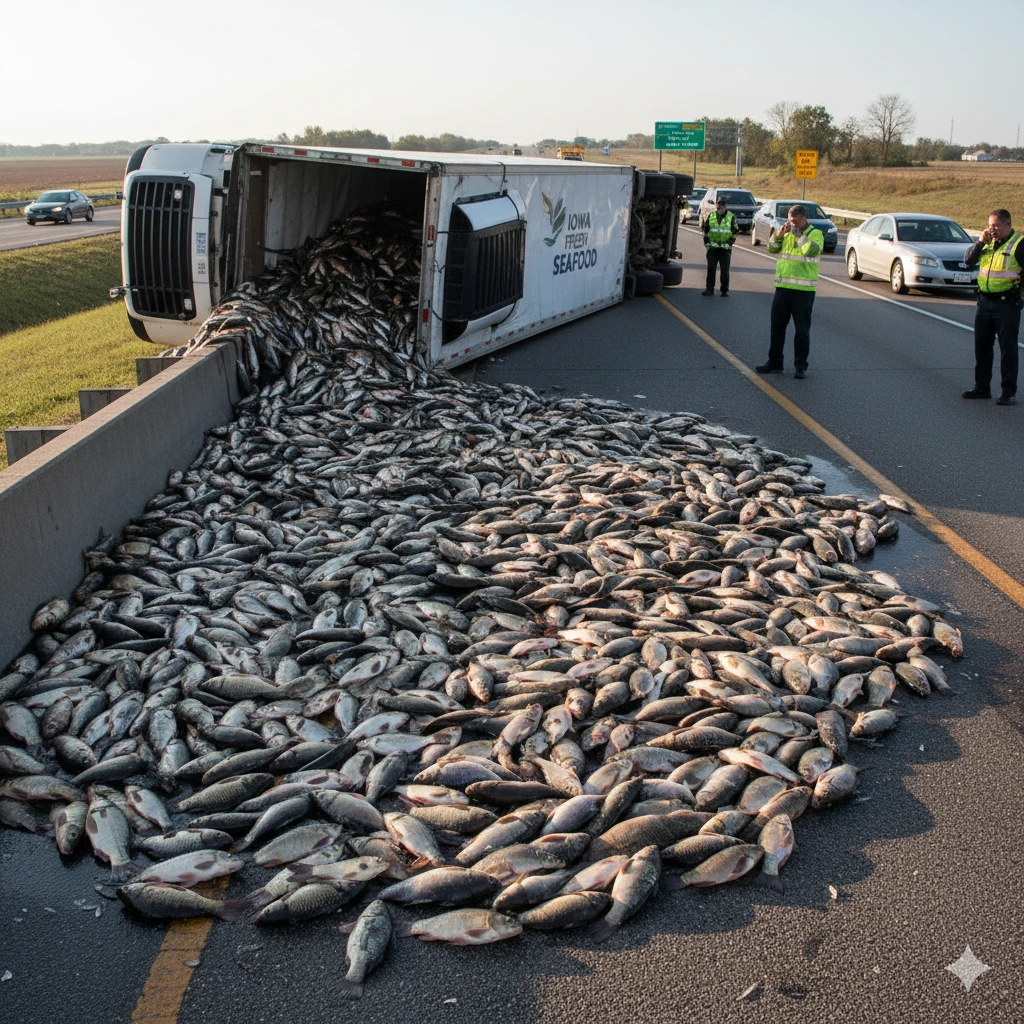
Out-of-Control Bees and Flying Cash: The Wildest Truck Accidents in the U.S.Every day, trucks log millions of miles on U.S. highways, moving everything from groceries to livestock. Most accidents are routine fender-benders or cargo spills.
Every day, trucks log millions of miles on U.S. highways, moving everything from groceries to livestock. Most accidents are routine fender-benders or cargo spills. But every so often, something truly surreal happens: bees swarming across lanes, roads covered in nacho cheese, pigs and cows on the run, or cash bills raining from the sky. Here’s a look at some of the strangest and most unforgettable truck accidents across the country.
Bee Invasions on the Highway
Washington (2025): A semi carrying 70,000 pounds of beehives flipped in Whatcom County, unleashing millions of bees. Local beekeepers rushed to the scene to recover damaged hives.
Maine (2024): A truck hauling 15 million bees overturned on I-95. Firefighters and rescuers ended up with multiple stings as they scrambled to contain the chaos.
Montana (2004): Near Bozeman, 9 million bees escaped after a truck crash. The driver had to smash through his own windshield to escape the swarming insects.
Despite the chaos, these crashes caused few human injuries, but highlighted how hard it is to control “live cargo.”
Pigs, Cows, and Chickens on the Loose
Ohio (2015): A livestock hauler tipped over, releasing around 150 pigs. Some bolted across the freeway while others were trapped inside the wreck.
Georgia (2020): Dozens of cows wandered onto I-75 after a trailer crash, forcing authorities to close the interstate for hours.
California (2012): Thousands of chickens died when a truck collided on Highway 99, scattering cages and feathers across multiple lanes.
These incidents were tragic for the animals and turned highways into scenes of absolute mayhem.
Food Spills That Turned Roads Into Kitchens
Arkansas (2017): A tanker of nacho cheese overturned on I-30, coating the asphalt with sticky yellow goo.
Tennessee (2018): A trailer full of Alfredo sauce caught fire, leaving a white, creamy mess across the highway.
California (2022): Near Vacaville, I-80 turned into a red river after tons of tomatoes spilled, creating a slippery hazard that caused pile-ups.
Michigan (2024): A truck slammed into a bridge on I-94, dumping barrels of salad dressing and shutting down lanes for cleanup.
Cleanup crews often spend hours dealing with these food disasters, not because of the crash itself but because removing sticky or slippery food waste is a logistical nightmare.

Frozen Cargo Gone Wrong
Texas (2015): A Blue Bell ice cream truck flipped on I-45. Nobody was hurt, but locals rushed to scoop up melting cartons.
Georgia (2017): A refrigerated truck full of frozen chickens caught fire, leaving thousands of charred birds scattered across the pavement.
Cash in the Air
California (2019): A Brink’s armored truck burst open on I-5 near Carlsbad, sending $1 and $20 bills flying. Drivers stopped to grab cash, but many later faced arrest after police tracked them through traffic cameras.
New Jersey (2018): On a busy East Rutherford highway, bags of cash fell from a truck, halting traffic as people scrambled to collect the money.
These crashes created a real-life “money rain”—and a reminder that free cash can come at a heavy legal cost.
Booze and Soda Floods
Kentucky (2018): A Jim Beam truck overturned, dumping thousands of gallons of whiskey into the Kentucky River, sparking environmental concerns over fish kills.
Missouri (2017): Thousands of Bud Light cans rolled across I-70 after a semi tipped over.
Texas (2019): A Dr. Pepper truck caught fire, leaving mountains of exploded soda cans piled along the highway shoulder.
The Unexpected and the Dangerous
Nevada (2017): A federally monitored truck carrying radioactive material overturned near Las Vegas. Luckily, there was no leak—but panic spread quickly.
Oklahoma (2018): A trailer hauling medical marijuana tipped over, sending a strong smell across nearby neighborhoods.
Colorado (2020): A dynamite truck for mining operations caught fire, forcing authorities to evacuate several miles of highway.
America’s trucking system is the backbone of its economy, but when something goes wrong, the results can be spectacular, dangerous, and downright bizarre. From highways turned into skating rinks of tomato juice to airborne dollar bills and runaway pigs, these accidents show that on U.S. roads, you never quite know what’s around the bend.

Human Trafficking: A Nationwide Call to Action on America’s Roads
Human trafficking is the focus of a nationwide awareness week aimed at educating truck drivers, motor carriers, law enforcement, and the public about human trafficking, how to spot the warning signs, and what to do if someone may be in danger.

TAA Compliance: When Safety Complaints Turn Into Six-Figure Losses
STAA compliance is no longer a technical detail for fleet owners—it is a financial, legal, and insurance exposure. A recent enforcement action in Texas shows how mishandling safety complaints can lead to termination claims, retaliation findings, and six-figure penalties, and what carriers must do to avoid becoming the next case

U.S. labor market raises red flags on Wall Street
The U.S. labor market closed 2025 with clear signs of weakening, as evidenced by the latest employment data released in December. In the latest episode

DOT finds half of North Carolina CDLs were issued illegally
The DOT warns that half of North Carolina’s CDL licenses are irregular after a federal audit uncovered serious compliance failures. The findings directly affect truckers, fleets, and transportation companies, raising urgent questions about road safety, legal operations, and the future of the trucking industry.

California’s Unhealthy Air: Impacts on Trucking and Freight
Unhealthy Air Quality in California: What Repeated Pollution Alerts Mean for Trucking and Freight Operations

Global Road Freight on Track to Hit USD 5 Trillion by 2033
Global Road Freight on Track to Hit USD 5 Trillion by 2033 as e-commerce growth, supply chain restructuring, and technology adoption accelerate demand for road-based cargo transport worldwide.