Drivers who commit drug and alcohol violations must immediately abandon their current responsibilities to begin the process before returning to vehicle operation
Drug and alcohol violations carry major repercussions for drivers and all parties involved. The U.S. Department of Transportation provides a detailed framework around these violations, including one of the most complicated steps: reinstatement. Carriers must use these policies to address everything from immediate consequences to long-term follow-up procedures for drivers.
Referred to as the return-to-duty process (RTD) are all the steps to follow after a driver has failed a drug or alcohol test under FMCSA regulations. Drivers who commit drug and alcohol violations must immediately abandon their current responsibilities to begin the process before returning to vehicle operation.
On the other hand, it is the obligation of carriers or medical review officers to report all violations to the Drug and Alcohol Clearinghouse. Following the report, the driver will be placed in “prohibited” status where the RTD process must begin.

Substance abuse professional program and return to service process
One of the first steps to reinstatement includes completing a treatment or education program with a substance abuse professional (SAP). During the assessment, the professional will determine the steps necessary to address the driver’s drug or alcohol problem and prescribe a course of treatment. Upon completion of the assigned treatment, the driver will be required to meet once again with the SAP to determine whether or not they have been successful.
Following the driver’s evaluation, if the treatment is deemed successful, the practitioner will enter the completed steps into the Clearinghouse, along with the driver’s eligibility to return to service. However, if the assessment is to the contrary, the driver will be required to continue working with the SAP until deemed sufficiently ready.
Once drivers are found to be ready to return to work, a drug and/or alcohol test will be required based on what has been ascertained during the assessments, conducted under direct observation. If the driver passes the test, carriers must notify the Clearinghouse to have the prohibited status removed.
By removing a driver’s prohibited status, the driver is granted the opportunity to return to safety-sensitive functions such as driving commercial vehicles. In addition, this will also allow drivers to regain their CDL status when new policies are enacted later this year regarding downgraded licenses.

Returning to work and future employers
A minimum of six tests within 12 months of returning to duty is required for drivers who come off barred status. Through the SAP recommendations frequent testing requirements may last up to five years. Drivers who change employers or take a break after a violation still have a responsibility to complete RTD and follow-up programs. That is why new employers wishing to move forward with these applicants should contact the SAP as well as previous employers to find out the status of the process.
Getting a driver back on duty legally and safely after a violation is a long and tedious process for both drivers and carriers. The ability for drivers to continue their careers after a violation is achievable, however it requires concerted efforts to achieve a safe environment for drivers and employers.

Middle East Conflict: Impact on Diesel Prices and What U.S. Truckers Should Expect
The escalation of conflict in the Middle East has pushed crude oil prices toward $80 per barrel, reigniting global energy volatility. For the U.S. trucking

The best roadside attractions for truckers in the U.S.
America’s highways hide unique places that break up the routine, don’t hesitate to check out these roadside attractions along the way. The road is much

The trucker style: comfort, function, and identity
Truckers’ style is much more than workwear; it’s an identity. These are the most commonly worn garments among truckers. Truckers’ style is much more than
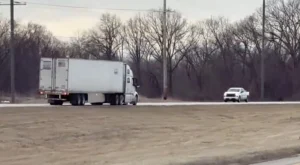
Chaos on Highway 61: Viral Wrong-Way Truck Video Reignites the CDL Debate
An 80-ton tractor-trailer traveling miles in the wrong direction on Missouri’s Highway 61 has reignited a nationwide debate over Commercial Driver’s License (CDL) standards, training

How technology affects driver retention
Friend or foe? 52% of drivers say technology directly influences their decision to stay with or leave a fleet. Fleet telematics company Platform Science published

Dalilah Law seeks to remove non-english speaking commercial drivers
President Donald Trump proposed the “Dalilah Law,” an initiative aimed at prohibiting undocumented immigrants from obtaining commercial driver’s licenses. On February 24, President Donald Trump