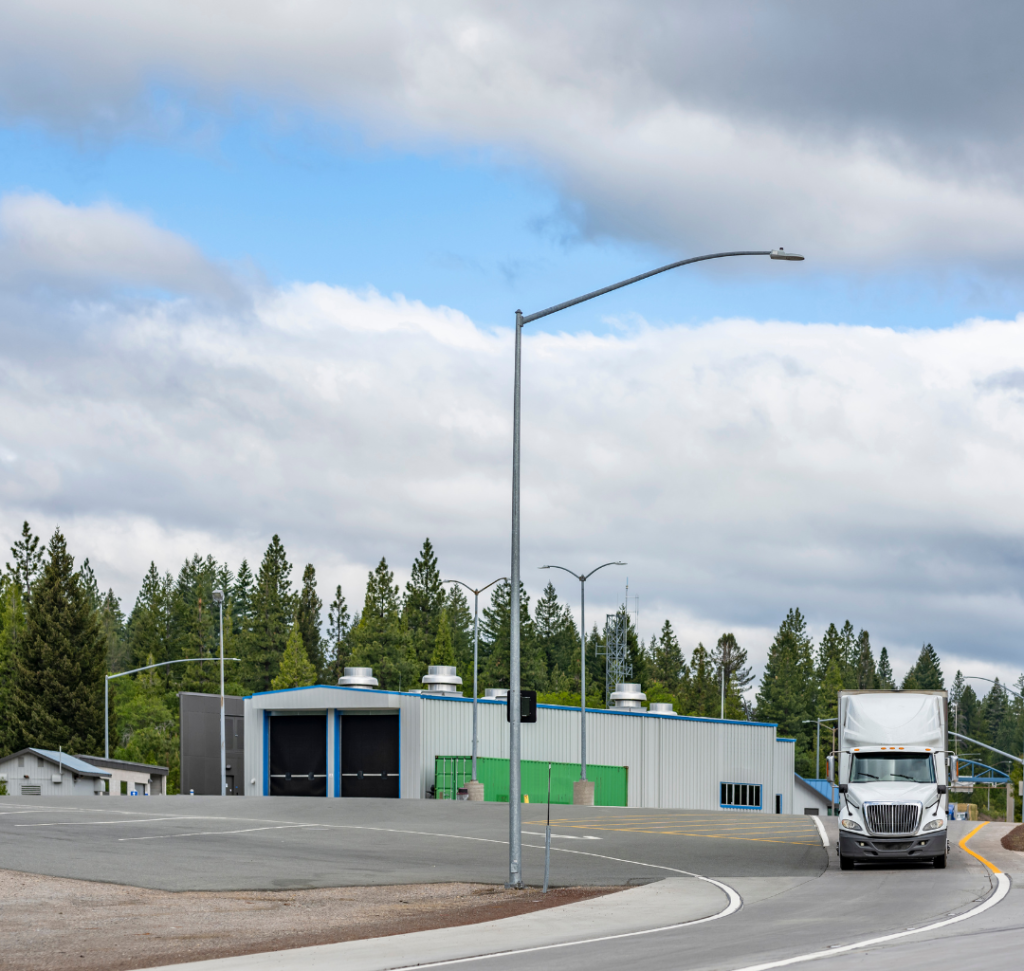
Weigh stations are checkpoints designated by the USDOT to ensure trucks are complying with the weight limit.
The U.S. Department of Transportation (USDOT) sets strict regulations on truck weight limits to maintain road conditions and, especially, to ensure driver safety. These limits require carriers to comply with the allowed quantities, and truck weigh stations have been implemented to monitor compliance.
Weigh stations are checkpoints designated by the USDOT, where inspectors or state highway patrol officers stop truck drivers to verify that their vehicle’s weight complies with state regulations.

How truck weigh stations work
Weigh stations, managed by state agencies, are located on highways and near borders to monitor the weight of commercial vehicles, mainly trucks. Their primary function is to protect the integrity of the roads and reduce the wear and tear caused by overweight trucks, which are a significant source of infrastructure damage. Although carriers are aware of weight limits, exceeding them can occur for various reasons, making these stations essential on the busiest trade routes.
The federal legal limits set by the USDOT are as follows:
- Maximum gross weight allowed: 80,000 pounds
- Maximum tandem axle weight: 34,000 pounds
- Maximum single axle weight: 20,000 pounds
Weigh stations located on highways, state borders, and ports of entry instruct drivers to slow down and stay in the right lane. The weighing process varies depending on the technology used and whether the truck has pre-clearance, which may exempt it from stopping.

Practices to comply with weight limits
Understanding the importance and operation of weigh stations highlights the responsibility that carriers and truck drivers must have to ensure compliance with the requirements. Here are some of our most recommended practices for truck drivers regarding weigh stations:
- Check your vehicle’s gross weight – Weighing the vehicle before reaching a weigh station allows for proactive weight verification and helps avoid penalties.
- Comply with all regulations – It is important to ensure your vehicle complies with all USDOT regulations to avoid additional penalties beyond weight limits.
- Know state-specific weight limit regulations – Although the USDOT sets general limits, some states allow slight exceedances. Therefore, it’s essential to know these regulations, especially on long-distance trips.

Remember that the Department of Transportation takes compliance with legal weight limits very seriously to ensure safety in semi-trailer traffic. Adhering to these regulations not only avoids unnecessary fines but also ensures a safer and smoother journey on the roads.

Cannabis reclassification could affect the trucking industry, ATA warns
President Donald Trump signed an executive order directing his administration to reclassify cannabis into a less restrictive federal category, could this affect the trucking industry?

ATA Calls for Tougher Penalties Against Cargo Theft
Cargo theft has moved from being an industry nuisance to a national concern. The American Trucking Associations (ATA) warned Congress that the crime is draining billions from the U.S. supply chain, disrupting logistics operations, endangering drivers, and increasingly intersecting with organized crime and national security threats—prompting renewed calls for stronger federal penalties and coordinated enforcement.

The first Bipartisan Trucking Caucus
Led by a group of lawmakers who come together to pursue shared policy goals, the caucus will focus on the integrity, safety, and growth of

NDAA passed with new protections for truck drivers and military freight
Congress approved the National Defense Authorization Act, a key piece of legislation that includes provisions aimed at protecting truck drivers. Congress approved this week the

California to Reissue Contested Commercial Driver’s Licenses, Challenging Federal Pressure
California plans to reissue contested commercial driver’s licenses (CDLs), reopening a regulatory dispute with federal authorities and raising key questions for the U.S. trucking industry.

Tesla faces suspension in California due to false advertisement
The California DMV announced that sales of Tesla Inc. vehicles could be suspended for 30 days in the state, due to marketing practices that “mislead