From no honking at night to driving barefoot, these are some of the strangest traffic laws in the U.S.
Most traffic laws are straightforward and easy to understand for any driver. From obeying speed limits to recognizing road signs and stopping at red lights, the rules are designed to keep everyone safe on the road. However, in some U.S. states, there are traffic laws that stray far from the norm. With strange purposes that go beyond the typical, these laws will leave you questioning how—and why—they were created.
Not honking at night, avoiding bad language while driving, or even being allowed to go without a seatbelt if you’re over 18. While many of these laws may seem absurd, compliance is mandatory and the penalties for breaking them are very real. With information shared by Smart Financial, we present a list of some of the most unusual traffic laws in the United States.

The strangest traffic laws in the United States
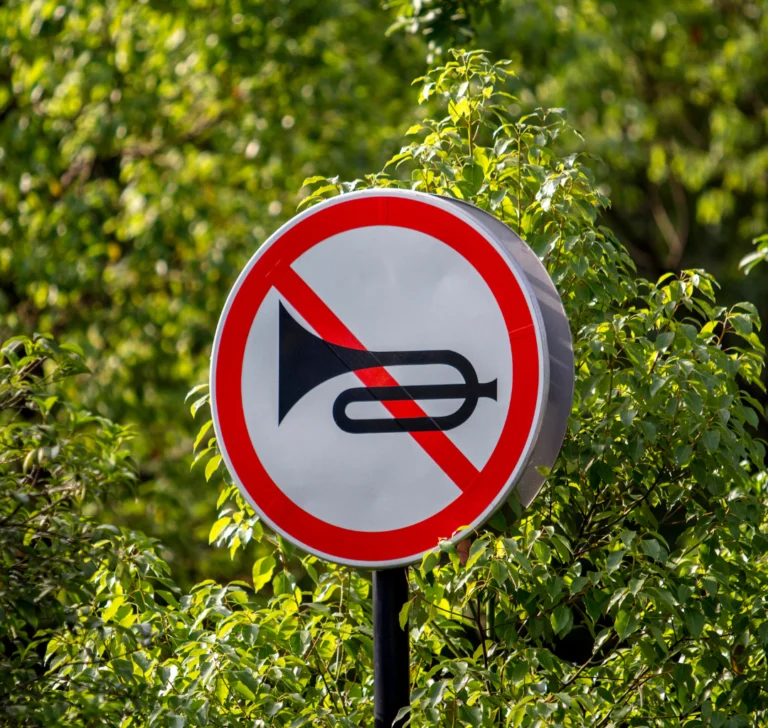
Arkansas: Honking after 9:00 p.m. is prohibited
In Little Rock, Arkansas, there’s a law that forbids drivers from honking their horn near places where cold drinks and sandwiches are served after 9:00 p.m. Violating this rule can result in a fine of up to $1,000 for a first offense. The reason behind this law? It’s not entirely clear, but many would agree that a horn honking at night can be pretty annoying.
Delaware: Drivers can’t change clothes inside their vehicles
Ever felt the need to change out of your gym clothes inside your car? Well, in Rehoboth Beach, Delaware, that’s illegal. The law prohibits changing clothes inside a vehicle if it’s in public view and on a public road. However, if the car is parked in a private garage, it’s not an issue. It’s unclear how many incidents led to the creation of this rule—but it’s on the books.
Maryland: Swearing from your vehicle is illegal
Everyone has, at some point, been stuck in traffic or lost their patience with a distracted driver. The most common reaction? Letting out a few choice words. But if you try that behind the wheel in Rockville, Maryland, you could be charged with a misdemeanor for using obscene language while driving. If caught, it could cost you a $100 fine. So, the decision is yours.

New Hampshire: Drivers over 18 are not required to wear a seatbelt
One of the most important traffic laws in many states seems unnecessary in New Hampshire. There, adult drivers are not legally required to wear a seatbelt. However, minors must be properly buckled up or risk receiving a citation. Despite the law, it’s always recommended to wear a seatbelt—regardless of your age or the state you’re in.
New Jersey: Drivers can’t pump their own gas
In most states, drivers are required to step out of their vehicles and pump their own gas. But in New Jersey, this is illegal. According to state authorities, refueling presents a fire hazard, and to minimize the risk, only authorized gas station attendants are allowed to operate the pump. It’s a sensible law that puts safety first.
Massachusetts: All transported animals must be properly secured
Unlike in New Hampshire, in Massachusetts even animals must be secured while traveling. In 1902, the state passed a law stating that if you were transporting a bear or any other wild animal on a public road, it had to be properly restrained. Otherwise, you could face a fine ranging from $5 to $20.
Today, that law is still in effect—but has been expanded. It now includes any animal being transported in the back of a motor vehicle. The animal must be contained within compartments with grates at least 46 inches high. Failing to comply can result in a minimum fine of $50.


U.S. labor market raises red flags on Wall Street
The U.S. labor market closed 2025 with clear signs of weakening, as evidenced by the latest employment data released in December. In the latest episode

DOT finds half of North Carolina CDLs were issued illegally
The DOT warns that half of North Carolina’s CDL licenses are irregular after a federal audit uncovered serious compliance failures. The findings directly affect truckers, fleets, and transportation companies, raising urgent questions about road safety, legal operations, and the future of the trucking industry.

California’s Unhealthy Air: Impacts on Trucking and Freight
Unhealthy Air Quality in California: What Repeated Pollution Alerts Mean for Trucking and Freight Operations

Global Road Freight on Track to Hit USD 5 Trillion by 2033
Global Road Freight on Track to Hit USD 5 Trillion by 2033 as e-commerce growth, supply chain restructuring, and technology adoption accelerate demand for road-based cargo transport worldwide.

California misses DOT deadline risking $160 million in federal funding
The state of California has reached the deadline set by the DOT to take action regarding the situation involving the number of non-domiciled CDLs issued

Health on Wheels: How to Prevent the Most Common Conditions on the Road
Health on wheels matters for anyone who spends long hours on the road. How to prevent the most common physical and mental conditions and maintain healthier routines while working behind the wheel.