These top innovation ideas aim to win $1 million and transform U.S. transportation, driving a new era of AI, robotics, and resilient infrastructure
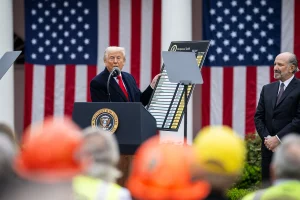
U.S. Transportation Secretary Sean P. Duffy has announced the 15 semifinalist teams selected for the prestigious Advanced Research Projects Agency – Infrastructure (ARPA-I) Ideas and Innovation Challenge, a national competition awarding $1 million to the most groundbreaking concepts capable of reshaping the country’s transportation landscape. Launched under the Trump administration, the initiative seeks bold and transformative solutions with the same pioneering spirit that fueled milestones such as the Wright Brothers’ first flight and the dawn of the space age.
Stage 1 of the challenge received 448 submissions, of which only 15 advanced to the semifinal round. Each team earned a $20,000 award and will participate in a December 9 Innovation Workshop at USDOT Headquarters in Washington, D.C., where they will refine their proposals with industry and government experts. Up to ten finalists will then move on to the 2026 ARPA-I Finals, where they will compete for an additional $700,000 and the opportunity to directly influence future USDOT research and innovation priorities.
The selected ideas reveal the cutting edge of transportation innovation: artificial intelligence for freight logistics and urban mobility; physics-grounded and generative digital twins; advanced robotics for road and airfield inspection; unspoofable navigation systems; quantum simulation for air traffic; climate-resilient biocement infrastructure; and new frameworks for responsible AI adoption. Together, these proposals sketch a roadmap of how Americans may move, build, and navigate in the coming decade.
The 15 Semifinalist Concepts
The semifinalists include Agentic AI for Adaptive and Resilient Middle-Mile Freight Operations, a system developed by Lacy Greening in Arizona that uses agentic artificial intelligence to optimize freight logistics, anticipate disruptions, and dynamically reroute shipments under real-world challenges. From California, UCLA Mobility Lab proposes CivicTwin, a physics-grounded digital twin of entire cities built from real-world data, capable of simulating mobility systems, infrastructure performance, and urban-scale scenarios before any physical implementation.
The University of Utah’s Energy in Motion: Atoms on Wheels concept introduces safe, monitored transport of mobile microreactors, offering emergency energy deployment for remote communities, military bases, or disaster-response operations. Meanwhile, the University of Michigan Transportation Research Institute and SaferDrive AI deliver a Generative AI City-Scale Digital Twin designed to virtually test autonomous vehicles through millions of simulated scenarios—long before they reach public roads.
Security in navigation emerges as another major theme. NavSentinel, from TruNav LLC of Illinois, presents a resilient GNSS receiver engineered to withstand interference and spoofing attempts. Complementing this approach, Tip & Cue Inc. of New York proposes Providing a Signal Source of Truth, a system that ensures a verified, trustworthy navigation signal for vehicles, trains, drones, and aviation systems.
Robotics and automation also play a critical role. New York–based MetaRE and Arup propose Next-Gen Smart Sensors Turn Every Train into an Inspector, a concept that transforms trains into continuous safety-inspection platforms capable of detecting track and tunnel anomalies without service interruptions. Colorado State University’s Pavement & Airfield Tactical Robotic On-site Locator (PATROL) introduces a robotic inspection system capable of detecting runway and pavement damage in real time. Idaho’s Yang Lu contributes Twin-Guided Robotic Pavement Overlays (T-GRO), which uses digital twin guidance to deliver faster, cleaner, and safer road resurfacing.
The Tennessee team—University of Tennessee Chattanooga, University of Tennessee, and the Oak Ridge Innovation Institute—proposes PRISM, an AI-powered real-time dynamic mapping system designed to improve autonomous vehicle operation through live, adaptive mapping.
Climate resilience is another critical frontier. Ohio’s ARCTOS Technology Solutions introduces Rapid Flood Damage Mitigation and Resilience Through Modular Biocement Infrastructure, a technique using fast-setting biocement to reinforce eroded terrain, stabilize roads, and mitigate flood impacts. Virginia’s CNA Corporation proposes Quantum Cooperative Air Traffic Simulation (Q-CATS), a quantum-inspired simulation system designed to manage complex air traffic interactions with unprecedented precision.
Wisconsin innovators Sikai Chen and Xiaopeng Li contribute SemanticVector, an AI-powered semantic compression system capable of processing up to 1,000 times more transportation data with radically reduced storage needs. Also from Virginia, Leidos proposes The Gravity of Infrastructure, an advanced modeling approach to better predict how bridges, highways, and heavy structures respond to stress, vibration, and loads, extending their operational lifespan.
Finally, the Georgia-based collaboration between Numobility and the Texas Transportation Institute brings TransportationBench, a national framework designed to accelerate responsible AI adoption through benchmarking, standardized evaluations, and transparency.

AI, Robotics, Climate Resilience, and the Digital Future of Transportation
From adaptive AI freight systems to quantum air traffic simulation, the ARPA-I semifinalist projects represent the most forward-looking innovations underway in the U.S. transportation sector. They bring together the precision of robotics, the intelligence of machine learning, the predictive capacity of digital twins, and the urgency of climate adaptation.
Whether by preventing runway degradation, ensuring unspoofable navigation, deploying microreactors after disasters, or compressing terabytes of mobility data into efficient streams, these ideas show how transportation may evolve in the next decade.
A National Blueprint for the Transportation Systems of 2050
The ARPA-I Ideas and Innovation Challenge underscores the strategic importance of building a national portfolio of transformative technologies. The 15 semifinalist concepts set the foundation for future infrastructure resilience, safety improvements, and digital modernization across the United States.
What begins today as experimental research has the potential to shape how Americans travel, transport goods, build roads, and navigate cities by 2050—ushering in an era of safer, smarter, and more resilient mobility for the entire nation.

Gas prices at lowest during the holiday season
Data by the American Automobile Association shows that December has been the cheapest month of the year for gas prices. The magic of Christmas has

Accident rates rise nearly 30% in winter holiday travel
The month of December becomes one of the most congested of the year, making the risk of an accident more volatile. Winter is the most

Working on Christmas: The Essential Jobs That Never Stop
At Christmas, while millions of families gather to celebrate, essential professions remain active around the clock so everyday life can keep moving. Truck drivers, doctors, firefighters, police officers and basic service workers keep the country running even on December 25

Has ELP enforcement really reduced trucking capacity?
A study by Overdrive questions the real impact of ELP Enforcement on U.S. freight rates. An investigation conducted by Overdrive, based on data from its

Inside the $33 Million Federal Plan to Modernize U.S. Transportation
The U.S. Department of Transportation has announced a federal investment program focused on innovation, road safety, and artificial intelligence applied to transportation, implemented through the University Transportation Centers.

The best Christmas gifts for a trucker
Find the best Christmas gifts for truck drivers with these options based on their needs and personality. The holiday season is often a challenging time