The transportation industry has mobilized significantly to assist communities devastated by Hurricane Helene.
Industry and governments are supporting the communities affected by Hurricane Helene, a Category 4 storm that hit the Gulf Coast on September 26, causing over 180 deaths and widespread destruction to cities and infrastructure.
By early October, seven states had declared a state of emergency, and the Federal Motor Carrier Safety Administration granted exemptions to speed up relief efforts. Some states suspended tolls, while President Biden committed federal resources for emergency management and debris cleanup, with more than 4,800 federal officials supporting response efforts.

Truckers to the rescue: heroes in times of adversity
The transportation industry has mobilized significantly to assist communities devastated by Hurricane Helene. Truckers and state associations have played a key role in delivering essential supplies and managing recovery logistics in several affected areas, once again highlighting the importance of the trucking industry in the United States.
In Florida, truckers have been working tirelessly to deliver essential supplies to the hardest-hit areas. The Florida Department of Transportation has cleared thousands of miles of roads and bridges and has distributed food, water, and other resources to facilitate recovery. Despite the challenges, cleanup and restoration efforts are progressing in the region.
In North Carolina, authorities coordinated with the Truckers Association to distribute aid to 25 affected counties, with supplies airlifted to inaccessible areas. Roads remain in poor condition, with hundreds of people rescued and evacuated. Meanwhile, in South Carolina, the Truckers Association worked alongside the Emergency Management Division to coordinate the delivery of key supplies while roads were being cleared.
Though in Alabama there were warnings that the dockworkers’ strike on the coast could impact the supply chain and slow down long-term recovery efforts, truckers have shown a strong commitment to maintaining operations. The state’s trucking industry continues to work around the clock to ensure that food, water, medicine, and other essential goods reach the most affected areas.

Social commitment of the trucking industry
In addition to state support, nonprofit organizations and private companies, such as the American Logistics Aid Network and Atlas Van Lines, have contributed financial and logistical resources. These organizations are working to ensure that supplies reach the hardest-hit areas as recovery efforts continue throughout the region affected by Hurricane Helene.
These actions reflect the strong social commitment of the trucking industry, especially in emergency situations. The constant and tireless efforts of truckers in the United States underscore their importance not only in the supply chain but also in everyday life. In addition to transporting 70% of the goods in the country, these workers show their willingness to dedicate time and effort for the common good.

Dalilah Law seeks to remove non-english speaking commercial drivers
President Donald Trump proposed the “Dalilah Law,” an initiative aimed at prohibiting undocumented immigrants from obtaining commercial driver’s licenses. On February 24, President Donald Trump

FORMULA 1 and the AI That Could Transform Transportation in the U.S.
The artificial intelligence system that Formula 1 implemented to monitor every car on every turn is opening the door to new applications in trucking, logistics,
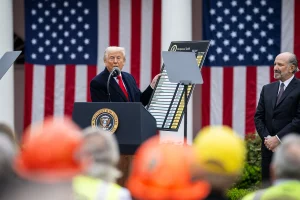
$170 billion at stake: 1,500 companies demand tariff refunds
Companies have challenged the global tariffs imposed by President Donald Trump, asking federal courts to reactivate proceedings to begin the refund process. The companies that
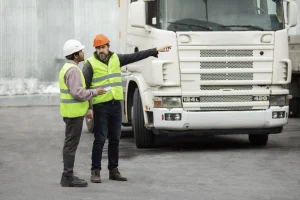
In brief: enforcement measures target speeding, CDL training gaps and more
Major enforcement actions across the U.S., including speeding, CDL fraud, and chain violations Colorado launches Speed Enforcement Program The Colorado Department of Transportation (CDOT) has
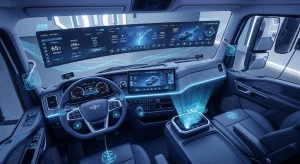
Chinese Vehicles Raise Espionage and Remote Sabotage Concerns
Investigations into Chinese technology in connected vehicles warn of espionage risks, massive data transmission, and potential remote access vulnerabilities that concern U.S. transportation and security

Between the Court and the Fed: the market redefines its roadmap for 2026
Trade policy in limbo as markets price in 2026 rate cuts and Supreme Court strikes down Trump tariff plan. In the latest episode of the