A labor conflict that could severely affect the U.S. economy is looming.
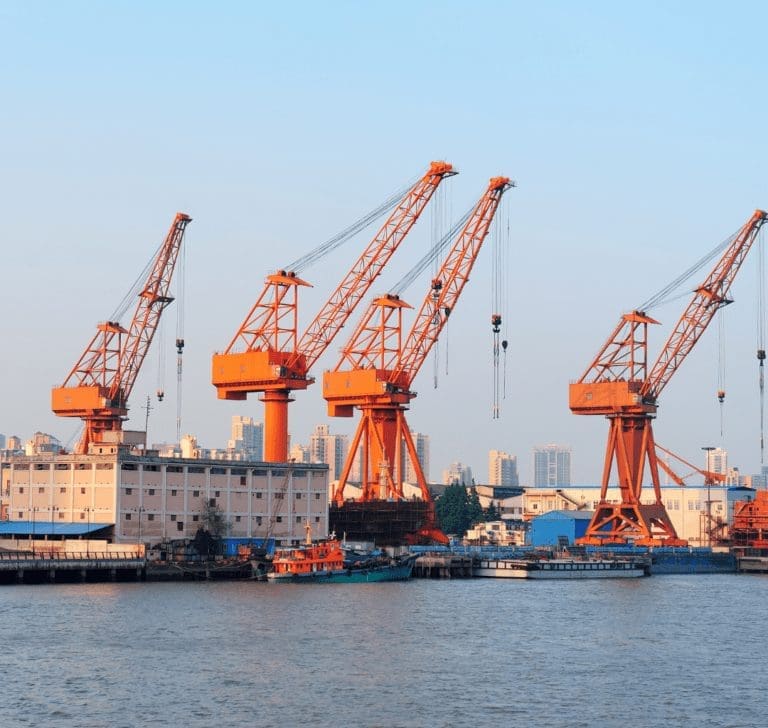
45,000 workers from East Coast and Gulf ports have threatened to strike just as elected President Donald Trump returns to the White House. The dispute centers around port automation, which could jeopardize thousands of jobs by replacing human labor with machines. If carried out, this strike could result in the paralysis of two key points for trade.
A similar event occurred in October 2024 when dockworkers from the International Longshoremen’s Association (ILA) went on a three-day strike. Workers halted their strike after securing a provisional agreement for a 62% wage increase over six years, contingent on approving a final contract before pay.

Automation at Ports: Necessity or Obstacle?
Negotiations resume on January 7, involving the use of semi-automated cranes operated by software or remote employees. The union led by Harold Daggett strongly opposes this technology, arguing that machines are no more efficient than human workers. Furthermore, the union’s vice president, Dennis Daggett, stated that automation is not driven by operational needs but by an attempt by companies to maximize profits at the expense of well-paid jobs.
Port operators and shipping companies defend automation as a necessity to keep U.S. ports competitive compared to more advanced facilities in Rotterdam, Dubai, or Singapore. In November, container companies and port operators stated that they would not continue negotiating a new six-year contract if it meant foregoing investment in automated technology.
Trump, who has already met with Daggett, has expressed his support for the union. The elected president posted on his social media that additional automation would harm workers, arguing that the economic savings do not justify the damage it causes to longshoremen’s jobs.
If the dockworkers begin their strike on January 15, the economic consequences could be severe. The affected ports handle more than half of the country’s container traffic, transporting essential products such as smartphones, fresh fruits, and automobiles. According to economist Mark Zandi, a strike lasting more than a week could result in significant economic losses, surpassing $2 billion if it extends beyond a month.

Impact of a Possible Strike at U.S. Ports
The industry is already preparing to mitigate the impact. Some companies are rerouting their shipments to the West Coast or Canada, and companies like Maersk and Hapag-Lloyd have started imposing surcharges for the possible disruption.
The provisional agreement reached in October already included a substantial wage increase for longshoremen, which could exceed $60 per hour, compared to the current $39 per hour. However, the final contract still needs to be approved before workers can access those increases.
The future of automation at ports remains uncertain. Recent research suggests there is no clear evidence that automated terminals are more efficient than conventional ones, although technological advancements could change this dynamic in the future.

Controlling road rage: a guide for truck drivers
The three key steps to help truck drivers control road rage.

New identification process for the Drug and Alcohol Clearinghouse
The FMCSA has begun implementing new identity verification requirements for the Drug and Alcohol Clearinghouse.

OPEC: What the United Arab Emirates Exit Means for U.S. Fuel Costs and Logistics
The departure of the United Arab Emirates from the Organization of the Petroleum Exporting Countries is reshaping the global oil market, introducing price volatility and creating new challenges for diesel costs, freight operations, and fleet planning across the United States.

Trucks only: Georgia plans dedicated commercial vehicle lanes on I-75
The Georgia Department of Transportation has begun developing a project that plans to add commercial vehicle lanes on I-75.

Tesla Semi moves toward scale
Tesla’s electric truck is already on the road—now the real challenge is scaling production for the freight industry

New US transportation map: adapt without wasting time
The U.S. government has implemented sweeping changes to regulations governing freight transportation, affecting everything from who can be behind the wheel to mandatory in-cab technology. This is an effort to strengthen safety and operational transparency.