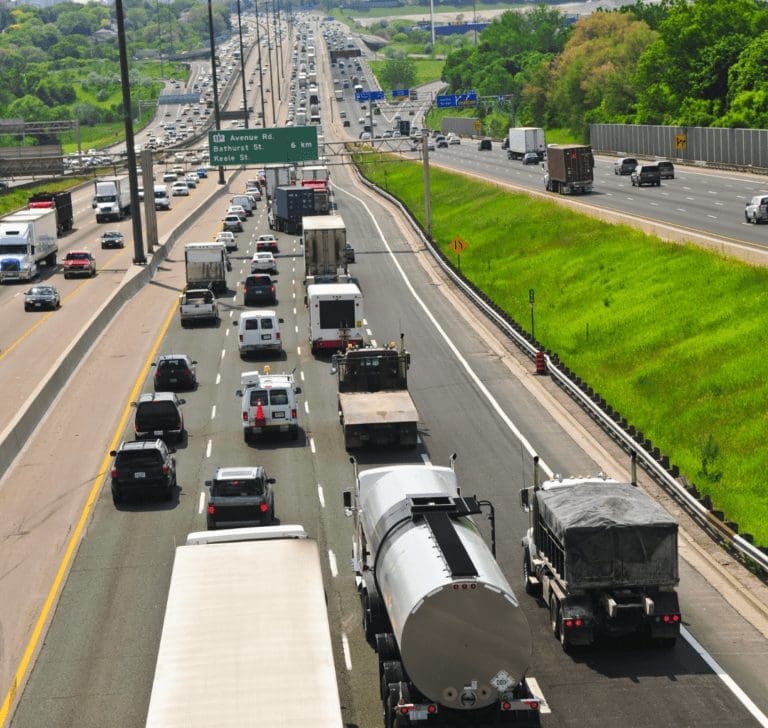
Drivers in the U.S. spent an average of 43 hours stuck in traffic in 2024, amounting to an impressive $771 per person in lost time and productivity.
The transportation data and analytics company INRIX, Inc. recently published its study titled “2024 Global Traffic Scorecard,” revealing that U.S. citizens lose the equivalent of a full week each year stuck in traffic congestion.
The report examines congestion trends in nearly 1,000 cities across 37 countries. New York and Chicago are among the most affected cities globally. According to Bob Pishue, a transportation analyst at INRIX, traffic has seen a significant increase since 2020, with a notable surge in technology-heavy areas like San Jose, San Francisco, and Seattle.
Meanwhile, the American Transportation Research Institute (ATRI) reported in December in its “Cost of Congestion” report that highway traffic jams resulted in a record $108.8 billion in costs in 2022. This figure represents the time lost by truck drivers, as well as an additional $32.1 billion spent on fuel. “Every minute lost in traffic translates into wasted money and productivity,“ added Pishue.

The 10 most congested routes in the U.S.
Drivers in the U.S. spent an average of 43 hours stuck in traffic in 2024, amounting to an impressive $771 per person in lost time and productivity. However, three cities stand out particularly on the congestion lists: New York, Chicago, and Los Angeles. In these cities, drivers lost an average of 102 hours per year due to traffic in New York and Chicago, and 88 hours in Los Angeles.
Chicago has 6 of the most congested routes in the U.S., while New York has 2. Here’s the list of the 10 most congested routes in the country:
- Stamford, CT I-95 SB between Westport and Indian Field Road
- Boston, MA I-93 SB between Charles River and Pilgrim’s Highway
- Dallas, TX US-80 EB between I-635 and Forney, TX
- New York, NY I-278 BQE WB between I-495 I’Chnge and Tillary Street
- Chicago, IL I-55 SB between I-90 and S Cicero Ave
- Chicago, IL I-90 EB between Cicero Ave and W Fullerton Ave
- Chicago, IL I-90 EB between Cicero Ave and Ohio Street
- New York, NY Cross Bronx Expy SB between Bruckner Expy and Walter Gladwin Park
- Chicago, IL I-290 EB between S Wolf Road and Harlem Ave
- Chicago, IL I-90 WB between W Ontario Street and W Irving Park Rd

Overall increase in congestion
Another important traffic index is that U.S. cities experienced a 9% overall increase in congestion compared to the previous year. New York, San Francisco, and Honolulu stand out among cities with the lowest speeds. In New York, a 6-mile trip through the city can take up to 30 minutes, with an average speed of only 12 mph.
The report also points out that the increase in traffic is largely due to economic growth, outdated infrastructure, and the rise in e-commerce, which has boosted freight traffic.
In light of this, the cost of congestion and quality of life remain concerns. Without stricter regulations and more investment in sustainable transportation, traffic may continue to worsen, affecting millions of citizens.

Truck drivers are at high risk of developing diabetes
About 11% of the adult population meets the criteria for prediabetes, and there is a particular group at high risk: truck drivers. Diabetes rates in

Starting in trucking: required permits, registrations, and compliance
Are you a new carrier? This is what you need to know about permits, registration, and compliance. The trucking industry can be quite challenging for

Alberta Clipper Brings an Early Polar Blast: A Critical Alert for Drivers
The Alberta Clipper is sweeping across the country with fast-moving Arctic air, sharp temperature drops, and dangerous road conditions that demand heightened attention from all professional drivers.

American manufacturers trigger truck “dumping” investigation
Foreign trailer manufacturers under investigation for alleged “dumping” in the U.S. The U.S. truck market is at the center of a trade dispute. After domestic

ATRI Warns: Litigation Is Rising Across the U.S. Trucking Industry
A new report from the American Transportation Research Institute (ATRI) reveals how escalating litigation, higher legal costs, and mounting insurance pressures are reshaping the U.S. trucking industry. The findings mark a critical moment for motor carriers, insurers, and logistics stakeholders who must understand the changing legal environment — and the increasingly strategic role of strong insurance partnerships.

FMCSA says no to hours-of-service exemptions
FMCSA rejects two requests for exemptions to hours-of-service rules for commercial drivers. The Federal Motor Carrier Safety Administration (FMCSA) has denied two exemption requests related