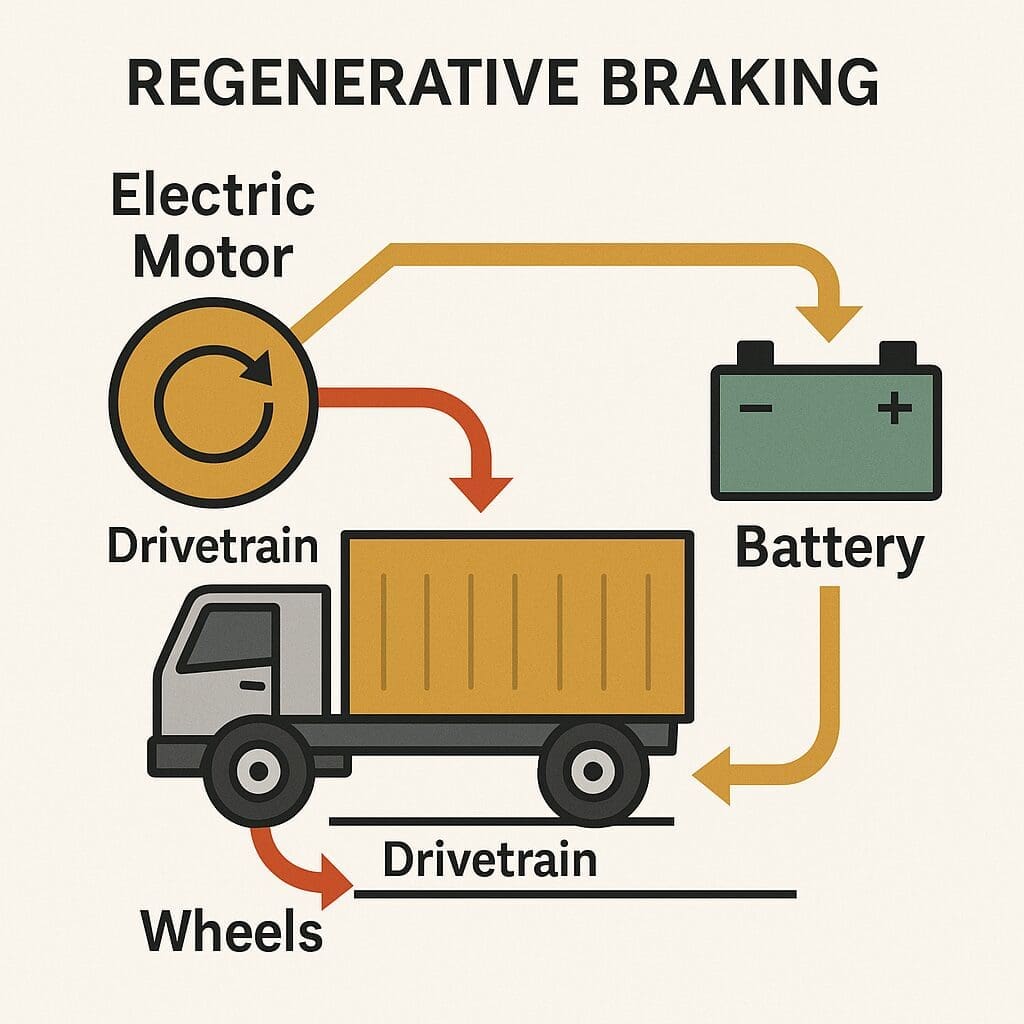
Electric trucks are not just reshaping freight transport—they’re setting social media abuzz. At the heart of this is regenerative braking, a technology that recaptures energy normally lost during braking and reinvests it into the battery. Here’s how it works

In conventional trucks, braking is a process of friction: the brake pads clamp down on the wheels, turning kinetic energy into heat. That heat, and the massive energy behind it, is simply lost to the air. But regenerative braking offers an alternative.
“With regeneration, all we’re doing is reversing the polarity of the electric motors and turning them into electric generators,” explains John Moore, electric vehicle product manager for Volvo Truck North America. Instead of wasting energy, the truck converts it back into electricity.
How the System Works
A motor and a generator are fundamentally the same device, just operating in reverse. When powered, the motor moves the wheels. When regenerative braking is activated, the motion of the wheels drives the motor, which becomes a generator and sends power back to the battery. This makes electric trucks far more efficient—especially since battery capacity is limited compared to diesel fuel.
Where Regenerative Braking Shines
The benefits of regenerative braking depend on factors like vehicle weight, driving terrain, and conditions. City driving, with its frequent stops, offers the greatest opportunity for energy recovery. But highway driving isn’t left out. For example, Nikola Motors reported recovering over 150 kWh of energy on a steep downhill route between Phoenix and Flagstaff—enough to fully charge two Tesla Model 3s.
Drivers Make the Difference
Regenerative braking is not just a matter of hardware—it also depends on the driver. Moore points out that while drivers initially enjoy the powerful acceleration of electric trucks, they soon shift focus to efficiency. Using a steering-column stalk or multi-position switch, they can control braking intensity and master “one-pedal driving,” where the accelerator alone manages speed and deceleration.
Smart Systems and Route Planning
Modern trucks use predictive cruise control, geofencing, and advanced software to identify the best opportunities for regenerative braking. Managing the system correctly can extend the range by up to 25% and reduce brake wear by as much as 30%. However, for the system to work, the battery needs available capacity—often below 70% charge.
Training for Maximum Efficiency
With the rise of electric trucks, fleets are investing in driver training to unlock the full potential of regenerative braking. OEMs provide training programs, but mentoring and gamification often help drivers build the skills to manage energy efficiently.
As the industry heads into an electric future, regenerative braking will play a critical role—not just in improving performance and lowering costs, but in reshaping how goods move across the highways of America.

Pain at the Pump: How the Iran Conflict is Driving Up U.S. Gas Prices
The military escalation in the Persian Gulf threatens consumers’ wallets and transit stability, with projections placing gas prices above historic highs following the closure of the Strait of Hormuz.

Smart Trucks: The Technology Protecting Drivers on the Road
The new generation of smart trucks is incorporating in-cab technology, fatigue monitoring, and advanced driver-assistance systems to improve highway safety. These are the innovations reshaping the industry.

Inflation at 3%: rising prices and political pressure test the Federal Reserve
Alarm bells rang again on Wall Street following the release of the latest U.S. wholesale inflation data. In the latest episode of the podcast Mercado

U.S. traffic deaths drop 12% despite increase in miles traveled
The National Safety Council (NSC) recently released a report showing a nationwide decline in traffic fatalities, despite an increase in miles traveled. The National Safety

Double Brokering in 2026: How the Scam Works and How to Protect Your Freight
Double brokering fraud is one of the fastest-growing threats in the U.S. trucking industry in 2026. From ghost brokering to email hacking and identity theft,

Middle East Conflict: Impact on Diesel Prices and What U.S. Truckers Should Expect
The escalation of conflict in the Middle East has pushed crude oil prices toward $80 per barrel, reigniting global energy volatility. For the U.S. trucking