Aurora and McLeod Software partner to facilitate the adoption of autonomous trucks in freight transportation
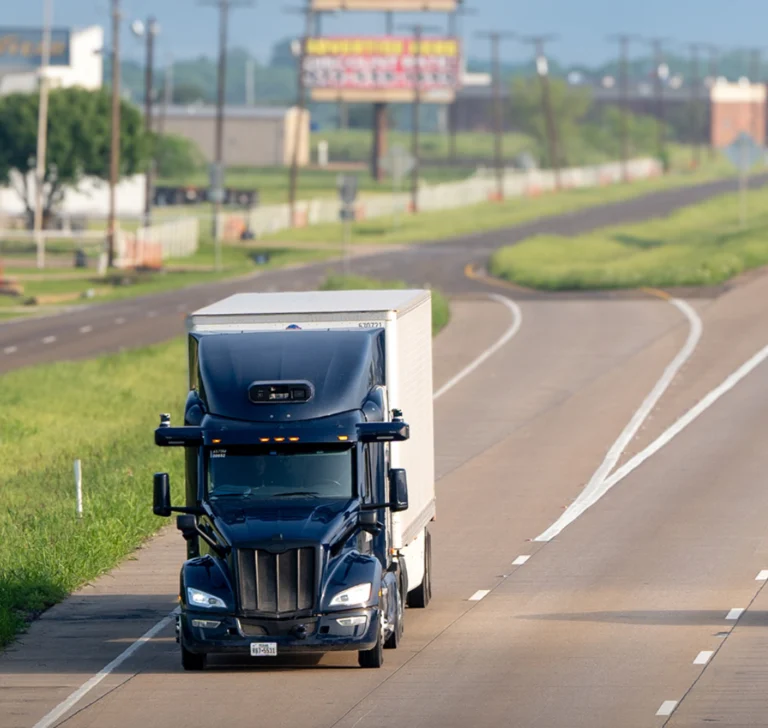
While the operation of autonomous trucks remains a complex challenge within the transportation industry, leading companies in this technology continue to push forward innovations to support its adoption across the sector. One such company is Aurora, which recently announced a strategic partnership with industrial technology provider McLeod Software. The goal of this collaboration is to integrate their solutions and offer a joint transportation management system (TMS) specifically designed for autonomous operations.
As both companies announced on August 28, the partnership involves integrating Aurora’s virtual driving system, Aurora Driver, with McLeod’s TMS platform. This connection will enable freight carriers to manage driverless trucks in much the same way they currently operate fleets with human drivers.
The integrated solution is set to launch in 2026, as it is still in beta testing. The primary goal is to ease the transition for customers of both companies toward using autonomous vehicles, thereby paving the way for broader adoption of this emerging technology.

Aurora at the forefront of the autonomous trucking industry
Aurora has established itself as a leader in the autonomous trucking sector, with milestones such as launching the first commercial driverless truck service on public roads in Texas. The company is increasingly focused on enabling customer adoption rather than solely validating its technology.
Currently, Aurora performs regular autonomous deliveries between Dallas and Houston and has added a nighttime service along that route, demonstrating how driverless trucks can significantly boost asset utilization. The company also opened a terminal in Phoenix to operate a new route between Phoenix and Fort Worth, Texas.
Although vehicles still have human safety operators on board, at the request of its manufacturing partner, Paccar, Aurora has confirmed that the Aurora Driver system handles all driving tasks without human intervention.
Through these innovations, Aurora continues to pave the way for autonomous driving in the freight transportation industry, and is taking another step forward with its new partnership with McLeod.

Aurora and McLeod: a customer-centered service
The collaboration between Aurora and McLeod aims to enable carriers to manage autonomous capacity using the same software they currently rely on for scheduling, dispatch, and billing. Thanks to this integration, users of McLeod’s TMS will be able to perform tasks such as bidding for and accepting autonomous shipments, dispatching driverless trucks, and monitoring cargo, all from a single platform.
Ossa Fisher, President of Aurora, described the partnership as a key milestone in delivering a customer-centric product and service. “By meeting our customers where they are, within the TMS they already use, we’re making it easier for them to access the safety and efficiency benefits of autonomous trucks,” Fisher said.
Tom McLeod, Founder and CEO of McLeod Software, emphasized that integrating Aurora’s autonomous capabilities provides McLeod customers with a clear path to incorporating autonomous tractors into their operations. According to McLeod, this partnership reflects the company’s ongoing commitment to technological innovation.
Aurora has announced that it will share further details about the alliance at the 2025 McLeod Software User Conference, which will take place September 21–23 in Denver.

$170 billion at stake: 1,500 companies demand tariff refunds
Companies have challenged the global tariffs imposed by President Donald Trump, asking federal courts to reactivate proceedings to begin the refund process. The companies that
In brief: enforcement measures target speeding, CDL training gaps and more
Major enforcement actions across the U.S., including speeding, CDL fraud, and chain violations Colorado launches Speed Enforcement Program The Colorado Department of Transportation (CDOT) has
Chinese Vehicles Raise Espionage and Remote Sabotage Concerns
Investigations into Chinese technology in connected vehicles warn of espionage risks, massive data transmission, and potential remote access vulnerabilities that concern U.S. transportation and security

Between the Court and the Fed: the market redefines its roadmap for 2026
Trade policy in limbo as markets price in 2026 rate cuts and Supreme Court strikes down Trump tariff plan. In the latest episode of the

New 10% U.S. import tariff takes effect amid legal and market uncertainty
The implementation of these new tariffs has generated global uncertainty among exporters, increasing confusion around U.S. trade policy. The United States has implemented a new
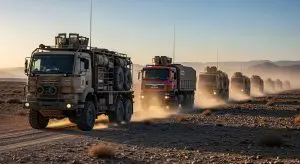
Military Trucks That Moved a Base in Syria
Convoys of advanced HEMTT and PLS military trucks carried armored vehicles, prefabricated base structures, mobile workshops and heavy equipment during the U.S. withdrawal from northeastern