The trucking industry, which relies heavily on contractors and owner-operators, how do regulations affect these groups?
The delay in finalizing government regulations has sparked criticism and debates over the government’s speed of action. While some believe the government is moving too fast, others argue that regulations are too slow. Recently, representatives from the American Trucking Association (ATA) and Scopelitis Transportation Consulting discussed regulations related to independent contractors, underride protection, and training programs in the trucking industry, as reported by FleetOwner.
As the trucking sector relies heavily on independent contractors and owner-operators, the discussion focused on contractor regulations from two perspectives: California’s AB5 rule and the Department of Labor’s regulations.

California AB5 Rule and Department of Labor regulation
California’s AB5 law requires employers to classify workers as employees when they lack certain criteria, affecting owner-operators as well. This law has led to legal disputes in the courts, with strong opposition from the transportation industry. Sean Garney, from Scopelitis Transportation Consulting, noted that companies do not convert drivers into employees because many prefer to be independent, and companies need to adapt to remain competitive, as reported by FleetOwner.
Meanwhile, the Department of Labor’s regulations on independent contractors could change depending on the results of the presidential elections. Members of ATA’s Women in Motion traveled to Washington, D.C. to advocate for the repeal of the independent contractor rule, arguing that it will protect truckers who choose this employment model for its economic opportunity and flexibility.
Another topic discussed was the road transportation regulations focus on improving safety, including underride protections to prevent collisions with other drivers, cyclists, and pedestrians. Kevin Grove, from ATA, stated that the association is deeply involved in these debates, especially in studying underride protection options in collaboration with the National Highway Traffic Safety Administration.
Although implementing protections comes with a high cost, their cost-benefit ratio is significant. However, current solutions are unsatisfactory, prompting exploration of new approaches to address the problem.
Sync between FMCSA and the transportation sector
The discussion also addressed the need for road transportation regulations to quickly adapt to technological advances. While not directly discussing synchronization between the FMCSA and the sector, they stressed the importance of regulations evolving with the industry.
Both Garney and Grove highlighted how technology is transforming the industry, from route planning to driver safety, and noted that some current regulations could quickly become outdated.
Grove emphasized the importance of preventing collisions rather than relying on measures to absorb energy. Garney expressed concern about the slow response of the FMCSA and other government agencies to technological advances, especially regarding autonomous vehicles. He lamented the lack of guidance and leadership in this regard. Despite regulatory delays, Garney highlighted the industry’s determination to continue evolving and developing innovative solutions.

The best roadside attractions for truckers in the U.S.
America’s highways hide unique places that break up the routine, don’t hesitate to check out these roadside attractions along the way. The road is much

The trucker style: comfort, function, and identity
Truckers’ style is much more than workwear; it’s an identity. These are the most commonly worn garments among truckers. Truckers’ style is much more than
Chaos on Highway 61: Viral Wrong-Way Truck Video Reignites the CDL Debate
An 80-ton tractor-trailer traveling miles in the wrong direction on Missouri’s Highway 61 has reignited a nationwide debate over Commercial Driver’s License (CDL) standards, training

How technology affects driver retention
Friend or foe? 52% of drivers say technology directly influences their decision to stay with or leave a fleet. Fleet telematics company Platform Science published

Dalilah Law seeks to remove non-english speaking commercial drivers
President Donald Trump proposed the “Dalilah Law,” an initiative aimed at prohibiting undocumented immigrants from obtaining commercial driver’s licenses. On February 24, President Donald Trump
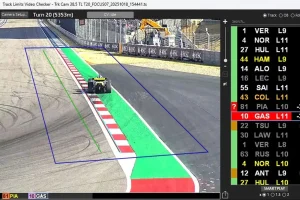
FORMULA 1 and the AI That Could Transform Transportation in the U.S.
The artificial intelligence system that Formula 1 implemented to monitor every car on every turn is opening the door to new applications in trucking, logistics,