Transportation companies should enforce stricter policies regarding mobile phone use while driving
April marks Distracted Driving Awareness Month, a phenomenon that remains a persistent concern in the transportation industry. According to data provided by the National Highway Traffic Safety Administration (NHTSA), distracted driving claimed 3,308 lives in the year 2022. Recently, insurer Travelers released the findings of a survey conducted with consumers and corporate executives, known as the Travelers Risk Index 2024, focusing on distracted driving. These results reveal figures indicating significant risks.
Trends in distracted driving
The Travelers Risk Index 2024 shows which distracted driving behaviors have increased. The following list presents the increase in each:
- Updating or checking social media: 13% increase
- Writing text messages or emails: 10% increase
- Talking on the phone (hands-free): 10% increase
- Recording videos or taking photos with the phone: 9% increase
- Reading text messages or emails: 9% increase

These behaviors have been on the rise since 2020, during the COVID-19 pandemic. According to the survey, 85% of business leaders are concerned about their employees’ use of mobile technology while driving. However, only 68% have implemented specific distracted driving policies, which include measures such as formally communicating restrictions on phone calls, text messages, and emails while driving for work purposes, requiring employees to sign a policy acknowledgment, disciplining employees who do not comply with the company’s policy, and prohibiting the use of portable devices while driving.
Fleet policies to reduce distracted driving
Regardless of the efforts to raise awareness and address this issue in the United States, there is a critical sector that needs to take action: the trucking industry. Truck drivers, who spend most of their workday on the roads, are particularly prone to distractions while driving. Additionally, the size and weight of the vehicles they operate increase their safety responsibilities.
Sentry recently hosted a roundtable discussion on distracted driving, where some key points were established to combat this issue. Experts point out that it is necessary for the entire organization to follow and comply with the same rules, as well as having the same mechanism to enforce them.

Despite these measures, drivers still face cognitive distractions when using hands-free technology, such as speaking through a speakerphone or via Bluetooth. Cognitive distraction has been observed to contribute to 85% of accidents and fatalities related to distracted driving. The implementation of technology, albeit ironic, can be an effective tool to reduce mobile phone use and improve focus on driving. One company addressing this challenge is NoCell Technologies, a software provider that helps truck drivers maintain their focus on the road by restricting mobile phone use.
Transportation companies should enforce stricter policies regarding mobile phone use while driving than those currently allowed by state governments.

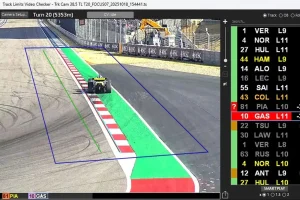
FORMULA 1 and the AI That Could Transform Transportation in the U.S.
The artificial intelligence system that Formula 1 implemented to monitor every car on every turn is opening the door to new applications in trucking, logistics,
$170 billion at stake: 1,500 companies demand tariff refunds
Companies have challenged the global tariffs imposed by President Donald Trump, asking federal courts to reactivate proceedings to begin the refund process. The companies that

In brief: enforcement measures target speeding, CDL training gaps and more
Major enforcement actions across the U.S., including speeding, CDL fraud, and chain violations Colorado launches Speed Enforcement Program The Colorado Department of Transportation (CDOT) has

Chinese Vehicles Raise Espionage and Remote Sabotage Concerns
Investigations into Chinese technology in connected vehicles warn of espionage risks, massive data transmission, and potential remote access vulnerabilities that concern U.S. transportation and security

Between the Court and the Fed: the market redefines its roadmap for 2026
Trade policy in limbo as markets price in 2026 rate cuts and Supreme Court strikes down Trump tariff plan. In the latest episode of the

New 10% U.S. import tariff takes effect amid legal and market uncertainty
The implementation of these new tariffs has generated global uncertainty among exporters, increasing confusion around U.S. trade policy. The United States has implemented a new