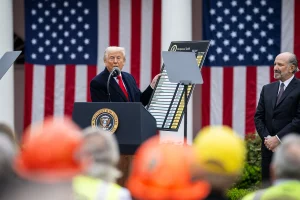
The goal is to decarbonize supply chains and promote the adoption of emission-free heavy-duty trucks
On March 12th, the Biden Administration unveiled a plan to deploy electric vehicle charging infrastructure and hydrogen fueling stations along freight transportation corridors in the United States. The goal is to decarbonize supply chains and promote the adoption of emission-free heavy-duty trucks.
This plan aims to concentrate both public and private investments in key infrastructure to reduce diesel pollution from medium and heavy-duty trucks. It seeks to accelerate the adoption of zero-emission vehicles and ensure an efficient and reliable charging network, which could also lower fuel costs for businesses and improve air quality on busy highways.

Integral network of recharging and refueling infrastructure
The Environmental Protection Agency and the Departments of Energy and Transportation have set the primary objective of developing a comprehensive and accessible network of hydrogen refueling and charging stations by the year 2040. This will provide the necessary infrastructure to support the operation of zero-emission trucks.
Additionally, the plan aims to reduce greenhouse gas emissions. The transportation sector accounts for approximately 29% of greenhouse gas emissions in the United States, with over a fifth coming from medium and heavy-duty trucks.
In the United States, there are currently only 92 electric charging stations for heavy-duty trucks. This measure responds to growing demands from truck manufacturers for public incentives to develop charging stations, improve the electrical grid, and support the electrification of heavy-duty vehicles.
Between 2024 and 2027, the focus will be on improving 12,000 miles of roads, including Interstate 80 and other highways in California, Texas, and Florida, as well as routes near key ports such as Los Angeles, San Diego, Long Beach, Houston, New York, and Miami. This action is part of government efforts to reduce pollution in ports and highways, while the EPA establishes new emission limits and the Department of Transportation allocates $450 million in grants to enhance port safety and efficiency.

$170 billion at stake: 1,500 companies demand tariff refunds
Companies have challenged the global tariffs imposed by President Donald Trump, asking federal courts to reactivate proceedings to begin the refund process. The companies that

In brief: enforcement measures target speeding, CDL training gaps and more
Major enforcement actions across the U.S., including speeding, CDL fraud, and chain violations Colorado launches Speed Enforcement Program The Colorado Department of Transportation (CDOT) has
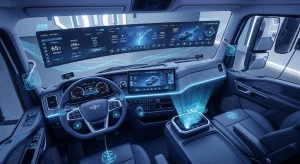
Chinese Vehicles Raise Espionage and Remote Sabotage Concerns
Investigations into Chinese technology in connected vehicles warn of espionage risks, massive data transmission, and potential remote access vulnerabilities that concern U.S. transportation and security

Between the Court and the Fed: the market redefines its roadmap for 2026
Trade policy in limbo as markets price in 2026 rate cuts and Supreme Court strikes down Trump tariff plan. In the latest episode of the

New 10% U.S. import tariff takes effect amid legal and market uncertainty
The implementation of these new tariffs has generated global uncertainty among exporters, increasing confusion around U.S. trade policy. The United States has implemented a new

Military Trucks That Moved a Base in Syria
Convoys of advanced HEMTT and PLS military trucks carried armored vehicles, prefabricated base structures, mobile workshops and heavy equipment during the U.S. withdrawal from northeastern