Truckers work between 60 and 70 hours a week and the majority do not receive compensation for overtime.
A recent attempt to eliminate the income tax on overtime wages creates a crucial opportunity for legislators to reconsider the situation of truckers in the United States. This profession, essential to the economy, is one of the few within the working class that lacks guarantees for additional compensation for hours worked over 40 per week.
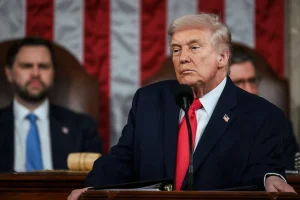
In a recent campaign speech, former President Donald Trump proposed a tax exemption for those working overtime. However, this measure would not benefit the vast majority of the 3 million truckers in the country, who are excluded by the exemption established in the Fair Labor Standards Act (FLSA) of 1938.
Truckers work between 60 and 70 hours a week, dedicating their time and effort to keeping the U.S. economy running. Despite this, the overwhelming majority do not receive compensation for overtime, leading to a growing demand for legislative change.

Bill to Guarantee Overtime for Truckers
In the last two sessions of Congress, the Bill to Guarantee Overtime for Truckers has been introduced, aimed at eliminating the exemption that prevents these workers from receiving the pay they deserve. This proposal is strongly supported by pro-trucker organizations, such as the Owner-Operator Independent Drivers Association (OOIDA) and the Teamsters.
The original intent of the FLSA exemption was to prevent truckers from working excessive hours. However, this legislation has resulted in many of them working 70 hours or more a week without receiving additional compensation. Thus, the GOT Truckers Act would amend the FLSA to ensure that truckers receive payment for the extra hours worked. Although the proposal would initially apply only to company drivers, OOIDA argues that this measure could bring about significant change across the industry, forcing shippers and receivers to value truckers’ time.
Representative Jeff Van Drew, a Republican from New Jersey, introduced the House version of the bill, HR6359, in November. Meanwhile, truckers continue to face a harsh reality: they work over 60 hours a week, often far from home and their families, and their wages have remained stagnant. Adjusted for inflation, their current earnings are half of what they were in 1980.
It is time for legislators to listen to the voices of truckers and recognize their effort and dedication. Justice and fair compensation are fundamental rights that should not be ignored.

Dalilah Law seeks to remove non-english speaking commercial drivers
President Donald Trump proposed the “Dalilah Law,” an initiative aimed at prohibiting undocumented immigrants from obtaining commercial driver’s licenses. On February 24, President Donald Trump

FORMULA 1 and the AI That Could Transform Transportation in the U.S.
The artificial intelligence system that Formula 1 implemented to monitor every car on every turn is opening the door to new applications in trucking, logistics,
$170 billion at stake: 1,500 companies demand tariff refunds
Companies have challenged the global tariffs imposed by President Donald Trump, asking federal courts to reactivate proceedings to begin the refund process. The companies that

In brief: enforcement measures target speeding, CDL training gaps and more
Major enforcement actions across the U.S., including speeding, CDL fraud, and chain violations Colorado launches Speed Enforcement Program The Colorado Department of Transportation (CDOT) has

Chinese Vehicles Raise Espionage and Remote Sabotage Concerns
Investigations into Chinese technology in connected vehicles warn of espionage risks, massive data transmission, and potential remote access vulnerabilities that concern U.S. transportation and security

Between the Court and the Fed: the market redefines its roadmap for 2026
Trade policy in limbo as markets price in 2026 rate cuts and Supreme Court strikes down Trump tariff plan. In the latest episode of the