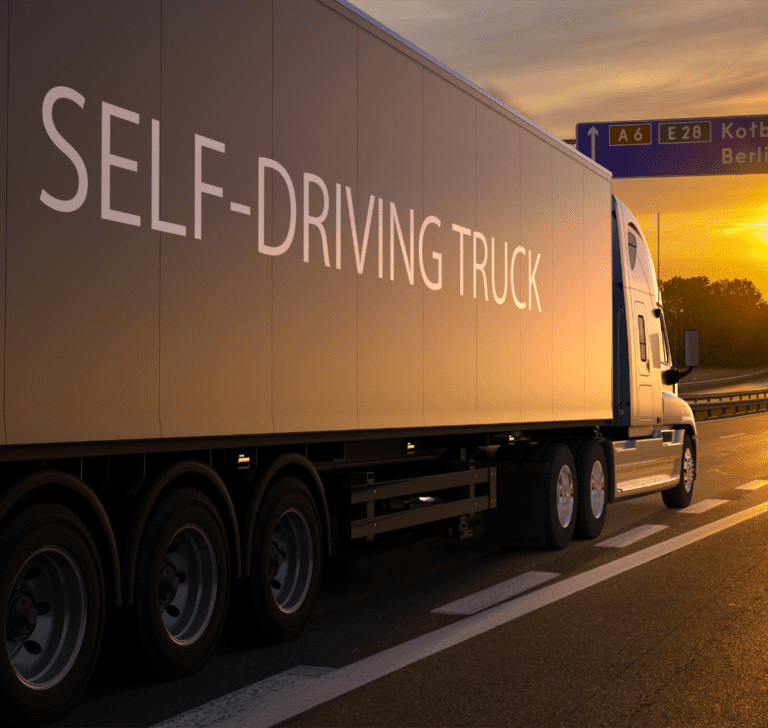
The landscape indicates that autonomous trucks are on track to become an integral part of the transportation industry in the years to come.
Over the past few years, autonomous road transport has emerged as a promising frontier, blending economic benefits and safety improvements. A steady influx of new companies and technology firms has focused on addressing the technical challenges of this emerging mode of transportation. The primary objective is to achieve the integration of driver functions into a vehicle that dispenses with their physical presence.
This burgeoning field in the transportation industry has attracted a wide range of innovators and entrepreneurs, all committed to introducing highly automated driving technology to the commercial vehicle market. These efforts have fostered partnerships among developers, truck manufacturers, fleet operators, logistics companies, and carriers.

Overview of autonomous trucks in the transportation industry
An overview of autonomous trucks in the transportation industry reveals a dynamic business landscape, with new entrants and exits among developers. Staying abreast of developments in this field is quite challenging. However, over the past year, the autonomous truck sector has seen a reduction in the number of developers, as several emerging and tech companies have closed or shifted their focus.
According to Transport Topics, companies progressing in the race towards autonomous driving are increasingly closer to eliminating drivers, paving the way for widespread adoption in the transportation industry. Aurora has partnered with leading truck manufacturers such as Paccar Inc. and Volvo Trucks North America, with plans to integrate its technology into the Class 8 truck models of these companies. Additionally, Aurora is collaborating with Continental, a global automotive supplier, for the mass production of components for its autonomous driving system, the Aurora Driver. On the other hand, Kodiak Robotics plans to commence autonomous truck operations on public roads without onboard drivers by the end of this year.
Transport and logistics companies participating in early pilot programs with autonomous truck developers are witnessing firsthand how this technology could fit into their own freight transportation networks in the future. Significant advancements have been made in autonomous truck designs since the first test vehicles were introduced five to ten years ago. Since then, the landscape has evolved significantly.
While there is still work to be done before fully autonomous trucks become a commonplace reality in North America, the progress demonstrated by remaining companies and their strategic partnerships suggest a promising future for the freight transportation industry. The landscape indicates that autonomous trucks are on track to become an integral part of the transportation industry in the years to come.

How Truck Drivers Can Protect Their Skin from UV Rays on the Road
Chronic exposure to UVA rays isn’t just about getting a tan—learn how to protect your skin from the sun’s rays while on the road.

Top Concerns of Fleet Managers in 2026
The J. J. Keller Center for Market Insights has completed its sixth annual study analyzing the key concerns facing fleet management.

How to survive inflation, the biggest challenge for a trucker’s finances
The latest statistics from the U.S. Department of Transportation reveal a challenging scenario, but one that’s not insurmountable. Everything is getting more expensive, including the intelligence of a good transporter.

Where Are Truck Drivers Most in Demand in the United States?
Texas, California, Florida, Illinois, and Georgia lead truck driver demand across the United States as the transportation industry faces a renewed shortage of professional drivers.

Oliver Tree & Gaspi: Tragedy That Highlights Air Traffic Logistics
The deaths of American musician Oliver Tree and Argentine content creator Gaspi in a helicopter collision over Rio de Janeiro have once again raised a critical question for the transportation industry: how to safely manage increasingly congested transportation networks, both in the air and on the ground.

How to Perform a Pre-Trip Inspection: A Guide for Truck Drivers
A pre-trip inspection is one of the most important procedures for any truck driver.