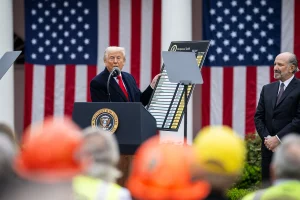
The results reveal a broader perspective on drivers' expectations
In a recent survey conducted by Trucker Path among truck drivers, the essential amenities and services in a truck stop were explored. The results reveal a broader perspective on drivers’ expectations, extending beyond the mere need for adequate parking spaces. Highlighting the importance of enhancing the truck stop experience to meet their demands and improve road life quality.
According to the findings, over 86% of participants expressed their desire for ample parking areas at truck stops. Truckers also highly value the availability of clean showers and food options at service areas. These additional services emerge as key points in defining an ideal truck stop.

Most needed amenities at a truck stop
1. Ample truck parking: according to 86% of respondents, having sufficient space for all vehicles is crucial.
2. Immaculate showers: during their breaks, drivers seek places to freshen up. 67.5% of respondents request clean showers for added comfort after long workdays.
3. On-site restaurant: 47% of respondents deem it ideal for truck stops to have dining options, eliminating the need to travel to other locations once a good parking space is found.
4. Variety of healthy and fresh food: apart from a restaurant, 41% of respondents prefer healthy food options.
5. 24/7 maintenance services: 29% of respondents consider it essential for truck stops to have maintenance services available, as finding them on the road can be challenging.
6. High-speed diesel pumps: with a total of 27% of votes, drivers wish to rest and refuel in one place.
7. Wi-Fi connection: given the long hours spent at truck stops, 22% of respondents suggest having internet access to pass the time.
8. Laundry service: in addition to showers, some trips last several days, making 20% of respondents find access to laundry facilities useful.
9. Driver rest area: sleeping in the truck cabin after hours of driving can be uncomfortable. 15% of respondents wish to have comfortable rest areas.
10. Pet acceptance: finally, with 13.5% of the votes, drivers wish to travel with their pets and have safe spaces for them at truck stops.

Challenges and opportunities in improving truck stops
Trucker Path’s survey highlights the growing need for private investment in truck parking. However, private investors face obstacles such as local opposition and zoning regulations. For instance, in California, where construction plans have been ongoing for a decade, hurdles regarding location and necessary permits persist.
State governments are addressing the national truck stop crisis with increased federal funding. Nevertheless, federal legislation prohibits commercial services at rest areas, which typically offer fewer parking spaces compared to truck stops.

$170 billion at stake: 1,500 companies demand tariff refunds
Companies have challenged the global tariffs imposed by President Donald Trump, asking federal courts to reactivate proceedings to begin the refund process. The companies that
In brief: enforcement measures target speeding, CDL training gaps and more
Major enforcement actions across the U.S., including speeding, CDL fraud, and chain violations Colorado launches Speed Enforcement Program The Colorado Department of Transportation (CDOT) has
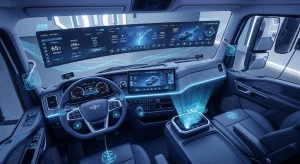
Chinese Vehicles Raise Espionage and Remote Sabotage Concerns
Investigations into Chinese technology in connected vehicles warn of espionage risks, massive data transmission, and potential remote access vulnerabilities that concern U.S. transportation and security

Between the Court and the Fed: the market redefines its roadmap for 2026
Trade policy in limbo as markets price in 2026 rate cuts and Supreme Court strikes down Trump tariff plan. In the latest episode of the
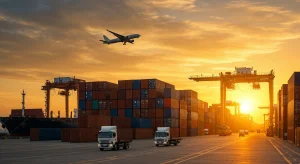
New 10% U.S. import tariff takes effect amid legal and market uncertainty
The implementation of these new tariffs has generated global uncertainty among exporters, increasing confusion around U.S. trade policy. The United States has implemented a new
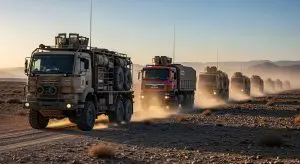
Military Trucks That Moved a Base in Syria
Convoys of advanced HEMTT and PLS military trucks carried armored vehicles, prefabricated base structures, mobile workshops and heavy equipment during the U.S. withdrawal from northeastern