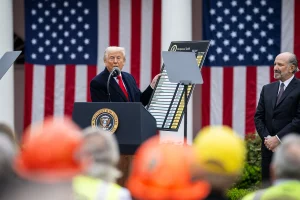
A WalletHub study compared all 50 states to determine the best driving conditions
Road safety and quality are central concerns for drivers. And while the U.S. does not lead in road quality according to the World Economic Forum, it ranks 17th out of 141 countries evaluated.
A WalletHub study compared all 50 states using 31 indicators to determine the best driving conditions, evaluating everything from fuel prices to rush hour congestion and road quality. The results include rankings of states with the highest and lowest traffic congestion, as well as the highest and lowest fuel prices.

Best states for driving in the United States
WalletHub provides a comprehensive view of road conditions in the U.S., highlighting both positive and negative aspects. In their rankings, California has the highest traffic congestion, while West Virginia has the lowest, showing a difference of nearly 15 percentage points between the two states.
California remains at the top of the fuel price list, contrasting with Texas, which has the lowest prices. Hawaii and Washington also rank among the top five states with high prices, while Georgia and Oklahoma show similar percentages in terms of low prices.
The study evaluates all relevant rankings for drivers, allowing WalletHub to identify the top three states for drivers in 2024. The top three are as follows:

Iowa
Iowa stands out as the best state for driving due to its rural environment and low congestion index on urban interstate highways, with fewer than 25% experiencing traffic jams. Average driving distances in Iowa are short, generally less than 20 minutes, allowing residents to save significantly on vehicle costs. Additionally, the state has one of the lowest vehicle theft rates, providing a safe environment for drivers.

Georgia
Georgia is the second best state for driving in the United States. Recognized for having the highest number of gas stations in the country, it also enforces some of the strictest laws against driving under the influence of alcohol. However, it faces significant challenges regarding speeding and distracted driving. On the other hand, vehicle ownership costs are notably low in Georgia. Additionally, the state ranks third in terms of automotive maintenance costs and offers cheaper gasoline prices compared to other states.

Kansas
Kansas takes third place, highlighted for its improvements in road safety that have earned it this position. Recently, the state experienced one of the largest year-over-year decreases in traffic accident mortality rates, with a reduction exceeding 12%. Kansas also stands out for having a per capita extensive road network maintained in excellent condition, and for its low traffic congestion index. These conditions significantly contribute to its position as the third best state for drivers.

$170 billion at stake: 1,500 companies demand tariff refunds
Companies have challenged the global tariffs imposed by President Donald Trump, asking federal courts to reactivate proceedings to begin the refund process. The companies that
In brief: enforcement measures target speeding, CDL training gaps and more
Major enforcement actions across the U.S., including speeding, CDL fraud, and chain violations Colorado launches Speed Enforcement Program The Colorado Department of Transportation (CDOT) has

Chinese Vehicles Raise Espionage and Remote Sabotage Concerns
Investigations into Chinese technology in connected vehicles warn of espionage risks, massive data transmission, and potential remote access vulnerabilities that concern U.S. transportation and security

Between the Court and the Fed: the market redefines its roadmap for 2026
Trade policy in limbo as markets price in 2026 rate cuts and Supreme Court strikes down Trump tariff plan. In the latest episode of the
New 10% U.S. import tariff takes effect amid legal and market uncertainty
The implementation of these new tariffs has generated global uncertainty among exporters, increasing confusion around U.S. trade policy. The United States has implemented a new
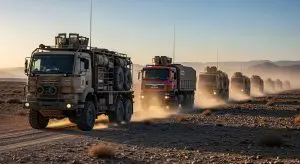
Military Trucks That Moved a Base in Syria
Convoys of advanced HEMTT and PLS military trucks carried armored vehicles, prefabricated base structures, mobile workshops and heavy equipment during the U.S. withdrawal from northeastern