A weakening polar vortex is setting the stage for unusual cold across the United States, arriving just after Thanksgiving—precisely when freight traffic spikes and trucking fleets operate at full capacity.
The end of 2025 brings a significant shift in weather patterns that is already drawing attention from meteorologists and transportation specialists. An anomalous stratospheric warming event over the North Pole is weakening the polar vortex earlier than usual. This process—known as Sudden Stratospheric Warming (SSW)—can dramatically disrupt air circulation across the Northern Hemisphere for several weeks.
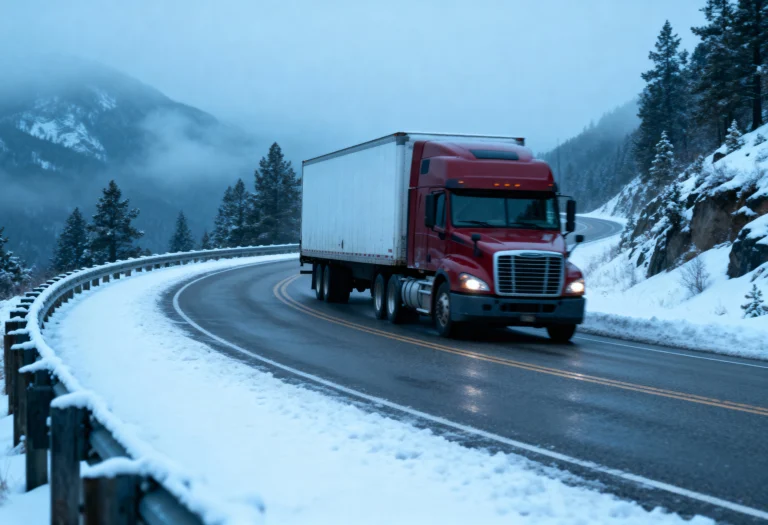
The biggest concern is timing: immediately after Thanksgiving, when freight movement accelerates and fleets are stretched to their limits. Early forecasts indicate that this polar vortex weakening could trigger waves of cold air, Arctic intrusions, snowstorms, and extreme ice episodes from late November into early December.
Normally, the polar vortex acts like a “container” that traps frigid air over the Arctic. When the stratosphere warms abruptly, the vortex becomes unstable. This allows masses of extremely cold air to spill southward with little warning—affecting large portions of the United States.
While meteorologists cannot predict each individual event, there is broad agreement: the coming weeks will be colder, more volatile, and riskier for over-the-road trucking operations.

Regions and Corridors at Higher Risk
Forecasters warn that the combination of Arctic air, moisture, and strong winds may cause significant disruptions, especially in:
Midwest: Iowa, Minnesota, Wisconsin, the Dakotas
Great Lakes region: Michigan, Ohio, New York
Rocky Mountains: Colorado, Wyoming, Utah
Northeast corridor: Pennsylvania, Massachusetts, Connecticut, Maine
Central and Southern states with potential cold blasts: Oklahoma, Arkansas, Texas
Major freight corridors that could experience restrictions, temporary closures, chain controls, and sudden ice conditions include I-80, I-90, I-70, I-40, I-25, I-94, and mountain passes throughout the West.
Cold Weather Diesel Reliability Act of 2025
Potential Impacts for Truckers and Logistics Operators
1. Sudden ice formation and black ice
Rapid drops in temperature increase the likelihood of invisible ice—one of the most dangerous hazards for heavy-duty trucks.
2. Intermittent mountain pass and highway closures
Especially across Wyoming, Colorado, Oregon, and high-elevation areas in California.
3. Delays at logistics centers
Snowstorms can cause bottlenecks in yards, cross-docks, and intermodal facilities.
4. Increased mechanical stress
Extreme cold affects batteries, air systems, diesel fuel (gel risk), valves, sensors, and tire pressure.
How Truckers Can Prepare for a Weakening Polar Vortex
1. Complete pre-trip inspections—every single time
Test battery, alternator, and electrical connections
Drain air lines to prevent freeze-ups
Use diesel treated with anti-gel additives
Check antifreeze, lubricants, and DEF levels
Inspect tires and monitor pressure (cold reduces PSI)
2. Carry a mandatory winter emergency kit
Thermal blankets and extreme-cold clothing
Heavy-duty gloves
Flashlight with spare batteries
Tire chains or traction devices
Food and water for 24–48 hours
Power bank or emergency charger
3. Adjust routes using updated forecasts
With a weakened polar vortex, weather changes can be abrupt. Recommended actions:
Check forecasts every 4–6 hours
Monitor state DOT maps
Avoid areas with heavy snow or ice formation
Plan alternative routes before departure
4. Communicate early with shippers and dispatch
Advise of possible delays before leaving
Request flexible delivery windows
Coordinate safe stopping points if conditions deteriorate
5. Allow wider time margins
Polar vortex–related events typically bring:
More crashes
Mandatory speed reductions
Terminal congestion
Higher demand for roadside assistance
Adding extra travel time can be critical for safety.
A weakening polar vortex is not an unusual meteorological event—but it can rapidly transform driving conditions across much of the United States. After Thanksgiving, a combination of Arctic air, early-season snow, and fast-forming ice may affect critical freight routes and test the responsiveness of drivers and fleet managers.
The key will be advance planning, reinforced readiness, and operational flexibility to manage a colder, more volatile, and fast-changing weather pattern. With proper preparation, the trucking industry can navigate this phase with greater safety and fewer operational disruptions.
👊Stop taking the hard route just because your permits and plates aren’t up to date.
— Saint George Insurance Brokerage Inc. (@SaintGeorgein) November 19, 2025
Call us — we’ll handle the paperwork so you can focus on the drive.
Dial: 888 572 7520 pic.twitter.com/DzhTBJRL6I

U.S. labor market raises red flags on Wall Street
The U.S. labor market closed 2025 with clear signs of weakening, as evidenced by the latest employment data released in December. In the latest episode

DOT finds half of North Carolina CDLs were issued illegally
The DOT warns that half of North Carolina’s CDL licenses are irregular after a federal audit uncovered serious compliance failures. The findings directly affect truckers, fleets, and transportation companies, raising urgent questions about road safety, legal operations, and the future of the trucking industry.

California’s Unhealthy Air: Impacts on Trucking and Freight
Unhealthy Air Quality in California: What Repeated Pollution Alerts Mean for Trucking and Freight Operations

Global Road Freight on Track to Hit USD 5 Trillion by 2033
Global Road Freight on Track to Hit USD 5 Trillion by 2033 as e-commerce growth, supply chain restructuring, and technology adoption accelerate demand for road-based cargo transport worldwide.

California misses DOT deadline risking $160 million in federal funding
The state of California has reached the deadline set by the DOT to take action regarding the situation involving the number of non-domiciled CDLs issued

Health on Wheels: How to Prevent the Most Common Conditions on the Road
Health on wheels matters for anyone who spends long hours on the road. How to prevent the most common physical and mental conditions and maintain healthier routines while working behind the wheel.