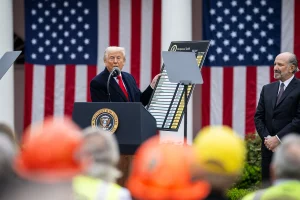
Although paid parking for trucks came as a solution to the crisis, most truckers are not willing to pay for this service.
Paid truck parking is gaining traction nationwide as a solution to the growing shortage of parking spaces for commercial vehicles. However, a recent survey conducted by the OOIDA Foundation reveals that most truckers are unwilling to pay for this service.
The survey, which primarily included owner-operators, shows that drivers reject paid parking for various reasons: high costs, lack of necessity since many operate on regional or local routes, preference for free rest areas, and the poor location of paid parking spaces, making them unattractive.

Paid parking: a partial solution to the space shortage?
While some view paid parking as a potential solution to the truck parking shortage, 58% of survey respondents indicated that they don’t use these spaces. Moreover, experts such as Charles Sperry, a research analyst at the OOIDA Foundation, argue that this option does not adequately address the issue. According to Sperry, many paid parking lots are built in inconvenient locations and do not offer additional services that justify the cost, leading to dissatisfaction among truckers, as reported by Land Line.
Another problem is that 86% of non-owner-operator truckers do not receive reimbursements for paid parking expenses, further exacerbating the situation. Some leased owner-operators mention trying to recover these costs through other means, such as purchasing fuel or using reward cards, but these methods are limited.
The parking shortage is also affecting truckers’ work efficiency. Aproximately six out of ten truckers waste time searching for parking, resulting in an average of nine hours of lost driving time per week. Company drivers and leased truckers are the most affected, as more than 60% of them have to stop earlier than planned due to the lack of available spaces, according to the OOIDA Foundation.

What do truckers look for in a parking lot?
In April 2024, Trucker Path conducted a survey revealing that truckers prioritize clean restrooms and showers, access to food and services, security, and good location when choosing parking lots. However, the most important factor for truckers is accessibility: they seek free, well-located, and easily accessible spaces where they can park and rest without hassle.
While major truck stop chains are popular, many truckers resort to parking at home or rest areas when no spaces are available. Despite the fact that paid parking could alleviate the shortage, truckers continue to reject this option.

Persistent funding challenges at the state and federal levels to improve the availability of public parking spaces have highlighted the urgent need to find more effective and sustainable solutions within the private sector. Collaboration between the public and private sectors is crucial to ensuring a more efficient and accessible parking system that meets the needs of truckers while also improving safety and productivity on the roads.

$170 billion at stake: 1,500 companies demand tariff refunds
Companies have challenged the global tariffs imposed by President Donald Trump, asking federal courts to reactivate proceedings to begin the refund process. The companies that
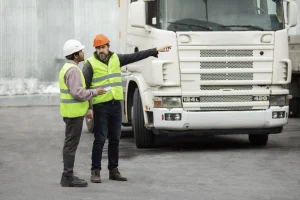
In brief: enforcement measures target speeding, CDL training gaps and more
Major enforcement actions across the U.S., including speeding, CDL fraud, and chain violations Colorado launches Speed Enforcement Program The Colorado Department of Transportation (CDOT) has
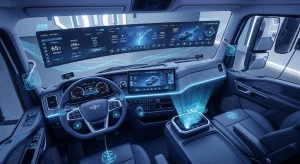
Chinese Vehicles Raise Espionage and Remote Sabotage Concerns
Investigations into Chinese technology in connected vehicles warn of espionage risks, massive data transmission, and potential remote access vulnerabilities that concern U.S. transportation and security

Between the Court and the Fed: the market redefines its roadmap for 2026
Trade policy in limbo as markets price in 2026 rate cuts and Supreme Court strikes down Trump tariff plan. In the latest episode of the

New 10% U.S. import tariff takes effect amid legal and market uncertainty
The implementation of these new tariffs has generated global uncertainty among exporters, increasing confusion around U.S. trade policy. The United States has implemented a new
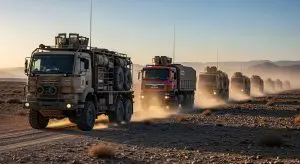
Military Trucks That Moved a Base in Syria
Convoys of advanced HEMTT and PLS military trucks carried armored vehicles, prefabricated base structures, mobile workshops and heavy equipment during the U.S. withdrawal from northeastern