Due to weather conditions and the ongoing need for supplies, the FMCSA has extended the declaration until February 15.
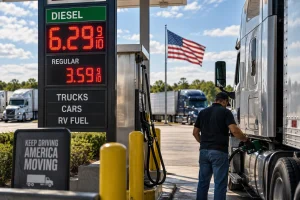
The Regional Emergency Declaration issued by the Federal Motor Carrier Safety Administration (FMCSA) on January 10 has been extended and modified. This declaration was made in response to severe winter storms that affected the United States in recent weeks, bringing extremely cold temperatures and generating high demand for fuel. Due to weather conditions and the continued need for supplies, the FMCSA has extended the declaration until February 15.
The order initially covered the 48 contiguous U.S. states and Washington, D.C., and provided relief regarding maximum driving hours for carriers and drivers providing direct assistance in affected areas. This measure covers the transportation of essential fuels, such as heating fuels (propane, natural gas, heating oil), as well as gasoline and diesel in the designated areas. The modified and extended declaration now includes 39 states and D.C., while the states that are no longer included are: Illinois, Indiana, Iowa, Kansas, Michigan, Minnesota, Missouri, Nebraska, and Ohio.

Drivers exempt from direct assistance in emergency relief efforts
Originally, the declaration exempted carriers and drivers from complying with maximum driving hours regulations (under 49 CFR 395.3) to provide direct assistance in emergency efforts by transporting heating fuel in the covered states. This measure was set to expire on January 31. However, after receiving multiple requests to extend the emergency declaration, the FMCSA decided to extend the deadline to February 15 and modify it to also include the transportation of gasoline and diesel.
The modified declaration covers carriers and drivers providing direct assistance in emergency relief efforts by transporting fuels such as propane, natural gas, heating oil, gasoline, and diesel in affected states. “Direct assistance” refers to the transportation and other services related to the immediate restoration of essential supplies, excluding the long-term rehabilitation of damaged infrastructure. Routine commercial deliveries do not qualify for emergency relief.

Additional measures of the FMCSA emergency declaration
The FMCSA declared that carriers or drivers with an out-of-service order will not be able to operate under this exemption until they meet the corresponding requirements.
Once emergency relief efforts have concluded, both the carrier and the driver must comply with maximum driving time requirements when operating commercial vehicles, unless the driver returns empty to the carrier’s terminal or their regular work location.
As per FMCSA regulations, a 10-hour rest period is required when a driver transitions from emergency relief operations to normal operations. This applies only if the total time spent in relief activities, or a combination of relief and normal operations, reaches or exceeds 14 hours.
States also have the option to grant additional rest periods to carriers or drivers. As of Tuesday, January 28, nine states had declared the emergency.

$170 billion at stake: 1,500 companies demand tariff refunds
Companies have challenged the global tariffs imposed by President Donald Trump, asking federal courts to reactivate proceedings to begin the refund process. The companies that

In brief: enforcement measures target speeding, CDL training gaps and more
Major enforcement actions across the U.S., including speeding, CDL fraud, and chain violations Colorado launches Speed Enforcement Program The Colorado Department of Transportation (CDOT) has

Chinese Vehicles Raise Espionage and Remote Sabotage Concerns
Investigations into Chinese technology in connected vehicles warn of espionage risks, massive data transmission, and potential remote access vulnerabilities that concern U.S. transportation and security

Between the Court and the Fed: the market redefines its roadmap for 2026
Trade policy in limbo as markets price in 2026 rate cuts and Supreme Court strikes down Trump tariff plan. In the latest episode of the

New 10% U.S. import tariff takes effect amid legal and market uncertainty
The implementation of these new tariffs has generated global uncertainty among exporters, increasing confusion around U.S. trade policy. The United States has implemented a new

Military Trucks That Moved a Base in Syria
Convoys of advanced HEMTT and PLS military trucks carried armored vehicles, prefabricated base structures, mobile workshops and heavy equipment during the U.S. withdrawal from northeastern