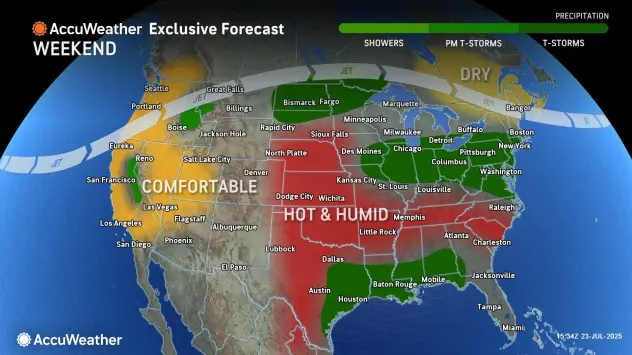
The last days of July will bring a heat wave of up to 100°F, potentially affecting 100 million people or more across the country.
A heat wave is about to sweep across much of the United States. According to AccuWeather data, the last days of July will bring temperatures reaching up to 100°F, potentially affecting 100 million people or more across the country. This heat wave, combined with intense sunshine and high humidity, could have serious consequences for people in several states.
So, get your air conditioner ready, plan that beach trip, and stay well-hydrated—because these temperatures are expected to be between 5 and 15°F above the historical average for this time of year, AccuWeather reports.

Heat wave to expand across the U.S.
Temperatures will reach up to 100°F from Texas to western Tennessee over the next two weeks. A strong area of high pressure, along with a northward bulge in the jet stream, will be the main drivers of the intense heat and sunshine. At the same time, AccuWeather reported that the Gulf of Mexico and the Atlantic Ocean will contribute high levels of humidity to the region. In the central states, where vast crop fields are in the middle of their growing season, moisture evaporating from corn stalks will also help raise humidity levels.
AccuWeather Chief Meteorologist Brett Anderson stated that, due to high humidity and light winds, afternoon temperatures could feel like 110 to 115°F in the states bordering the western Gulf of Mexico, as well as in Oklahoma, Arkansas, and parts of Missouri, Illinois, Indiana, and Tennessee.
The heat wave is expected to spread eastward and northwestward by the end of the week, with its epicenter in the central U.S. By late July and early August, it could also expand to include much of the interior western United States, according to meteorological reports.
Although only a few storms are expected, they may be intense around the edges of the heat dome. Additionally, there is a risk of flash flooding in storm-affected areas due to the high humidity, which increases the likelihood of extreme rainfall.

How to stay safe during a heat wave
Heat waves can pose a serious risk to your health. That’s why it’s essential to know how to stay safe during these periods of extreme heat. Below are the official recommendations from the National Weather Service (NWS) to protect yourself and others during a heat wave:
- Reduce, eliminate, or reschedule strenuous activities to the coolest parts of the day. People especially vulnerable to heat—such as children, the elderly, those with chronic illnesses, and pregnant individuals—should stay in the coolest available location.
- Wear lightweight, loose-fitting, and light-colored clothing to reflect heat and sunlight.
- Minimize direct sun exposure.
- Eat light, fresh, and easy-to-digest foods like fruits or salads.
- Drink plenty of water and non-alcoholic, non-caffeinated fluids—even if you don’t feel thirsty.
- Use air conditioning or fans, and spend time in air-conditioned places like shopping centers or libraries.
- Do not point electric fans directly at yourself when room temperatures are above 90°F, as dry air can increase dehydration.
- Bathe or shower with cool water.
- Check in on elderly, sick, or frail individuals who may need help coping with the heat. Keep children, individuals with disabilities, and pets safe during heat waves.

Controlling road rage: a guide for truck drivers
The three key steps to help truck drivers control road rage.

New identification process for the Drug and Alcohol Clearinghouse
The FMCSA has begun implementing new identity verification requirements for the Drug and Alcohol Clearinghouse.

OPEC: What the United Arab Emirates Exit Means for U.S. Fuel Costs and Logistics
The departure of the United Arab Emirates from the Organization of the Petroleum Exporting Countries is reshaping the global oil market, introducing price volatility and creating new challenges for diesel costs, freight operations, and fleet planning across the United States.

Trucks only: Georgia plans dedicated commercial vehicle lanes on I-75
The Georgia Department of Transportation has begun developing a project that plans to add commercial vehicle lanes on I-75.

Tesla Semi moves toward scale
Tesla’s electric truck is already on the road—now the real challenge is scaling production for the freight industry

New US transportation map: adapt without wasting time
The U.S. government has implemented sweeping changes to regulations governing freight transportation, affecting everything from who can be behind the wheel to mandatory in-cab technology. This is an effort to strengthen safety and operational transparency.