The landscape indicates that autonomous trucks are on track to become an integral part of the transportation industry in the years to come.
Over the past few years, autonomous road transport has emerged as a promising frontier, blending economic benefits and safety improvements. A steady influx of new companies and technology firms has focused on addressing the technical challenges of this emerging mode of transportation. The primary objective is to achieve the integration of driver functions into a vehicle that dispenses with their physical presence.
This burgeoning field in the transportation industry has attracted a wide range of innovators and entrepreneurs, all committed to introducing highly automated driving technology to the commercial vehicle market. These efforts have fostered partnerships among developers, truck manufacturers, fleet operators, logistics companies, and carriers.

Overview of autonomous trucks in the transportation industry
An overview of autonomous trucks in the transportation industry reveals a dynamic business landscape, with new entrants and exits among developers. Staying abreast of developments in this field is quite challenging. However, over the past year, the autonomous truck sector has seen a reduction in the number of developers, as several emerging and tech companies have closed or shifted their focus.
According to Transport Topics, companies progressing in the race towards autonomous driving are increasingly closer to eliminating drivers, paving the way for widespread adoption in the transportation industry. Aurora has partnered with leading truck manufacturers such as Paccar Inc. and Volvo Trucks North America, with plans to integrate its technology into the Class 8 truck models of these companies. Additionally, Aurora is collaborating with Continental, a global automotive supplier, for the mass production of components for its autonomous driving system, the Aurora Driver. On the other hand, Kodiak Robotics plans to commence autonomous truck operations on public roads without onboard drivers by the end of this year.
Transport and logistics companies participating in early pilot programs with autonomous truck developers are witnessing firsthand how this technology could fit into their own freight transportation networks in the future. Significant advancements have been made in autonomous truck designs since the first test vehicles were introduced five to ten years ago. Since then, the landscape has evolved significantly.
While there is still work to be done before fully autonomous trucks become a commonplace reality in North America, the progress demonstrated by remaining companies and their strategic partnerships suggest a promising future for the freight transportation industry. The landscape indicates that autonomous trucks are on track to become an integral part of the transportation industry in the years to come.

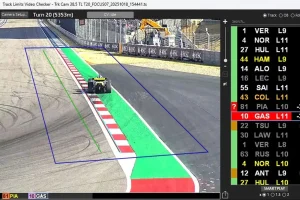
FORMULA 1 and the AI That Could Transform Transportation in the U.S.
The artificial intelligence system that Formula 1 implemented to monitor every car on every turn is opening the door to new applications in trucking, logistics,
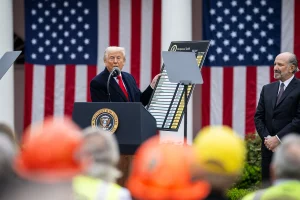
$170 billion at stake: 1,500 companies demand tariff refunds
Companies have challenged the global tariffs imposed by President Donald Trump, asking federal courts to reactivate proceedings to begin the refund process. The companies that

In brief: enforcement measures target speeding, CDL training gaps and more
Major enforcement actions across the U.S., including speeding, CDL fraud, and chain violations Colorado launches Speed Enforcement Program The Colorado Department of Transportation (CDOT) has
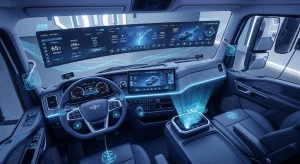
Chinese Vehicles Raise Espionage and Remote Sabotage Concerns
Investigations into Chinese technology in connected vehicles warn of espionage risks, massive data transmission, and potential remote access vulnerabilities that concern U.S. transportation and security

Between the Court and the Fed: the market redefines its roadmap for 2026
Trade policy in limbo as markets price in 2026 rate cuts and Supreme Court strikes down Trump tariff plan. In the latest episode of the
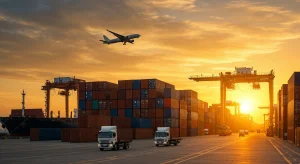
New 10% U.S. import tariff takes effect amid legal and market uncertainty
The implementation of these new tariffs has generated global uncertainty among exporters, increasing confusion around U.S. trade policy. The United States has implemented a new
This entrance is unbelievable. The splendid substance displays the distributer’s dedication. I’m overwhelmed and anticipate more such astonishing entries.
I love the way you used humor in this post. It made me laugh out loud.