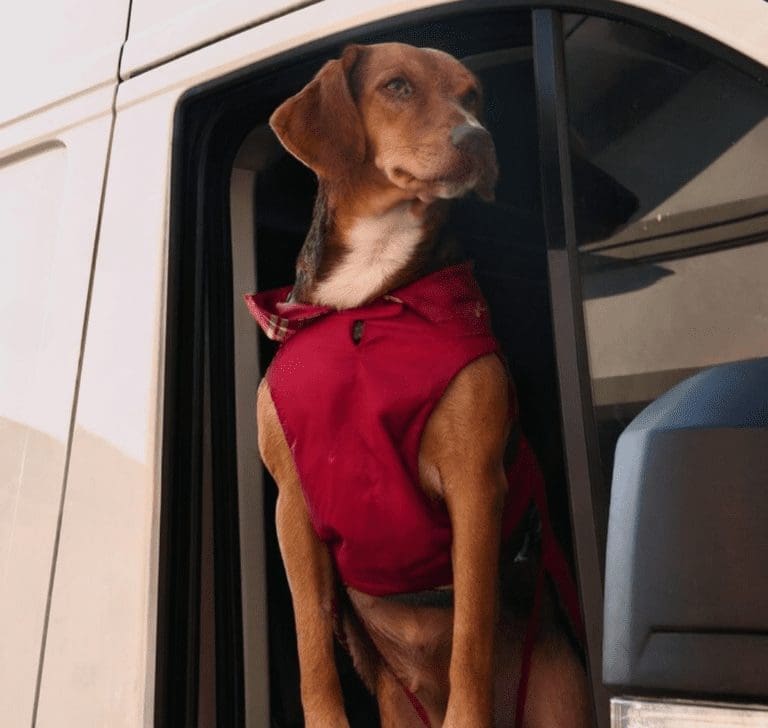
Five general measures that will help you travel the road with your four-legged best friend.
On February 20th, National Love Your Pet Day is celebrated, a special date to show the affection we feel for our four-legged companions. For truck drivers, whose work can be solitary, having a pet as a companion during their travels is an excellent way to counter the challenges of mental health and reduce the feeling of loneliness on the road. In fact, 40% of truck drivers travel with their pets for this very reason.
However, despite the fun, traveling with a pet on the road is not an easy task. Preparation is key to ensuring both the driver and their furry companion enjoy the journey. To achieve this, it is essential to plan ahead. Below are five general measures that will help you travel the road with your best friend.

1. Find a transportation company that allows pets
Many transportation companies have restrictions regarding driving with pets or service animals, so it’s important to verify that your company allows pets on board before making a decision. Common rules or restrictions include breed limitations or policies that only allow dogs or cats, authorization to have emotional support animals or trucker dogs, weight limit requirements for pets, and the need to pay an additional deposit to bring them along.
2. Find the ideal breed to accompany you on your trips
Just as life on the road is not for everyone, not all animals are suited for spending long days in a truck. It’s important to consider your pet’s size, breed, temperament, how much exercise they need daily, and their emotional state. If your ideal companion is a dog, it’s best to choose medium-sized breeds or those with moderate energy. Here you can find some options that may adapt well to life on the road.

3. Develop a health plan
Choosing the perfect pet is not enough; ensuring their health is also crucial. Before setting off, you must make sure their vaccinations are up to date, especially the rabies vaccine, to protect their well-being and prevent potential risks during the trip. It’s also important to have a veterinary care plan for any emergencies. Some suggestions include:
- Locating veterinary clinics and emergency services: Before your trip, research veterinary clinics along your route, as well as emergency veterinary services availability.
- Veterinary visits: Schedule routine check-ups for your pet. While this doesn’t have to happen during your trips, regular visits are necessary.
- Vaccination card: Be sure to bring at least one copy of your pet’s vaccination record, especially if you’re crossing borders. This document will serve as the required proof for transporting your pet wherever needed.
- Managing common health problems: Issues like motion sickness, allergies, or digestive problems will require your immediate attention. It’s important to learn how to treat these ailments by researching or consulting your vet about the best solutions. This will ensure a safer trip for both of you. Familiarize yourself with common health issues that may arise during your travels so you’re prepared.

4. Ensure their comfort during the trip
Your pet needs a comfortable and safe space, which is essential for their physical and mental health. We recommend implementing the following activities and routines so your furry companion enjoys the adventure to the fullest:
- Crate training: While not everyone’s favorite, training your pet to have a comfortable space in a crate is essential. Do it positively, reinforcing that it’s a safe and comfortable place rather than associating it with punishment.
- Temperature control: Maintain a pleasant temperature inside the truck and avoid exposing your pet to extreme cold or heat. Regularly check that your pet is not agitated or dehydrated, and adjust the temperature as necessary to ensure their well-being.
- Constant hydration: Make sure your pet has access to fresh water throughout the trip.
- Feeding routine: Implement a schedule for your pet’s meals. This will help establish a routine for them.
- Exercise breaks: A pet needs regular exercise to release energy and stretch their legs (just like you). This leads us to the next point.
5. Research pet-friendly stops
Before hitting the road, research truck stops and rest areas that allow pets and have designated zones for your pet to exercise. Make sure to find truck stops with pet exercise areas, waste disposal stations, and pet-friendly policies. Use specialized digital platforms to share this information.

The most important thing is that your pet always feels your love. Although it may feel overwhelming at first, over time the trips will become more enjoyable, and both of you will establish a routine while enjoying each other’s company.

Truck drivers are at high risk of developing diabetes
About 11% of the adult population meets the criteria for prediabetes, and there is a particular group at high risk: truck drivers. Diabetes rates in

Starting in trucking: required permits, registrations, and compliance
Are you a new carrier? This is what you need to know about permits, registration, and compliance. The trucking industry can be quite challenging for

Alberta Clipper Brings an Early Polar Blast: A Critical Alert for Drivers
The Alberta Clipper is sweeping across the country with fast-moving Arctic air, sharp temperature drops, and dangerous road conditions that demand heightened attention from all professional drivers.

American manufacturers trigger truck “dumping” investigation
Foreign trailer manufacturers under investigation for alleged “dumping” in the U.S. The U.S. truck market is at the center of a trade dispute. After domestic

ATRI Warns: Litigation Is Rising Across the U.S. Trucking Industry
A new report from the American Transportation Research Institute (ATRI) reveals how escalating litigation, higher legal costs, and mounting insurance pressures are reshaping the U.S. trucking industry. The findings mark a critical moment for motor carriers, insurers, and logistics stakeholders who must understand the changing legal environment — and the increasingly strategic role of strong insurance partnerships.

FMCSA says no to hours-of-service exemptions
FMCSA rejects two requests for exemptions to hours-of-service rules for commercial drivers. The Federal Motor Carrier Safety Administration (FMCSA) has denied two exemption requests related